The search for answers about the alleged attack on Dr Helen Haines prompts a tacit acknowledgement that many issues are causing problems in our society, any number of which could've been the impetus for the horrific event, writes Belinda Jones.
THIS WEEK'S ALLEGED ATTACK ON Dr Helen Haines MP shocked the nation — and reverberated around the world.
Lost in the fog of our Australian exceptionalism and belief in our “shared democratic values”, we share a belief that "it couldn’t happen here”. That false sense of security offers little comfort at times like this.
For many politically engaged Australians, particularly our devoted IA readers, the alleged attack on Helen Haines prompted a search to blame someone or some ideology or some kind of health issue or other possible reason.
Social media exploded with couch detectives sprouting their various conspiracy theories.
Some said the alleged perpetrator of the alleged attack was radicalised by left-wing politics; some said it was the fault of right-wing ideology and some said it was a health issue.
As yet, no one knows what prompted the alleged attack. We may never know.
But what these social media narratives did reveal was that many in the online community believe that extreme Left, extremist-Right, male violence against women and mental health issues are three critical issues simmering just below the surface in our society.
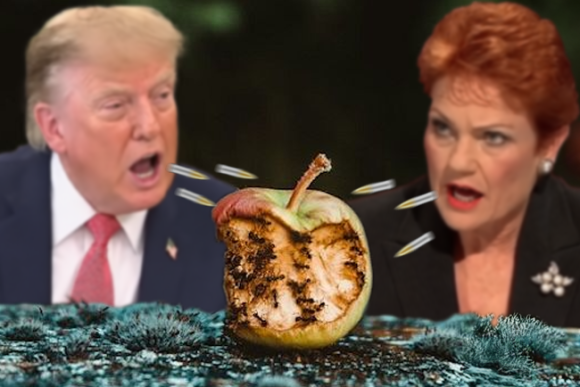
We know these issues exist. These and many others, like substance abuse, exist. We know they lead to anti-social behaviour and violence.
We all know more needs to be done about it, but many apathetic Aussie voters are thinking, you know, right after MAFS, I'll think about it.
We elect politicians to represent us and expect them to take care of all those awkward issues that no one wants to talk about until after a tragedy.
So, consequently, this week they were among those chosen to be blamed, too.
And, yes, there is an element of blame to lay at the feet of politicians, but there is also an element of blame to lay at our own feet.
Every three years, Australians have the privilege of being able to vote in a democratic society. For many, that privilege is worse than having a tooth pulled.
Many around the world dream of having what Australians have and yet we take it for granted, or worse, complain about having to vote.
And when many Australians vote, they have a “set and forget” mentality.
Trudging up the path to vote, whinging and complaining all the way:
They’re all the same.
Two wings of the same bird.
We should be able to do this online.
Geez, it’s hot/cold.
What’s the point of voting? They’re gonna do whatever they want anyway.
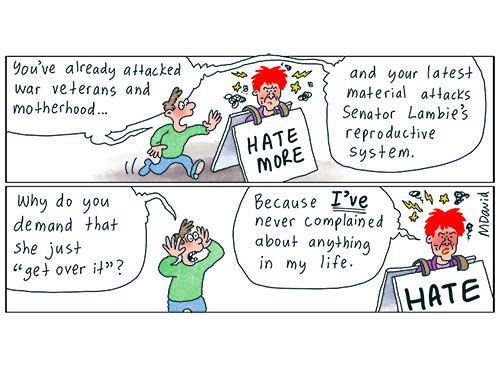
Then, after polls close, they might watch the election results, depending on who’s playing footy that night.
And finally, when the winner is announced, they sit back and expect the incoming government to get on with things and fix all society’s ills. See you in three years, my work here is done, says many an Aussie voter.
Not one of those apathetic voters with businesses would treat their own business like they do their politics. They wouldn’t hire someone to manage their business then leave them to do what they like for three years.
None of those apathetic voters who are parents would put their children in a school and then not seek to be engaged with the school for the next three years.
And yet, politics controls every facet of our lives; it makes no sense that political engagement is so low in Australia, or indeed in many Western countries.
But it’s okay, those apathetic voters think to themselves, we’ve got the Fourth Estate to keep an eye on things while I crack a tinnie and watch Australia’s Second Innings in The Test.
But the legacy media ain’t what it used to be.
Journalism has become infotainment; opinions have replaced fact-based news bulletins. AI is replacing real journalists. News comes and goes in 24 hours – online, on TV, on your phone – it is relentless.
Australian mainstream journalists regularly publish horse-race politician stories, pitting one side against the other, fanning the flames of discontent by platforming the politicians most likely to fall for a gotcha question or have an extreme reaction that could go viral.
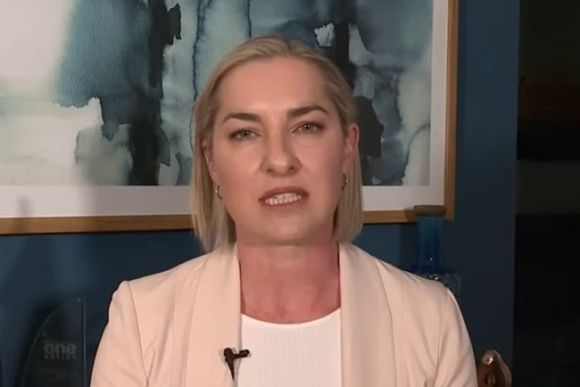
The aim seems to be the creation of viral content, not fact-based news. It’s about clicks, ratings, likes, shares.
Once upon a time, newspapers were full to the brim of local, national and international stories from intrepid reporters who, many would say, operated on hunches, hints and leads. They chased the story.
These days, like drip-fed battery hens, Aussie mainstream media journalists rarely chase the story; many wait for the story to come to them. They might get a leak, see something on X they can turn into a story or wait for an invitation to a politician’s press conference.
They don’t investigate like Bernstein and Woodward, Nellie Bly or Ida B Wells. They don’t hound politicians about all the problems in our society.
You would think there would be a press pack outside the Attorney-General’s office every single morning hounding her to do more about extremism, radicalisation, the epidemic of violence against women, domestic violence and Robodebt (given 400,000 Australians who were issued illegal debt notices are still waiting for justice).
If our Fourth Estate were doing the job apathetic Australians think they are doing to hold power to account, then you’d think a daily press pack outside the Health Minister’s office hounding them for details on how to solve the mental health crisis, the aged care crisis and fight NDIS funding cuts.
A functioning Fourth Estate would be hounding every politician for evidence of them doing the jobs the apathetic Australians voted them in to do.
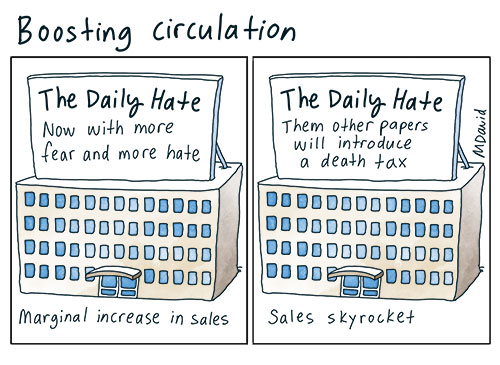
But Australia’s Fourth Estate is not functioning. Nor is the USA’s. Nor is the UK’s. The common denominator is News Corp.
All countries where Rupert Murdoch’s media empire has weakened journalism coincidentally share many of the same societal issues as Australia.
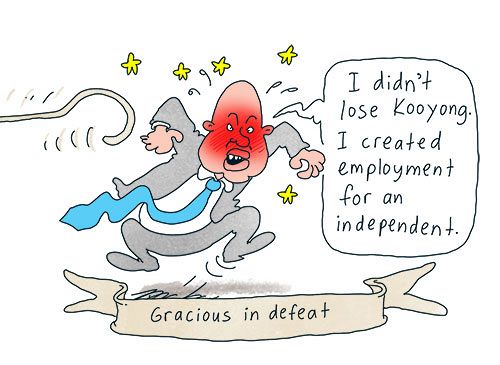
Australians allowed it to happen; they are still allowing it to happen.
Turn on News 24 any night of the week to see the appalling and blatant fanning of the flames of discontent on any number of issues. And you can be sure Murdoch's cameras will be there to capture the carnage of their collateral damage and turn it into their next news bulletin — "stay tuned", Murdoch's ads will tell apathetic voters enjoying their weekend.
So if we are to blame anyone for the tragedy of the alleged attack on Helen Haines, then we must look no further than ourselves.
Apathy about politics and our failure to ensure that our Fourth Estate is functioning well has led to a wide range of societal issues not being dealt with competently or not at all. We, the people, dropped the ball.
We may never know the reason for this week’s tragedy in Wangaratta. But we do know we have a series of critical issues bubbling just below the surface of our so-called democratic, laid-back, exceptionalist society.
When Australians demand better journalism from journalists, then we’ll get better politicians because they will be held to account with more zeal than our current crop of drip-fed battery hens. When we get better politicians, we’ll get better solutions to society’s critical problems.
The only thing stopping that is our drip-fed, Murdoch-led mainstream media, who wouldn't have the foggiest idea who Woodward and Bernstein, Nellie Bly or Ida B Wells were, or how their work protected their societies.
Belinda Jones is an IA assistant editor, a former teacher and federal political candidate. You can follow Belinda Jones on Twitter/X @belindajones68.
 This work is licensed under a Creative Commons Attribution-NonCommercial-NoDerivs 3.0 Australia License
Support independent journalism Subscribe to IA.


Related Articles
- Helen Haines and the climate of hate: Bad apples or orange by-products?
- EDITORIAL: Helen Haines and the climate of hate: Bad apples or orange by-products?