One Nation may not have policies, but it knows how to ride the waves of public anger and grievance politics, writes Yuki Lindley.
VOTERS TURNING to artificial intelligence (AI) for information during the upcoming Victorian Election may find little information about One Nation — a party with notoriously few policies.
However, this matters little today, as political contests are increasingly contested in the realm of emotion, or what Canadian philosopher Brian Massumi describes as the ‘politics of affect’. Rather than considering party policies when voting, people increasingly make emotional choices based on gut instincts and “common sense”.
The 1990s saw a shift in academia towards examining the role of emotions and bodily experiences in shaping our political and social lives. This became known as the affective turn. While escaping a clear, universal definition, affect can be described as a force of feelings or intensities that emerge first in the body, before we are able to clearly label and define those feelings.
Importantly, these affects are socially constructed. We often think of emotions as personal, innate and emerging from within us. However, affect theory reveals how the emotions we attach to certain situations or groups of people are not natural, but socially constructed through the repetition of stories and images.
As writer Sara Ahmed describes, feelings “stick” to ideas and groups of people. In this way, images of refugees and immigrants are made sticky with danger and fear, while the Australian flag with belonging.
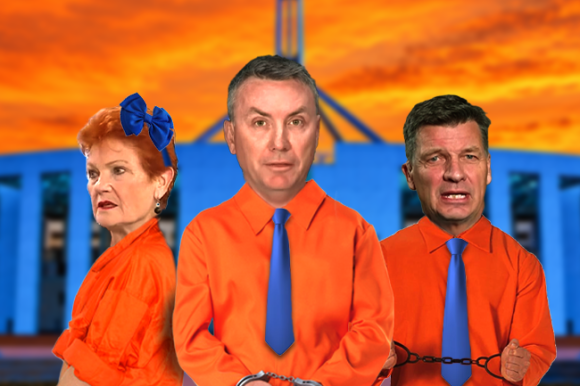
This affective turn in the 1990s also filtered through to popular culture. Shows such as The Oprah Winfrey Show and The Jerry Springer Show became popular sites for public displays of emotional intensity, or affect.
As author Catherine Liu argues, trauma evolved from a clinical diagnosis to become a tool of social control and commercial profit. These kinds of public displays of trauma and emotional intensity proved highly profitable, and the role of publicly sharing one’s emotions became an end in itself, rather than a starting point from which one begins the work of understanding its root causes. Public displays of emotions and speaking about one’s pain came to replace the work of addressing the sources of injustice.
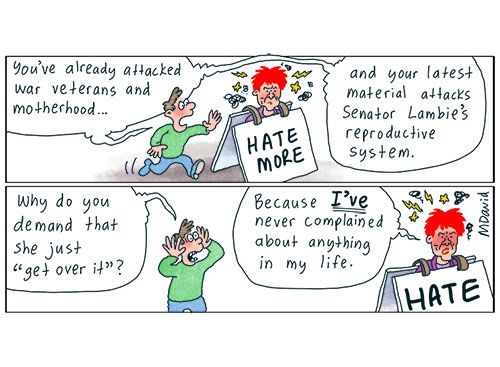
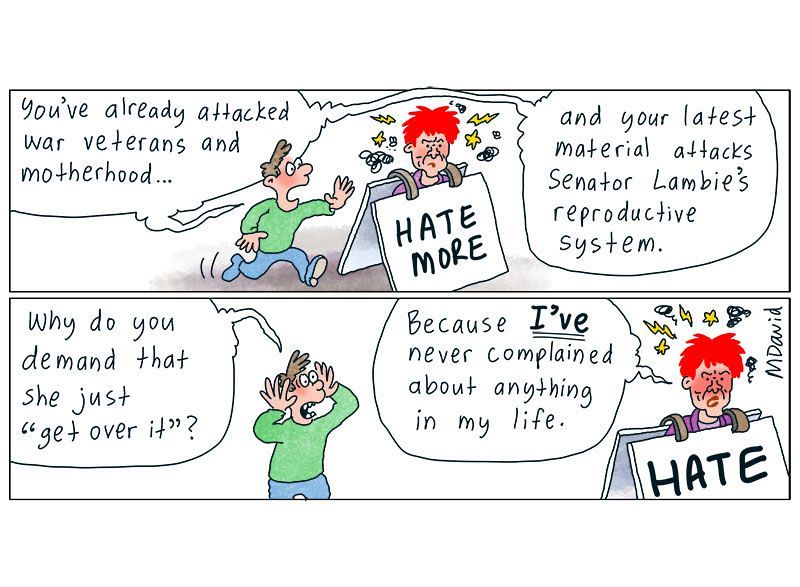
Naming the systems which are driving increasing precarity, ecological collapse and genocide is hard, whereas public displays of emotions are easier and have become normalised. Raging online about immigrants, cheering on the open racism of One Nation, or complaining about politicians provides the kind of emotional release that has come to substitute for meaningful political action.
Today, algorithms further drive division by prioritising content that provokes strong emotional reactions, as they are highly shareable and profitable. The news cycle keeps us fed with content that will have us returning; content designed to make us feel intensely about the state of the world, while ensuring we remain cynical, passive observers. We become consumers of emotional states, in turn angry, frustrated and fearful, but ultimately sceptical about taking meaningful action.
As One Nation and its wealthy donors know only too well, when emotional intensity comes to replace any real political action, the status quo is maintained.
This is why any meaningful political resistance must move beyond critique, fact-checking, and policy positions. These operate at the level of cognition and conscious thought. However, today’s political power operates through affective flows, those emotional intensities which often precede conscious thought. It is in this realm of feelings and gut instinct that the fight must be waged.
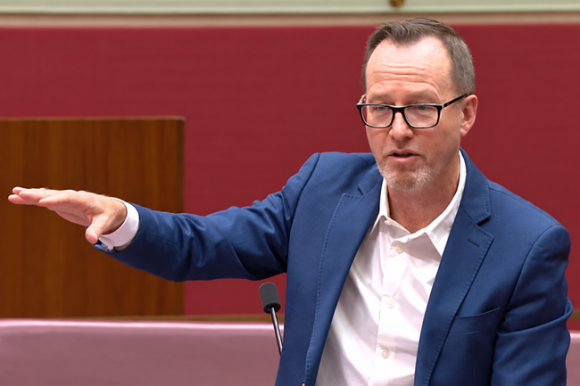
New York City Mayor Zohran Mamdani understood and capitalised on the politics of affect. He built a platform that focused on living costs that everyone could relate to — utilities, groceries, childcare and rent. But importantly, he built emotional connections with voters by listening to them and gaining their trust. By loudly expressing his love of New York, he built around himself an infectious sense of belonging, identity and New York pride. This combination proved irresistible for thousands of young New Yorkers who came out to volunteer on his campaign.
Mamdani proved you can counter a politics of fear by tapping into people’s sense of pride and identity, and regaining their trust. The Gen Z revolutions erupting around the world reveal the power of righteous anger amplified, shared and organised through digital networks. Gaza mobilised a global movement that connected imperialism, capitalism and ecological collapse. All of these movements harnessed the power of affect.
In today’s digitally connected landscape, feelings can spread across the globe like wildfire, but that emotional intensity, or affect, must be harnessed and connected to well-organised movements for genuine change. We need stories that recognise ordinary people’s struggles, acknowledge their fears and grievances, and funnel that anger towards the systems that benefit the few, at the expense of the many.
Too often, the Left seems to jump straight to solutions, looking for the policies that will effect change, without first acknowledging and harnessing the power of anger. Solutions require cognition, conscious thought and reason, but affect operates in a different register. It begins in the body, the feeling in your stomach that the system is rigged, that your children face a precarious future and that it is only a matter of time before the extreme weather events unfolding on our screens are at our door.
It is in this bodily register that the political fight for our futures begins.
Yuki Lindley is a student of philosophy of race, colonisation and Indigenous sovereignty.
 This work is licensed under a Creative Commons Attribution-NonCommercial-NoDerivs 3.0 Australia License
Support independent journalism Subscribe to IA.


Related Articles
- One Nation's immigration policy comes with a multibillion-dollar price tag
- One Nation’s James Ashby and the Liberals: Why orange is the new blue
- Want to know more about One Nation? Follow the money and 'sexy' planes
- EDITORIAL: Want to know more about One Nation? Follow the money and 'sexy' planes
- One Nation’s migration maths doesn’t add up