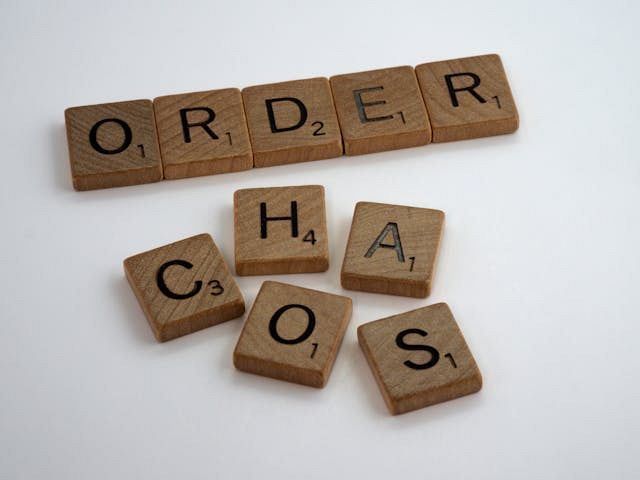
The present international crisis presents Australia with an opportunity to seek an independent path in the world that will also make the nation more secure in an increasingly tumultuous world, writes Dr Albert Palazzo.
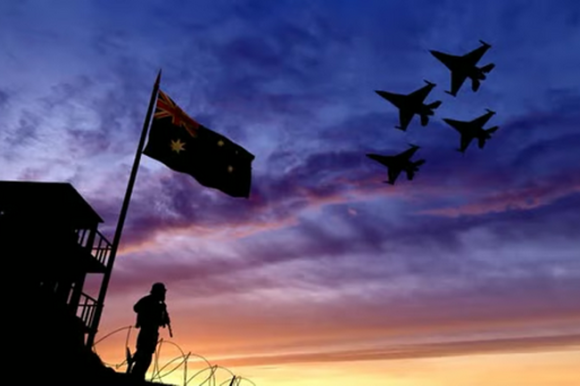
FOR MANY YEARS, the rules-based global order was one of the stated pillars of Australia’s defence policy. It featured in numerous government security documents as well as in statements by government officials. At the same time, our political leaders insisted that the global order was under attack from Russia and China and Australia needed to support the United States in its defence.
The government hardly mentions the words "rules-based global order" these days. It is almost as if it were never genuinely significant despite the effort put into extolling its importance. Perhaps Australia’s political class did not expect the United States, under the leadership of President Donald Trump, to be the one that destroyed the order that featured so strongly in Australia’s security policy.
When one of the pillars of a nation’s security policy collapses, it is reasonable to expect that a re-examination of that policy will take place. Perhaps the government might even release a statement acknowledging that the situation has changed. In this instance, however, the chosen course of action by Australia’s leaders is to hope that no one has noticed the seismic shift that has occurred. Australia’s total support for the Alliance continues as before, support for the illegal war with Iran is offered and the troubled AUKUS agreement is described as "full steam ahead".
Other countries have not been so hesitant to acknowledge reality. The speech given by Canadian Prime Minister Mark Carney at the meeting of the World Economic Forum was an exercise in telling it like it is. The rules-based order is gone and America is now a rapacious hegemon.
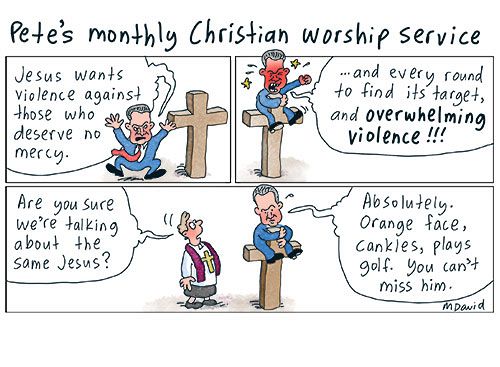
The key question Australians need to ask themselves is whether they want to become the vassal of a hegemon. If the hegemon in question was China, the answer would be an immediate resounding no, with the government leading the cheer. Yet this is the trajectory Australia is on in regard to the United States.
I must assume that the Australian Government does not want our nation to become an American vassal, but it is hard to tell.
To avoid such a fate, Australia must join with Europe, Canada and regional states to develop new ways to ensure our security amidst the turmoil and lack of trust Trump has engendered. From a defence perspective, it is essential for Australia to implement an independent national security policy that does not rely on the United States. The days of the "insurance policy" are gone. Our island geography, protected by modern precision strike missiles and long-range drones, allows Australia to defend itself, and to do so at a relatively modest cost.
Instead of building an Australian Defence Force (ADF) that is designed as a subset of the U.S. military, and which slips easily under a U.S. command to fit into the American-made American-led war, Australia should aspire to have a military whose primary purpose is to protect the nation — just like any sovereign state. I outline the necessary steps in my book, The Big Fix: Rebuilding Australia’s National Security.
Securing Australia is not only a matter for the military, however. Australia can play a leading role among middle powers to build new multilateral organisations to advance shared interests and protect itself from potential abuse by a hegemon. Regionally and globally, Australia should work with other states to moderate the power of the new hegemonic-led world order. The Department of Foreign Affairs and Trade (DFAT) should rightly be the lead for the nation’s security policy, with the Department of Defence in support.
Australia also needs to improve its resilience. The closing of the Strait of Hormuz has resulted in a fuel crisis that has demonstrated Australia’s vulnerability to overseas shocks which it cannot control. The government needs to implement internal reform so that Australia breaks its reliance on overseas fuels and thereby secures its own future from external interference. One obvious step to reduce the nation’s vulnerability to fuel disruption would be the electrification of transport. This would be an appropriate whole-of-government project, a term which is used to describe AUKUS.
Unfortunately, weapon projects have a limited flow-through to the rest of society, unless one works for a defence contractor (or owns its shares). By contrast, the electrification of transport would benefit virtually every Australian, either through new employment opportunities, lower energy costs and the reduction in the greenhouse gases that are driving climate change.
Another way to address resilience is to invest more in education — particularly at the research level — so that smart people can find smart solutions for what Australia and the region needs. Australia should also strive to manufacture more basic medicines and medical supplies, as well as other critical items. In a world of increasing turmoil, Australia can fortunately feed itself, but shortcomings in other areas must be addressed.
The Australian Government’s starting point, however, must be an acceptance and frank articulation of the new reality. In the first instance, I suggest that our leaders begin the journey by stating what is bleedingly obvious elsewhere — the rules-based global order is gone. Australia cannot continue to believe in the magic of AUKUS. A partner we cannot trust is no longer a partner and the sooner we accept this, the better.
 This work is licensed under a Creative Commons Attribution-NonCommercial-NoDerivs 3.0 Australia License
Support independent journalism Subscribe to IA.