The assassination of Iran's Leader Ayatollah Khamenei in an unprovoked first strike, starting an illegal war, and may come back to haunt the United States and Israel, as well as Australia. Dal Ouba comments.
RESPECTED by millions around the world, yet misunderstood and misrepresented by his own adversaries, the life and death of Iran's Supreme Leader Ayatollah Ali Khamenei will have significant repercussions for global politics and even the global economy.
Given the colonial and Eurocentric nature of the West, it is unsurprising that the latest violation of international law, with the unlawful attacks on the sovereign state of Iran, are sanitised with demonising speech about its political and spiritual leaders. Apparently, we all need to support the recent attacks on Iran, and overlook the expansion of Israel’s borders and hegemony in the Middle-East, or we risk vexatious claims of antisemitism or laughable accusations of supporting terrorism.
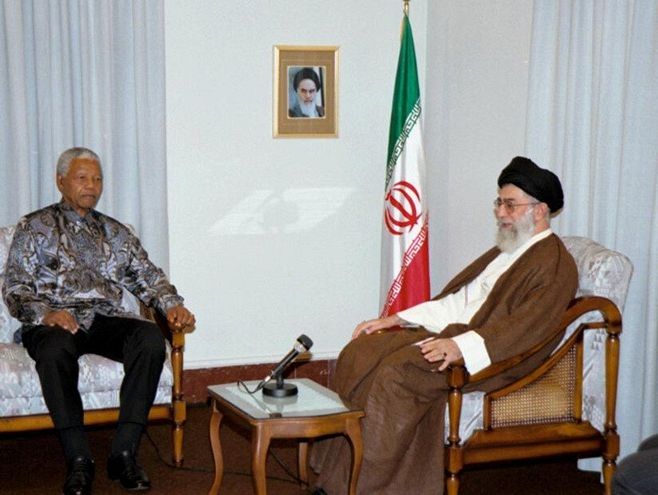
Yet, someone needs to explain to NSW Premier Chris Minns – who has overseen the dismantling of basic human rights in his State and the recent hosting of Israeli President Isaac Herzog, who is complicit in Israel's war crimes both in Palestine and Lebanon – that dismissing Ayatollah Ali Khamenei as "evil" only reinforces his greatness. Lauded by Nelson Mandela in 1992, who addressed him as "my leader", both of these iconic figures of the 20th Century were leaders of resistance against apartheid and Western hegemony and affirmed their support for Palestinian rights.
Ayatollah Ali Khamenei also constantly lobbied all political parties in Iran to consider the plight of struggling Iranians in their economic policies, with the belief that no Iranian should be living in poverty, despite the political friction it caused domestically. In contrast to other leaders in neighbouring Arab countries, his existence was shaped by simplicity and humility. In fact, moments before his death, he refused to enter a bunker as advised by his Security Council, citing the fact that the Iranian population itself did not have bunkers and that it would not be fair for him to claim special privileges. Furthermore, Ayatollah Ali Khamenei was the "Stop" sign for Iran building nuclear weapons and cited moral reasons for not supporting Iran’s development of them. His fatwa against the acquisition, development and use of nuclear weapons dates back to the mid-1990s and has been in place since.
The Israeli-U.S. attacks on his office – where he was killed alongside several senior figures, including Ali Shamkhani, the former Secretary of Iran’s Supreme National Security Council – coincided with news from Oman’s Foreign Minister stating that the most recent breakthrough talks between U.S. and Iran had "really advanced, substantially". He stated that Iran had agreed, during these indirect talks with the United States, to never stockpile enriched uranium.
So, why then was Ayatollah Ali Khamenei assassinated less than 24 hours later? Only an Epstein-compromised elite seeking to salvage his reputation and power could commit such an erratic act — which is exactly the description President Trump fits. Only a severely compromised individual would strike Iran without Congressional approval to appease Israel and create a diversion from incriminating Epstein files, which have increasingly made the corruption of compromised Western leaders apparent.
However, unlike previous Middle-East wars, which involved colonised Arab countries, Iran has proven to be a different adversary, with strategic alliances and capabilities the rich Arab countries have failed to harness. The assassination of Ayatollah Ali Khamenei on Saturday 28 February 2026 has only strengthened the resolve and unity of the Iranian population. For instance, which genuine Iranian citizen will still find themselves inspired by Western notions of feminism after the Sunday 1 March airstrike on the elementary girls school in Minab, Southern Iran, which killed at least 55 preschool girls and over 100 other older children, including a girls volleyball team?
The demonisation of not just Iran and its leaders, but anyone who dares to question Israel's growing hegemony over the Middle-East or mourn its leader Ayatollah Ali Khamenei will no doubt weaponised in this country. It will be be used to try to explain to the average Australian why it is necessary for them to support a war that threatens the Strait of Hormuz, where 20 per cent of the world's oil and gas supplies must pass through. It is under this false pretext of nobly combating evil that violations of international law are justified. It will be used again as Australian households are forced to bear higher petrol prices, higher inflation and rising interest rates with no "relief" in sight, according to the Australian Financial Review. It is under this false pretence of pre-emptive strikes, which only benefit Israel, that we are being led into another Iraq-style war, but with much more severe repercussions for the global economy and security.
The arrogant assertion that the assassination of Ayatollah Ali Khamenei will somehow destabilise Iranian society misses the critical notion — that he is revered by millions across the globe, including his own opponents. Granting him martyrdom has merely cemented his value in the eyes of those who respected him in a Pope-like way and unleashed formidable forces with which its foes must now contend.
Editor's note: Opinions expressed in this article may not necessarily reflect those of Independent Australia.
Dal Ouba is a researcher, educator and published writer with experience in writing about curricular and social justice.
 This work is licensed under a Creative Commons Attribution-NonCommercial-NoDerivs 3.0 Australia License
Support independent journalism Subscribe to IA.