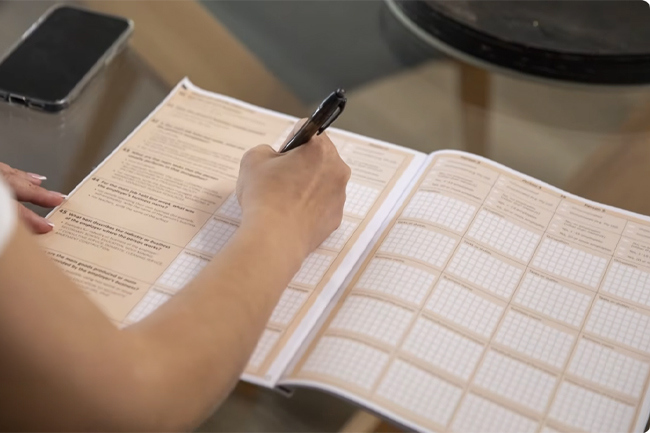
A flawed Census question has shaped decades of misleading data and funding decisions, writes Brian Morris.
THE ROOT CAUSE of false and misleading data being collected by the Australian Bureau of Statistics (ABS) over many decades was to have been finally rectified with a new and ethical question for the upcoming 11 August Census.
The ABS had known for years that a deceptive Census question could misdirect grants and deny access to critical federal funding. The question needed to be reworded.
But vested interests intervened, and together with federal government inaction, a correction of the long-standing error was abandoned and the historically flawed question has been reinstated.
Why is just one Census question so important?
An error rate of 15% for national statistics involving the economy, public health or environmental mismanagement would generate pointed questions across the entire media industry.
But media and public scrutiny is also needed to determine why and how misleading ABS data has been used to allocate critical funding — which directly impacts broad sections of society.
It affects the equity and ethics of childhood education; it gives impetus to the growing “class division” within society; it diverts billions in taxpayer funding; and this long history of data discrepancy raises questions of the political interface with powerful institutions.
What is the question?
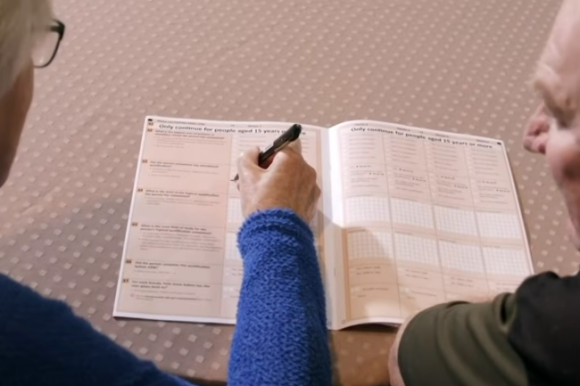
In 2021, the ABS Census asked its traditional ‘What is the person's religion?’ question, which assumes that we all have one. Unsurprisingly, just 38% of the population recorded ‘No religion’.
However, in a national survey by Essential Media in July 2021, the question asked was: ‘Do you have a religion?’ It recorded 54% of the public saying they had no religion. This is the question ABS was meant to have presented at the 11 August Census.
That’s a difference of 16% and within just one month of that same year, 2021.
Some may ask what’s wrong with this ABS question. To psychologists and to many of us, it seems clear that asking what a person's religion is is just prompting people to consider the religion of their childhood. One that they may no longer follow.
In this Census, the ABS was all set to ask the obvious and unbiased question: ‘Does the person have a religion?’ followed by a “Yes/No” box. If “No”, just move on — if “Yes”, then record your religion.
What happened earlier this year?
The Rationalist Society of Australia undertook a Freedom of Information search, which revealed that the Australian Catholic Bishops Conference (ACBC) wrote to Prime Minister Anthony Albanese expressing concerns about a proposed ABS change to the religious question. Somehow, this led to government action, which caused ABS to abandon the planned changes and reinstate the flawed question for the 11 August Census.
The outcome, when results are finally known in 2027, is not in doubt. To now continue with their traditional loaded question, the ABS figure is not expected to reflect the true percentage of Australians who have “no religion”. In 2021 it was ABS 38% and Essential Media 54%.
Census-driven data creates funding inequity
Government policy going back to John Howard had an aim to privatise public education. It continues to do that. The Gonski review of 2012 – to equitably and fully fund public schools – was never fully implemented, meaning that private schools take an increasing slice of taxpayer funding, special grants and benefits.
The spin-off is that Australia is becoming a more divided country, with an increasing level of private school elitism, while public schools suffer further decline. Jane Caro is an acclaimed author and a Walkley Award winner, and she lays out in full detail this whole narrative in her 2026 book, Rich Kid, Poor Kid: The Battle for Public Education.
A transparent public inquiry is needed into the entanglement of current and recent governments, the Australian Bureau of Statistics and how/why religious institutions have carte blanche to dictate their religious requirements to certain parliamentarians and public servants.
Ethical and equitable access to childhood education equates to a fairer and more balanced society. At what point will we finally recognise that fully secular countries are more harmonious and stable than those nations built on the tenets of conflicting religions?
So it’s not simply a call to mark “No Religion”, if you honestly don’t have one, when completing the Census on 11 August. But it is also to recognise the social damage that’s been caused.
This all goes back to the last century, where the ABS has continued to collect misleading data, simply by failing to correct a question that was fatally flawed from the outset. That’s especially disappointing when the ABS was originally seen as the “gold standard” for data accuracy.
Brian Morris is a former journalist and founder of the National Secular Lobby (NSL) and Plain Reason.
 This work is licensed under a Creative Commons Attribution-NonCommercial-NoDerivs 3.0 Australia License
Support independent journalism Subscribe to IA.