Australia’s reliance on the lethal poison 1080 to control invasive species is exposing deep regulatory failures, ethical conflicts and a worsening pest crisis, writes Dr Simon Pockley.
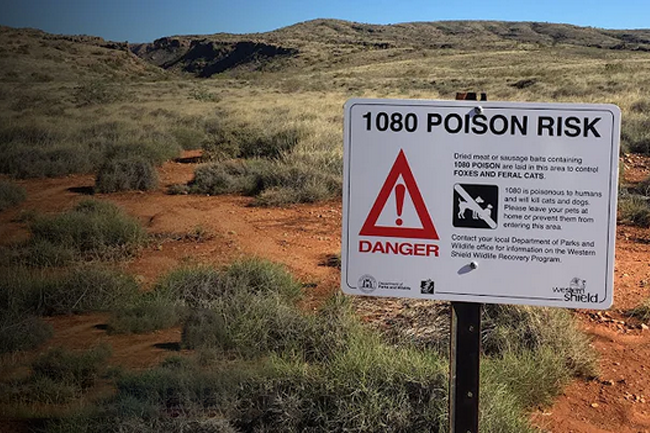
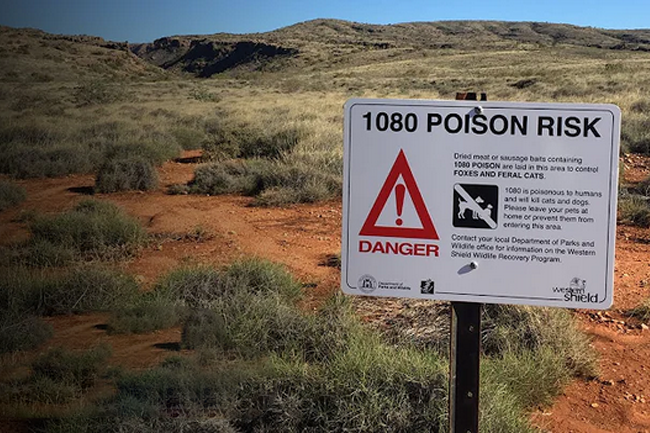
EVERY SIX MONTHS, I receive phone texts from the Warrumbungle National Park warning me about “aerial/ground fox/dog baiting”. Yet wild pig and goat numbers are increasing while birds and insects are vanishing.
So, I took a closer look. What I found were half-truths, colliding ethics, broken regulatory authorities and the sense that we are at another tipping point of environmental degradation.
There is no argument that foxes, pigs, cats and rabbits contribute to the high extinction rate of native animals, causing severe environmental degradation, as well as significant agricultural damage. In NSW, pest animals are regulated under the Biosecurity Act 2015, which requires landholders and managers to control them. The National Parks and Wildlife Service (NPWS) simply follows the recommended best practice of deploying baits loaded with 1080 (pronounced “ten-eighty”).

Ten-eighty (sodium fluoroacetate) is an odourless, tasteless powder that dissolves in water. It's one of the world's most toxic manufactured poisons, with no known antidote. The World Health Organisation rates it Class Ia — the highest toxicity level. Patented in Germany in 1927 as an insecticide, it carries a dark mythology: allegedly rejected by Nazis for exterminating Jews because it would kill the guards and found by the CIA in Saddam Hussein's stockpile.
The name 1080 was simply a laboratory accession number trademarked by Monsanto, which sold it – along with manufacturing rights and facilities – to Tull Allen of Tull Chemical Company, Alabama, USA, in 1955.
In 1972, 1080 was banned in the USA. Despite Tull Chemicals being deregistered by the Environmental Protection Authority (EPA), it continued to manufacture and sell the poison. Though banned or restricted globally, grandson Charles Wigley supplied Australia (200 kg annually) and New Zealand (2,300 kg — where they aerial bait). Both now rely on stockpiles after Tull's plant burned down in 2024.
The core rationale for 1080 use is that it's a naturally occurring toxin in some Western Australian native plants, to which native animals have evolved tolerance — unlike introduced predators. While true for some native animals in WA, this is not true in the eastern states where such plants are absent. In Tasmania, for example, 1080 is used to control native mammals in timber plantations.
Species specificity also depends on careful attention to 1080 concentration in baits, bait material, size, placement, timing and carcass retrieval. However, in the field, non-target and secondary poisoning from eating carcasses kills domestic animals, birds, insects and native carnivores.
According to the Australian Pesticides and Veterinary Medicines Authority (APVMA)'s Final Review Report and Regulatory Decision:
The most likely avian casualties based on carcass recovery appear to be introduced species such as sparrows, starlings and pigeons, scavengers such as currawongs, corvids and kookaburras, and occasional raptors in pig poisoning campaigns. Among mammals, dogs are the most common non-target casualty, usually following consumption of meat baits or contaminated carcasses. Macropods, possums, wombats and rodents may be killed by grain or carrot baits.
In Australia, the APVMA is the main regulatory body for 1080. It regulates 1080 up to retail sale; state regulations then govern its use.
In 2023, a damning independent review by Clayton Utz found serious systemic issues with APVMA administration, governance and culture. The regulator had been captured by the agricultural chemical industry due to dependence on levies from the companies it regulated. Both the CEO and board chair subsequently resigned.
Senator Murray Watt said in 2023:
“The report also found that former Agriculture Minister Barnaby Joyce’s decision to move the regulator to Armidale resulted in a loss of corporate knowledge, a loss of corporate culture and a loss of experience and knowledge of public sector values.”
Recently, the Federal Government rejected a recommendation to relocate APVMA to Canberra, fearing further disruption.
Two main advocacy groups promote 1080 use: the Invasive Species Council (ISC), which drives political advocacy, and the Centre for Invasive Species Solutions (CISS), which drives research.
Gillian Basnett, formerly from CISS, said:
“Effective 1080 baiting is the ‘thin green line’ that protects many of our threatened and other native species from extinction.”
Since the 1960s, growing community opposition in Australia and New Zealand has called for phasing out 1080. Objections stemmed from observed deaths of pet dogs, dingoes, target species and wildlife. In 2005, responding to petitions, APVMA oversaw a 1080 reconsideration.

The 2008 final report ignored sole-supplier risk and excluded animal welfare:
From the public submissions made to the review, it was evident that there was strong public concern about the humaneness of 1080 and that the community considered that this issue should be considered by the review. While the APVMA noted the community concerns, it did not base its regulatory decisions on this matter as animal welfare is not a specific criterion under the Agvet Codes that can be taken into account in making decisions about the future use of 1080.
Anti-1080 groups include The Greens, Coalition Against 1080 Poison, the Animal Justice Party (AJP), and Animal Liberation. Their opposition ranges from humane concerns to rejecting terms like “invasive, alien, feral and pests” as human supremacists — arguing non-Indigenous human arrivals are the ultimate perpetrators of ecological devastation.
In 2020, the Invasive Species Council published a rationale entitled 1080: A Weighty Ethical Issue, which states:
‘Killing introduced animals is often the best overall outcome both for animal welfare and conservation. Before the eradication of a population of about 50 cats from Tasman Island, they were killing up to 60,000 seabirds a year. If we think over larger timescales, the death of those 50 cats will save millions of sea bird lives.’
The document ignores Indigenous perspectives but prioritises trials of humane 1080 alternatives. By 2023, Animal Welfare concluded 1080 is inhumane. Pro-1080 groups dispute this, arguing opposing claims constitute misinformation.
In Australia, dingoes are now at the centre of ethical and cultural tensions between livestock protection, biodiversity conservation, Indigenous heritage, tourism and even scientific credibility. In some states, national parks and regions, they're protected; in others, they are pests.
A 2021 UNSW genomic study found 99 per cent of wild dogs are pure dingoes or dingo-dominant hybrids, not invasive ferals. Consequently, control programs target Australia's apex predator, which can suppress key 1080 targets: foxes, feral pigs and rabbits.

The 2023 National First Nations inaugural dingo forum produced the Dingo Declaration, demanding non-lethal coexistence. Somehow, acceptable dingo predation on wildlife must be reconciled with livestock losses.
I spoke to Dr Linton Staples, a 40-year pest-control veteran who pioneered 1080 fox baiting through Animal Control Technologies Australia (ACTA, now Kiwicare-owned). He also developed faster-acting non-1080 baits for foxes, cats and pigs.
Dr Staples warns of legislative barriers (especially dingoes), skill loss and government agencies prioritising regulation over action.
“We are heading for a pest crisis. Control options are being restricted by a failure to assess the balance of benefit over acceptable risk. Being absolutely effective or absolutely safe is an impossible threshold. We need a paradigm shift in approach.”
Staples also warns of the risk of highly contagious African swine fever (ASF) spreading via wild pigs — one threat among many. There's no space here to detail Australia's biosecurity failures.
Dr Carol Booth, Invasive Species Council policy director, recently said:
“We are utterly shocked by the report’s findings. When biosecurity staff themselves are reporting an alleged lack of consequence for repeat offenders and inconsistent enforcement reportedly due to political pressure, that should set off alarm bells at the highest levels of government.”
Australia spends over $25 billion annually on pests and weeds. Weeds cost five times more than vertebrate pests. Yet landholders report rampant feral animal increases despite baiting, trapping, fencing and shooting.
Tech optimists point to autonomous robots controlling weeds and envision heat-sensing armed drones killing invasive pests humanely and cost-effectively. Scaling across vast areas – especially Indigenous lands – creates regulatory nightmares: CASA approvals, chemical licenses, ethics and surveillance concerns. Still, there are exciting advances in genetic bio-controls and advanced telemetry is enabling high-tech traps.
A radical approach (anathema to government thinking) would be to augment top-down government programs with bottom-up landholder empowerment, as exemplified by Landcare's community-led pest control success.
Back in the Warrumbungles, I spoke to Ranger Cassius. He told me the Park did not have the resources to monitor the 1080 baiting effectiveness, but that it would continue anyway.
Despite a decade of worsening State of the Environment reports since 1996, neither the Albanese Government nor the opposition shows any appetite for addressing Australia's collapsing environmental values.
Public awareness of reported crises is muted by economic and political priorities, policy inertia and fragmented media coverage.
Dr Simon Pockley is a former chair of the Southern Otway Landcare Network and a senior business analyst at Australian National Data Service. You can follow Simon on Twitter @simonpockley.
 This work is licensed under a Creative Commons Attribution-NonCommercial-NoDerivs 3.0 Australia License
Support independent journalism Subscribe to IA.