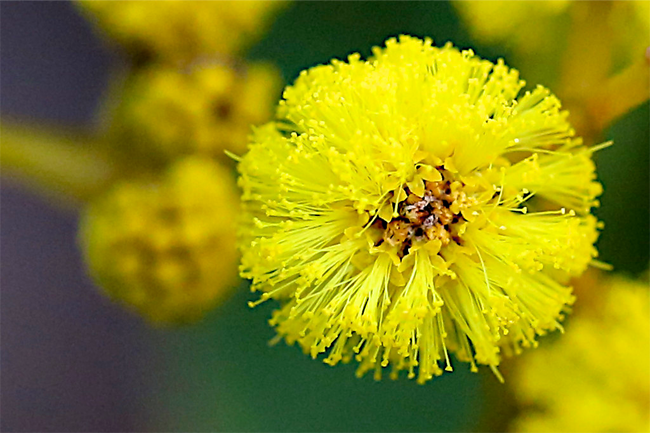
Australia’s golden wattle is more than a national flower, symbolising unity, resilience and the democratic spirit of a nation, writes history editor Dr Glenn Davies.
THE FIRST DAY of September has many names.
Some welcome it as spring’s dawn, a time to celebrate nature’s renewal. For others, it is National Wattle Day — a time when the smells of spring are in the air as well as Australia's vivid gold blossom.
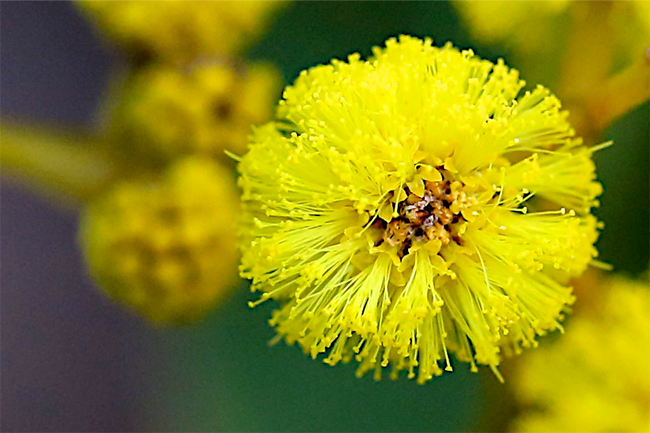
I have written before on how National Wattle Day is celebrated annually on the first day of spring. On this day, a sprig of Australia's national floral emblem, the golden wattle (acacia pycnantha) is traditionally worn to symbolise unity, resilience and national identity.
The wattle is the largest genus of flowering plants in Australia. These acacias are extremely diverse and found in habitats from rainforest to arid lands. You could plant two or three different acacia species for every day of the year and still have plenty left over.
Wattle grows in all parts of Australia, with differing varieties flowering throughout the year. It is a broad and inclusive symbol of an egalitarian, classless, free citizenry.
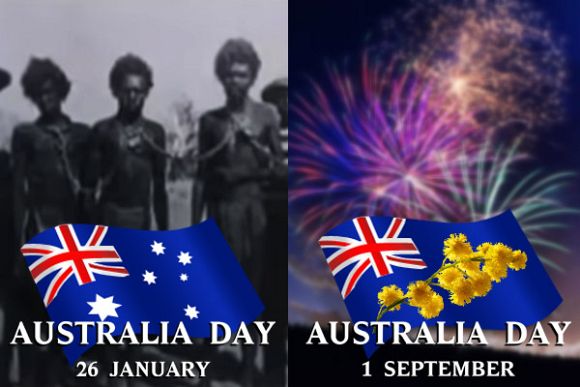
The golden wattle, though, is the only wattle that grows all over Australia. This democracy of wattles was the overpowering reason why the wattle was chosen as the national floral emblem in the early 20th Century. It represents the spirit of the Australian people, thriving despite droughts, bushfires and harsh conditions. Its bright yellow blooms symbolise hope, renewal and unity, making it a powerful emblem of national pride.
Wattle celebrations first arose as occasions when earlier generations of Australians stood up and said: “I am from this land. This place is home.” It is a symbol that comes directly from our land. Wattle is Australian and represents us all. Like the Southern Cross, the appeal of wattle is not first and foremost to the idea of nation, but to the idea of place.
The first known use of wattle as a meaningful emblem in the Australian colonies was in Hobart Town in 1838, when a resident suggested wearing a sprig of wattle to celebrate the golden jubilee of the landing at Sydney Cove. In this seemingly small gesture lay a suggestion of an independent Australia.
From the 1860s to the early 1900s, there was a push for Australia to recognise the wattle as the national flower, which was further compounded by the establishment of the Wattle Club in Victoria. Founded by Archibald James Campbell, an ornithologist and field naturalist who was passionate about Australian wattles, this club organised special outings, especially during September, for wattle appreciation. Archibald was one of the first people to mention the creation of a special day to celebrate Australia’s most famous flower.
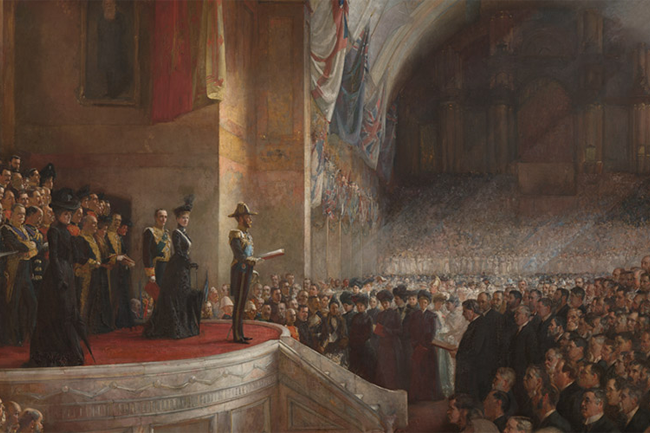
In 1910, the Wattle Day League was formed and established the annual celebration of Wattle Day on the first day of spring. The Wattle Day League was headed by Sydney Botanic Gardens director, JH Maiden, and founded multiple branches across the country.
Support for Wattle Day continued even during the First World War when wattle sprigs were sold to raise money for organisations like the Red Cross. As a tradition, pressed wattles were sent in letters to wounded soldiers.
Wattle touches all levels of society.
Early pioneers and World War I diggers were buried with a customary sprig of wattle. Then Governor-General Sir William Deane took wattle blossoms to Switzerland to commemorate young Australians who died there. Prime Minister John Howard also wore sprigs of wattle at ceremonies after the Bali bombings.

Terry Fewtrell, President of the Wattle Day Association, said in a 2014 Australia Day speech that:
“...wattle has journeyed with us in kitbags, pockets and letters to places that become synonymous with our shared story; be they Gallipoli, Kokoda or Swiss canyons.”
Australian athletes wear wattle-inspired green and gold uniforms, and those honoured with an Order of Australia receive awards with an insignia designed around the wattle flower.
The green and gold of wattle leaves and blossoms were declared our national colours in 1984, then in 1988, the wattle was adopted as the official national flower. Subsequently, National Wattle Day was formally declared on 1 September 1992, standardising the celebration across the country.
Australians may have made a home for themselves among the gum trees, but it is the wattle tree that has found its way into Australian republican symbolism. In 1993, the Australian Republic Movement gave its support to Wattle Day celebrations being held throughout Australia on 1 September. Wattle captures something crucial to the success of the republic — feeling for country. It is a unifying symbol.
This year, 1 September marks the 34th anniversary of the declaration of National Wattle Day, as well as the 33rd anniversary of the Australian Republic Movement giving its support to National Wattle Day celebrations throughout Australia.
Annual Wattle Day luncheons had been held around Australia by Peter Consandine, national executive director and founder of the Republican Party of Australia, on or near 1 September from 2006 until his death on 18 May 2026.
The Republican Party of Australia was founded on 11 January 1982 by Peter Consandine and four others; however, Consandine was to become the mainstay of the party. The RPA continued down a separate path since the 1990s to the more high-profile Australian Republican Movement, which has steadfastly kept an apolitical advocacy approach, whereas the Republican Party of Australia has actively sought political election for its members.

Dr Benjamin Jones recently wrote in IA that:
‘Peter Consandine remained steadfast in his conviction that Australia was a unique and vibrant nation that deserved its own head of state for well over four decades.’

Let’s all take a moment this National Wattle Day and reflect on the wattle flower, which symbolises an egalitarian, classless, free citizenry.
So, when the blaze of wattle lights up the Australian landscape each year, let’s all remember that the wattle is a symbol of our land that unites us all.
2026 Wattle Day scheduled events can be found HERE.
You can follow history editor Dr Glenn Davies on Twitter/X @DrGlennDavies.
 This work is licensed under a Creative Commons Attribution-NonCommercial-NoDerivs 3.0 Australia License
Support independent journalism Subscribe to IA.