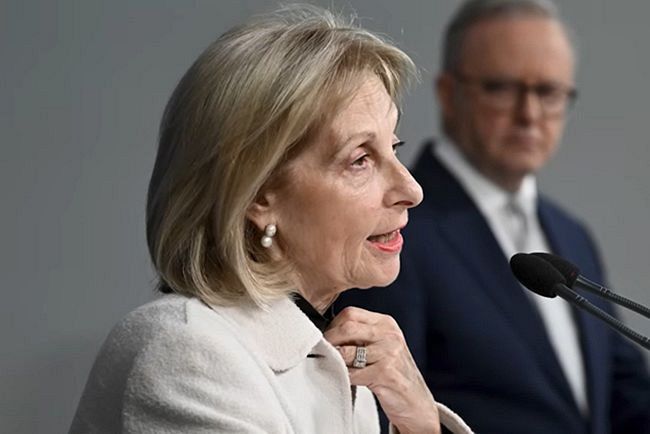
Australia's Special Envoy to Combat Antisemitism, Jillian Segal, is the most divisive person in Australia, a threat to our right to protest, free speech, our national broadcasters and educational institutions, writes George Grundy.
IT'S HARD TO put a finger on the most profound change to Australian society in the last few decades. Multiculturalism, indigenous rights, female workforce participation and economic and digital transformation have all shaped modern life in this country in their own ways, but in the latter stages of 2026, a sweeping series of far-reaching changes are being implemented to nearly every aspect of public life.
These developments are coming at a pace rarely seen in the world of parliamentary politics, and with so little public debate that Australians may not even notice before they’re here at our doorstep.
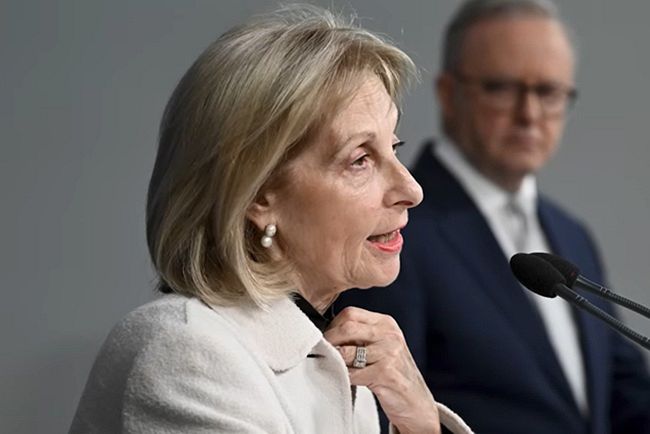
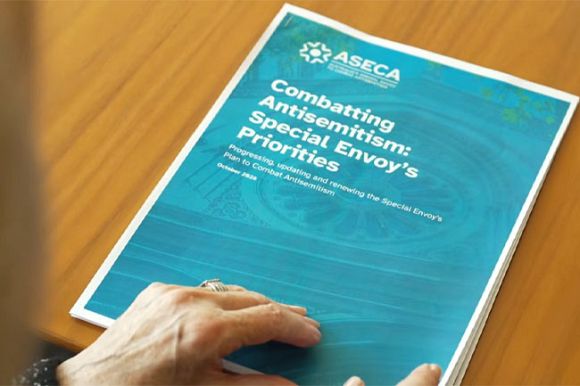
Jillian Segal AO, Anthony Albanese’s ‘Special Envoy to Combat Antisemitism’, published her second major report last month, setting out a breadth of policy proposals that include (but are not limited to) major reforms to Australia’s media, universities, education, right to protest and immigration and visa systems.
Such is the scourge of antisemitism in Australia, Segal contends, that public life must change forever, mostly involving the winding back or restricting of the rights of expression which most Australians take for granted.
Segal’s recommendations, unvetted by parliament, are already being implemented, as the frigid air of book bans and artistic repression apparently becomes the norm, so an examination of Segal, her background and her plans for the future of Australian society is something everyone should consider.
First, it is important to understand who Jillian Segal is, and how she came to be appointed to this hugely powerful position.
Segal is one of 32 ‘special envoys’ in mostly Western nations around the world, charged with combating antisemitism.
By her own telling, Segal credits Ambassador Deborah Lipstadt and (U.S. antisemitism special envoy) Aaron Keyak with successfully pressuring the Australian government into appointing a dedicated antisemitism envoy in 2024.
Given the background of the Americans involved in the initiative, and Segal’s close relationship with SECCA (‘Special Envoys and Coordinators Combating Antisemitism’, established by New York’s World Jewish Congress) it would not be a stretch to say that Israel also played a significant part in Segal’s appointment.
Segal’s first report was issued in July 2025 and described the rise in antisemitism in Australia as a ‘national crisis’, but a second report issued just last month was even more strident, and now appears to be supported by a number of federal ministers and state politicians.
Because of this, Segal’s reports and public statements deserve the utmost scrutiny, as they precede publication (due on December 18th) of the government’s Royal Commission on Antisemitism and Social Cohesion.
On the few occasions a public institution has been afforded the chance to critique Segal’s work, it hasn’t been pretty — in August a NSW Supreme Court judge called her preferred (IHRA) definition of antisemitism ‘detached from reality’. Undeterred, Segal’s report says she wishes to expand IHRA training to all government departments in the country, ‘at scale’.
Jillian Segal’s October report contains a great deal of (often evidence-free) opinion that should make Australians queasy.
For example, Segal insists that progressive activists and (perceived left-leaning) institutions like universities are the real hotbeds of antisemitism, whilst all but ignoring the danger from neo-Nazis and the Australian Far-Right (in contradiction to ASIO’s assessment).
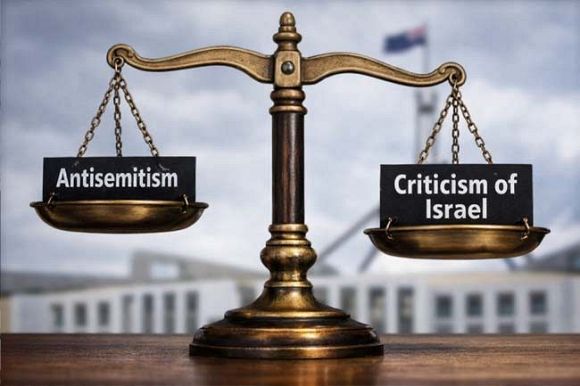
‘The most pervasive manifestation of antisemitism facing Australia today’, Segal writes, ‘Is hatred viewed through a modern, progressive lens.’
For those with a knowledge of history, it is more than concerning to see a Jewish advocate seemingly untroubled by actual Nazis, who just this August staged a protest in which Hitler Youth slogans were chanted and an ‘Abolish the Jewish Lobby’ banner was raised.
Even more extraordinary is that Australia’s Far-Right politics overlap significantly with Jillian Segal's husband, John Roth, who (through his family trust) donated $50,000 to the conservative campaign group ‘Advance’ (Segal denies any involvement in her husband’s political affairs).
Just to recap, Australia’s antisemitism Special Envoy appears unconcerned about the threat posed by the Far-Right and neo-Nazis, and her husband made the second-largest donation (in 2025) to a fringe political party that specialises in hateful, racist ideology and disinformation.
To take just one of innumerable examples, last July Advance posted an AI image on Facebook, showing brown-skinned and hijab wearing immigrants queuing outside a house, and suggesting that the housing crisis was caused by (apparently Muslim) immigration.
The Jewish Council of Australia has condemned Advance. It appears that the Segal household, so concerned about combating antisemitism, is also happy to financially support other forms of bigotry.
It’s hard to overstate just how powerful Jillian Segal’s position as Special Envoy makes her. Segal reports directly to Home Affairs Minister Tony Burke as well as the Prime Minister.
As such, her pronouncements are subject to very little scrutiny, and her recommendations are quickly becoming policy.
Across a broad range of institutions, Segal has sought to change Australia, from our universities, libraries, media, judiciary, immigration policies, even schools and kindergartens — apparently a sweeping change to nearly every aspect of public life is required.
If Segal has her way, visa holders and visitors to this country will be subject to "checks", to see if they’re antisemitic.
Given the recent judicial opinion that Segal’s definition of antisemitism is ‘detached from reality’, Australians should be profoundly concerned as to who might be excluded from visiting or living here, should Segal take charge of our borders.
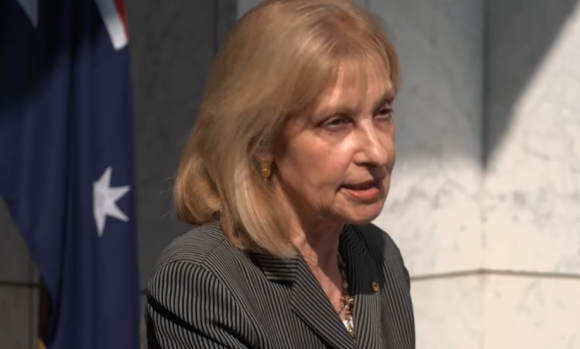
Segal has advocated changing school curricula to educate children on matters such as antisemitism, the Holocaust and Jewish history.
This seems reasonable enough, but if even-handedness in the treatment of world affairs is the goal, then surely there would be no objection to Australian children being taught about Israel’s recent conduct in Gaza. Don’t we want our kids to know the full picture, and to develop critical thinking?
If the Jewish Council of Australia can call Israel’s actions in Gaza ‘ethnic cleansing’ and ‘genocide’, why is it antisemitic to try to understand their view?
Isn’t the teaching of just one point of view a form of propaganda? Isn’t exceptional treatment for one societal group the definitional opposite of cohesion?
These are uncomfortable questions to be asking about a community that has suffered greatly through history, and endured horrific tragedy at Bondi last year, but it is Segal who has sought religious exceptionalism, often in the face of public disquiet, and not just in our schools.
Just this month, a New South Wales council refused to display a world-renowned artwork known as the ‘Wall of Tears’, commemorating and paying homage to 18,457 Palestinian children killed in Gaza.
Shoalhaven City Council cited the risk of ‘community conflict’ caused by the exhibit, but the implied logic should make Australians uneasy. Protesting an artwork commemorating the slaughter of children would, surely, only make sense if you felt that the reported death toll was untrue, or perhaps if you felt that the death of those children was justified.
Indeed, ultimately those objecting to the ‘Wall of Tears’ must be people who think what has happened in Gaza is okay. Pro-genocide, you might say.
Just think about that one more time — an Australian council refusing an art exhibit, because it might offend people who are comfortable with the mass slaughter of children.
In 2026, a wall simply featuring a list of children's names is deemed too dangerous to display to the public. What are we doing here?
It’s easy to judge the validity of any moral position — just try it the other way round.
Imagine the outcry if an Australian council refused to show an art exhibit paying homage to Israeli children murdered in the October 7th attacks, and justified their refusal based on the fear that the artwork might attract pro-Palestinian protesters. It would, surely, be on the front page of every newspaper in the land.
Imagine if Jillian Segal were from any other minority group in Australia. Imagine if she were Muslim, with a hotline to the Prime Minister, and a plan to revolutionise teaching in our schools and stifle our right to protest.
This is not to be pejorative to Muslim Australians (who themselves regularly report being victims of racism), just a means of illustrating just how uniquely antisemitism is being treated.
Just as an aside, Jews make up 0.46% of the Australian population, whereas Muslims are 3.2% — there are nearly seven times as many Muslims, as yet unserved by a Special Envoy who enjoys as much power as Segal.
To take another example, Asian Australians (who make up 17.4% of the population, nearly forty times the size of our Jewish diaspora) regularly report being the victims of discrimination, with a Lowy Institute survey indicating 37% facing some form of discrimination in a single year.
This large group, reporting regular discrimination, have no special envoy working on their behalf.
One wonders what Indigenous Australians, by some distance the most impoverished group in our society, make of it all. Australia was forced to hold a nationwide referendum to even consider offering them a Voice, and still felt this was a bridge too far (Advance was a major player in the ‘No’ vote).
Now the envoy for a much smaller community is seemingly empowered to change nearly every aspect of public life, apparently without a care for these other groups and their struggles.
When parsing public statements by Segal and others, Australians should be cautious, because political discussion on antisemitism is often very carefully phrased, in ways that at first glance seem reasonable.
To take one example, (Liberal candidate for Victorian Premier) Jess Wilson has decried "violent protests, with no action in response". Such is the threat, Wilson added, that if elected she would ensure that protests in Victoria would require government-issued permits.
On the face of it this might seem reasonable if it is accepted, prima facie, that violent antisemitic riots are taking place (in fact the worst recent moment of public unrest was the thuggish police response to Sydneysiders protesting a visit from the President of Israel, Isaac Herzog, a state widely condemned for carrying out a genocide). But in the very next sentence, Wilson singled out antisemitism as apparently the only form of racism worthy of being named.
It’s a pattern seen again and again — seemingly reasonable statements denouncing nebulous concepts like "hate", used as barely concealed cover for the defence of Israel against legitimate criticism.
Organisations that her government considered hateful, Wilson added, would have their funding cut.
Again, that seems unarguable, until you consider that many antisemitic groups consider flags, placards or spoken words "hateful". Ultimately, this leads to the kind of legal absurdities already seen in Queensland, where just saying the words ‘globalise the intifada’ is outlawed.
Just next week the Combat Antisemitism Movement is co-hosting a local government summit aimed at educating councillors on the evil of antisemitism, but media watchers have pointed out that their list of "examples" of antisemitism often includes things as innocuous as raising a Palestinian flag, or using the word ‘genocide’. Jillian Segal, naturally, will speak at the summit.
Australians don’t need their imagination to see where this ends. In the UK, successive Labour Prime Ministers have overseen an Orwellian application of the law that criminalises saying that you support Palestinian action, leading to the ludicrous spectacle of elderly women being led away and charged with terrorism offences, simply for carrying a piece of cardboard with words written on it.
To further illustrate this absurdity, an activist recently attended a UK protest holding a sign that read ‘I support genocide, I oppose Palestinian action’ and was untroubled by the police.
This month it was announced that the maximum fine for Australian universities that do not ‘deal effectively’ with antisemitism will increase from $40,000 to $2 million, a fifty-fold increase.
Universities, for obvious reasons, are often home to vibrant political debate, and as such regularly find themselves targets for right-wing governments wishing to crush dissent.
It’s not hard to imagine how the threat of million-dollar fines will force universities to quash any attempt by students to express themselves.
To put it another way, Jillian Segal, unelected, has succeeded in dramatically quelling political expression in one of Australia’s most cherished institutions. From now on, Australian students will be free to protest any issue they like, just not Israel.
To be clear, antisemitism is racism, and should be abhorred by every Australian. What happened at Bondi was an atrocity. There is every reason that the safety of Jewish Australians should be of paramount concern.
But there is also legitimate public disquiet about the actions of the state of Israel, which has the world’s only undeclared nuclear arsenal, has attacked six countries since 2023 and is the primary driver of the disastrous war in Iran.
Under the rule of Benjamin Netanyahu, a wanted war criminal, Israeli society appears close to fascism, as survey after survey continues to show strong Israeli public support for the slaughter in Gaza.
Much caution should also be used when suggesting antipathy towards Israel as the primary driver of a worldwide upswing in antisemitism. Almost half of America’s Jewish population (the second largest on earth) oppose Israel’s actions in Gaza, with 61% accusing Israel of war crimes.
Notably, 80% of Jewish Americans believe Israeli and AIPAC actions have increased antisemitism.
Judaism and the state of Israel are not the same thing, and plenty of people are able to make the distinction, but it should be noted that senior Likud party members (and Netanyahu in particular) are the ones who most often conflate the two, instinctively accusing critics of Israel of broader antisemitism.
Jillian Segal has also done the same.
Looming in the background to this entire story remains Israel’s genocide in Gaza (Segal called the Palestinian death toll ‘grossly inflated’), as well as its egregious lawlessness in the West Bank, Lebanon and beyond.
Its (caretaker) Prime Minister is a wanted war criminal, and the immiserated Palestinians are still being slaughtered each day in an ongoing humanitarian catastrophe, despite the sick joke that is the ceasefire.
No one could seriously argue that a change in Israeli behaviour wouldn’t result in a downturn in antisemitism, no matter how wrong-headed the connection may be. Nearly four in five Australians have an unfavourable view of Israel; now we are tearing down the fabric of this country to limit the public space for such sentiments.
Segal’s term as Special Envoy runs to July next year. Just as with the ruinous AUKUS, Prime Minister Albanese finds himself backed into a corner — firing Segal would mean admitting he made a mistake, with the associated political damage that would cause (despite the cushion of his enormous parliamentary majority).
So Australia is forced to continue to deal with a rogue public servant, with clear links to a foreign nation as well as a domestic extremist political group, acting wildly beyond her remit and attempting to rewrite Australian public life, solely to the benefit of one very small part of our community.
Segal is the most divisive person in Australia, a threat to our right to protest, free speech, our national broadcasters and educational institutions.
In short, a threat to Australian democracy.
Segal is implementing one of the broadest changes to Australian public life in generations. She is unelected, unaccountable and unrepentant. Her position should be abolished and she should be sacked today.
George Grundy is an English-Australian author, media professional and businessman. You can follow him on Twitter @georgewgrundy.
 This work is licensed under a Creative Commons Attribution-NonCommercial-NoDerivs 3.0 Australia License
Support independent journalism Subscribe to IA.


Related Articles
- Jillian Segal's 'Understanding Antisemitism in Australia': Putting Israel beyond criticism
- Jillian Segal's report turns criticism of Israel into a punishable offence
- Segal’s anti-antisemitism role draws criticism over free speech concerns
- Jillian Segal's plan to combat antisemitism straight from lobby group wish-list