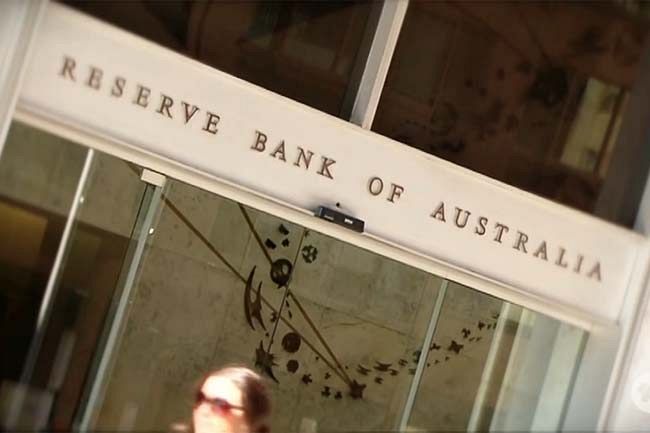
While politicians argue over costly reforms, the RBA’s quiet rate cuts could be doing the heavy lifting for Australia’s economy — and its Budget. Stephen Koukoulas reports.
INTEREST RATES are something of an obsession for Australians. This fixation is usually viewed from the prism of the somewhat high level of household debt and how interest rate changes will impact mortgage holders.
For those with a mortgage or small business loan, lower interest rates free up cash flow and can make the cost of living and cost of doing business more comfortable. When interest rates are cut, economic growth, spending, job creation and wage increases are higher than when interest rates are increased.
It is as simple as that.
The Reserve Bank of Australia (RBA) and other central banks use interest rates in this way to manage their targets for inflation and full employment.
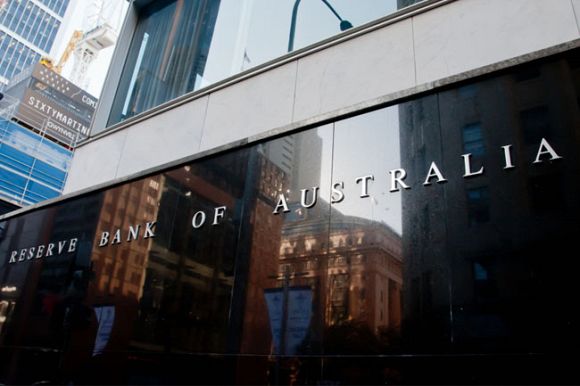
In the context of the upcoming Productivity Summit, commissioned by Treasurer Jim Chalmers, many issues and economic reforms that can work to enhance the efficiency and productivity of the economy will be canvassed. These can be costly for the Budget, involve lags of many years to yield benefits and have an element of complexity that can make the changes hard to legislate and get through Parliament.
Many suggestions at the Summit will be worthy, to be sure, but will run into the problems of timeliness, complexity and politics.
Overlooked will be how simple, efficient and effective interest rate changes can be.
Think about a change in monetary policy. Interest rate changes do not need to consider whether there are costs to Budget revenue, or whether any political compromise of legislation is needed.
There is also a substantial productivity boost from low inflation and accompanying low interest rates, and the impact that feeds into a stronger economy.
An interest rate change is also easy to make.
Every six to eight weeks, the Monetary Policy Board of the RBA meets and it can decide to increase, reduce or keep interest rates steady. There is no preconceived bias. The Board reacts to the fresh economic and market news and acts accordingly.
Decisions are taken and implemented immediately.
Each interest rate decision is “free”. The push of a button reveals the decision on the RBA web page.

What’s more, if or rather when, economic circumstances change, recent interest rate decisions can be added to or, when necessary, reversed. Again, it can be done quickly, easily and with no laborious consideration of the politics of the issue.
Aggressive changes can be made, too, if required. Think of the rate cuts of 100 basis points at a time when the Global Financial Crisis was unfolding in 2008.
And these changes can deliver a meaningful, quick and potentially powerful shot to the economy.
This is unlike other economic reforms, such as negative gearing, superannuation concessions, education, skills and training programs or company tax, which can be slow to deliver benefits.
In the current interest rate cutting cycle, which clearly has further to run, the stimulatory effects on the economy have not really started. Two 25 basis point rate cuts, in February and another in May, have barely impacted.
Which brings us to another critical point in how interest rates can spread their impact in the Government’s Budget settings.
This is not a direct effect, but it is through the impact on economic activity and, to some extent, the interest costs on the Government’s borrowing.

Interest rate cuts to help lock in a Budget surplus?
It is rarely, if ever, mentioned how RBA interest rate settings can impact the Budget balance of the Federal Government.
They do.
Interest rate cuts that boost household spending will boost GST collections. More jobs and higher wage growth mean more PAYG income tax collections for the Federal Government. Growth in company profits from lower interest rates boosts company tax payments. To the extent that lower interest rates influence the interest rate the Government pays on its borrowings, especially in the T-Bill market and short-dated bonds, debt interest costs can also be lower with a lower interest rate structure.
A stronger economy will also dampen the growth in government spending on unemployment and some other payments.
In simple terms, an easier stance for RBA monetary policy settings will see a better-than-otherwise bottom line for the Federal Budget.
Keep to the mandate
While interest rate settings should not give any consideration to the impact of policy changes on the Budget, the consequences of interest rate settings for the Budget can, however, be pronounced.
Of course, the RBA needs to keep to its mandate — inflation around the mid-point of the 2-3% target band and full employment.
Ahead of the next RBA decision on Tuesday 12 August, it is noteworthy that inflation is now around 2% and the unemployment rate has risen from a low of 3.4% in 2023 to a three-and-a-half-year high of 4.3% in the most recent labour force data.
In addition to cheering the benefits for the economy, households and businesses of lower interest rates, Treasurer Jim Chalmers would also be delighted to see the Budget bottom line improve with easier monetary policy.
Stephen Koukoulas is one of Australia’s most respected economists, a past chief economist of Citibank and senior economic advisor to an Australian Prime Minister. You can follow Stephen on Twitter/X @TheKouk.
 This work is licensed under a Creative Commons Attribution-NonCommercial-NoDerivs 3.0 Australia License
Support independent journalism Subscribe to IA.


Related Articles
- The RBA says one thing, its pictures and graphs say another
- CARTOONS: Mark David takes a hike
- CARTOONS: Interest rate rises — it's just not cricket
- CARTOONS: The RBA refuses to choke!
- CARTOONS: Interest rates bite!