Australia’s immigration debate is shifting from slogans and scare campaigns toward the harder question of how migration should actually be managed, writes Dr Abul Rizvi.
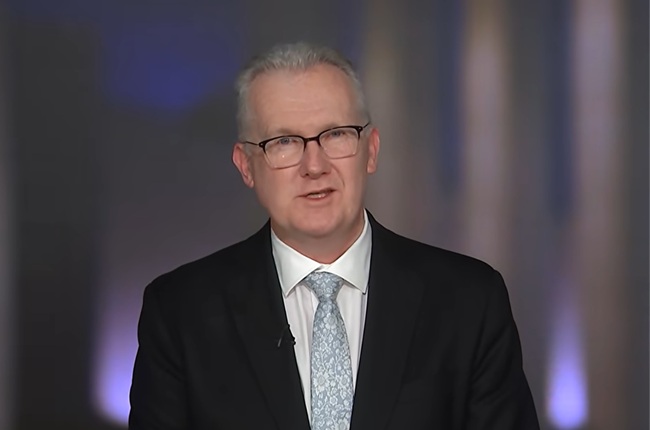
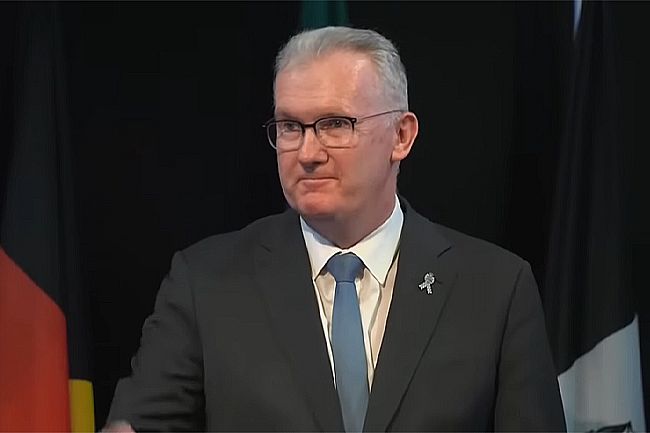
AFTER MORE than a year trying to avoid talking about immigration policy, Immigration Minister Tony Burke is at last talking about immigration policy. Much of what he has recently said has been misrepresented, possibly intentionally.
But given the multiple policy challenges Burke faces, what can we decipher from what he has actually said and what might that mean for the future of immigration policy?
Burke’s comments on assimilation versus integration of migrants were a re-statement of policy for at least 50 years. The misrepresentation of his words by the usual suspects shows how far the quality of public debate on immigration policy in Australia has fallen.
Greek and Italian migrants in the 1950s and 1960s, for example, were never going to “assimilate” even though they were totally loyal to Australia. Former Immigration Minister Al Grassby, in 1973, introduced the term “multiculturalism” to reflect the fact that first and possibly second-generation migrants would always retain some aspects of their culture (and indeed lead to existing residents adopting some of the newcomers’ culture).
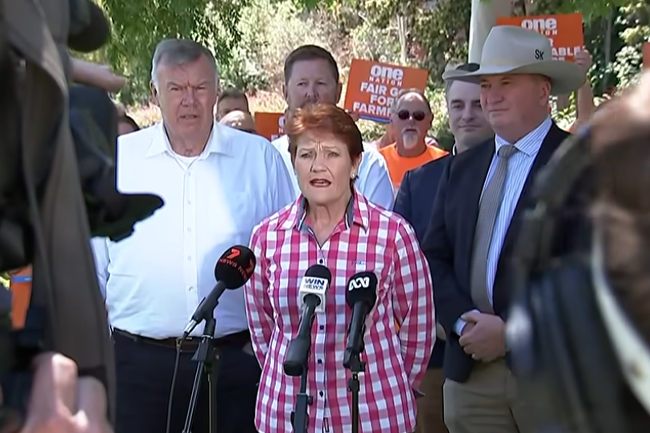
Much of the deterioration in the public debate on immigration is due to successive governments failing to develop and explain a long-term plan for immigration, leading to the vacuum being filled by One Nation and now the Coalition’s desperate attempts to play One Nation lite (while trying not to sound too much like Donald Trump).
Against that background, it was good to see Burke talking more broadly about immigration rather than just responding to issues in the media as they arise.
Speaking with Indian Link Media Group’s The Pawan Luthra Podcast last week, Burke made several broad statements that are actually consistent with long-standing Labor policy but not necessarily consistent with the actions of the Albanese Government over the past four years.
Leaving aside the inevitable political point scoring, the key policy points Burke made were in the following areas:
- managing the pace of immigration;
- addressing the problem of “permanently temporary” visa holders and guest workers;
- increased skills targeting; and
- importance of social cohesion and citizenship.
The statements Burke made were necessarily broad. Hopefully, he will put some detail into these statements when he announces the 2026-27 Migration Program later this month.
Managing the pace of immigration
In contrast with his (frankly silly) statements last year about “there being no magic number” for immigration and that a long-term migration plan would restrict government flexibility, Burke acknowledged that “it’s not like you could have unlimited immigration without creating a problem with housing and infrastructure. So we need to make sure that it’s managed and it’s paced”.
While it may sound like a statement of the obvious, for Burke and his predecessor, Clare O’Neil, this represents a major step forward. Their fear of being labelled as supporting a “big Australia” overwhelmed them. They now have that label even though they have no long-term immigration plan.
The challenge for Burke will now be to explain what he plans to do about “pacing” immigration and how that will be managed and delivered. It’s what I called for in my address to the National Press Club in mid-2024.
Burke notes that the Albanese Government has reduced net migration from its peak of over 500,000 in 2022-23, largely by tightening the extraordinarily loose policies it inherited from the Morrison Government. Most of that tightening was actually done by O’Neil. The further tightening of student visas in recent months has been done by Assistant Minister Julian Hill (ironically targeting mainly students from South Asia, particularly India).
We are yet to see Burke champion a policy change to broader immigration policy as opposed to policy on boat arrivals, use of the Character provisions of the Migration Act and preventing entry of Iranian visitor visa holders.
To get net migration down to the Treasury forecast of 225,000 in 2026-27, which is key to “pacing” immigration, as he says is needed, Burke has to take the lead.
Permanently temporary migrants and guest workers
While Labor has long recognised the need to address the problem of “permanently temporary” migrants and to avoid low-skill guest worker programs, the Albanese Government has done remarkably little in that space. It abolished former Nationals Leader David Littleproud’s Agriculture Visa, which would have been the biggest and most abused low-skill guest worker visa in Australian history.
The Albanese Government abolished the Coalition’s unrestricted work rights for students and the COVID visa. But it has done little more to address an issue it recognised as a problem more than a decade ago.
In fact, the Albanese Government has allowed the Pacific Australia Labour Mobility (P.A.L.M.) scheme (the very definition of a low skill guest worker visa) to continue despite a massive death/injury rate, worker exploitation and workers absconding and/or applying for asylum.
If Burke was true to his word about guest worker visas, he would abolish the P.A.L.M. scheme. But that won’t happen as it would buy a fight with the foreign, employment and agriculture ministers that he could not win.

It would also buy a fight with every farm lobby group in the country — lobby groups who have been surprisingly quiet about One Nation policies to reduce net migration to negative 100,000 per annum, which would require abolishing all visas for the agriculture industry and regional Australia.
Burke should look to enable a skills development pathway for P.A.L.M. visa holders to permanent residence. Currently, P.A.L.M. visa holders must participate in the Pacific Engagement Visa lottery to have even a remote chance at securing permanent residence. That is an appalling way to manage any permanent residence visas.
Skills targeting
Burke says he not only wants to reduce the number of “permanently temporary” migrants, but he also wants to attract the brightest and the best, and better target Australia’s long-term skill needs. That is good to hear, as Burke has to date done very little in these areas.
Apart from students, at end March 2026, the number of people in Australia on every other major long-term temporary entry category (temporary graduates, skilled temporary visa holders, working holidaymakers and NZ citizens) was at record levels. In addition, the number of bridging visa holders (people already in Australia who have applied for another onshore visa) had hit a new record of 432,300 — a sure sign of a visa system in deep trouble.
To achieve the objectives he appears to have set himself, Burke should:
- Replace the current very high student visa refusal strategy (one that is inefficient, untargeted and chaotic) with one that genuinely targets the best students. That would be by introducing a robust university entrance exam as the primary criterion for an initial student visa.
- Confine further onshore student visas to applicants enrolled to study high-quality courses in areas of Australia’s long-term skill needs. That would have the added benefit of addressing the massive backlog of onshore student applications at the Administrative Review Tribunal, as well as part of the bridging visa backlog.
- Similarly, confine temporary graduate visas to students who have studied high-quality courses in areas of Australia’s long-term skill needs.
- Develop a robust visa arrangement to enable highly skilled construction tradies to secure an onshore pathway to an employer-sponsored visa.
- Abolish the third working holiday maker visa option and standardise an English language requirement for working holidaymakers.
- Encourage the massive number of unsuccessful asylum seekers in the country to depart and/or carefully ramp up removals (not Trump style, as One Nation and the Coalition are advocating).
These measures would have the added benefit of reducing net migration towards the level forecast by Treasury (which is presumably the “pace” of immigration Burke wants).
Dr Abul Rizvi is an Independent Australia columnist and a former Deputy Secretary of the Department of Immigration. You can follow Abul on Twitter @RizviAbul or Bluesky @abulrizvi.bsky.social.
 This work is licensed under a Creative Commons Attribution-NonCommercial-NoDerivs 3.0 Australia License
Support independent journalism Subscribe to IA.


Related Articles
- Liberal Party migration scare campaign built on the wrong data
- Suggested Cabinet submission for 2026-27 migration and humanitarian program
- No entry, no growth: Australia’s immigration pause illusion
- Australia’s migration numbers defy both camps
- A clogged visa system only rewards the unscrupulous