As cost-of-living pressures mount, critics argue Australia’s inflation response is worsening the pain rather than solving the problem, writes David Higginbottom.
WHEN THE COST OF LIVING rises, the Reserve Bank of Australia (RBA)'s answer is to raise the cost of living further.
In May 2026, RBA governor Michele Bullock's board voted 8-1 to lift the cash rate to 4.35 per cent – the third rise of the year – in response to an inflation spike driven by global fuel prices and supply chain disruptions that no Australian interest rate decision can possibly fix.
The logic is circular, the instrument is blunt and the people paying the price are the one-third of Australian households with a mortgage. But the problem is not the governor. The problem is the machine.
Bullock is operating within a macroeconomic framework taught in universities as a hard science, treated by governments as an objective truth and deferred to by the media as a law of nature. It is none of these things. It is a set of theories built on demonstrably false assumptions.
In data science, there is a well-known corollary: Garbage in, garbage out. When the model is broken, the quality of the data fed into it is irrelevant — the machine turns facts into garbage.
The illusion of science
Economics suffers from a profound case of physics envy. It attempts to apply the rigid mathematics of the natural sciences to the messy reality of human behaviour — assuming perfect information, perfect foresight and rational actors who ensure markets automatically return to equilibrium. None of this is true. Yet the models treat these assumptions not as simplifying abstractions, but as the literal mechanics of reality.
If the models are so obviously flawed, why does the system assume it will always self-correct? The answer lies in an invisible political assumption: the “democratic fix”. Neoclassical economics separates “the economy” from “politics” by an artificial wall, assuming that a perfectly neutral, uncorrupted democratic regulator will step in whenever markets fail.
But the landmark 2014 Gilens and Page U.S. study demonstrates that this regulator may not exist. Economic elites have substantial, independent impacts on government policy, while average citizens have, statistically, near-zero influence.
The doctrine of RBA independence rests on this same fiction — that monetary policy is a neutral lever with no persistent real-world effects. Anyone who has watched the Australian housing market over the past two decades knows otherwise.
The policy test: 2008 and COVID-19
When forced to confront reality, the models fail catastrophically. The 2008 Global Financial Crisis and the COVID-19 pandemic provided rare natural experiments.
In standard macroeconomic models, government intervention is a generic input — the “G” in the equation. The model cannot distinguish between a central bank buying bonds from a hedge fund, a government mailing an untargeted stimulus cheque, or a targeted wage subsidy keeping a worker attached to a firm. These are treated as identical.
Following both the GFC and COVID-19, central banks engaged in quantitative easing — buying bonds from the private financial sector. The model assumed this liquidity would flow into productive investment. Instead, it flowed into equities and real estate.
Research indicates that only about 3 to 5 cents of every dollar of asset appreciation feeds through to personal consumption. The machine turned a crisis response into the greatest upward transfer of wealth in modern history.

Contrast this with Australia's direct fiscal interventions. During the 2008 GFC, the Rudd Government's targeted stimulus kept Australia out of recession while the rest of the advanced world collapsed.
During COVID-19, JobKeeper preserved the employer-employee relationship and delayed the onset of inflation. The United States, lacking the infrastructure for such targeting, relied on broad stimulus cheques and untargeted bank loans, generating an estimated 2.5 additional percentage points of inflation.
The model treats both as equivalent forms of “expansionary policy”. Because the assumption is wrong, the policy prescription is wrong.
The cure: Functional finance
The RBA's own statement acknowledges that the current inflation spike is driven by ‘capacity pressures’ and ‘sharply higher fuel and related commodity prices’ from the conflict in the Middle East. These are supply-side shocks. Raising domestic interest rates will not produce more oil, nor clear global shipping bottlenecks.
As Dr Bronwyn Kelly has consistently argued in these pages, raising interest rates just raises prices further; it doesn't lower them. The deliberate mechanism of the RBA's approach is to increase unemployment so that people lose the ability to pay their bills at the same time those bills are rising. This is not just nonsensical; it's cruel.
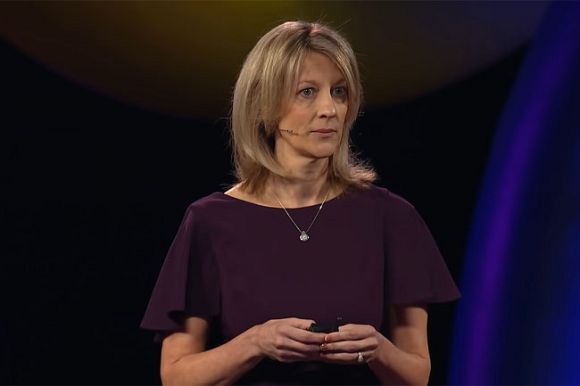
There is an alternative. Kelly's recent work on functional finance provides the roadmap. Developed by Abba Lerner in the 1940s, functional finance recognises that fiscal policy – government spending and taxation – is a far more powerful and precise tool for managing inflation than monetary policy.
As Kelly outlines in her most recent Independent Australia piece, it operates on three basic rules: use government spending and taxation to keep total spending at the level needed to buy all the goods the economy can produce; use government borrowing or debt repayment to achieve the interest rate that results in the most desirable level of investment; and manage the money supply as needed to carry out the first two rules.
Under this framework, the trade-off between price stability and full employment is revealed as a myth. The solution to inflation is not to stifle demand and create unemployment, but to pull supply forward — increasing public spending and stimulating investment so that employment and production grow together. This is the foundation of what Kelly calls the “public interest economy”.
The alternative tradition: MMT and Piketty
Functional finance is not an isolated idea. Modern Monetary Theory (MMT) is its direct institutional descendant, where Lerner provided the macroeconomic philosophy, economists like Wray, Kelton and Mitchell provided the modern operating manual, demonstrating that the only real constraint on government spending is real resources, not money.
Thomas Piketty provides the empirical proof of what happens when you run it the neoclassical way. In Capital in the Twenty-First Century, he proved that the rate of return on capital historically exceeds economic growth. When central banks pump money into the financial system via QE, it flows into assets. The asset-owning class captures the gains; wage-earners are left behind. Neoclassical monetary policy does not just fail to reduce inequality; it is structurally designed to increase it.
If inflation is demand-driven, taxing excess spending is a far more effective and fairer remedy than raising interest rates. It targets the excess directly, rather than indiscriminately punishing mortgage holders.
We should not take the governor to task for pulling the only lever she is allowed to touch. We should take to task the fact that she is sitting in a machine that was never a science, was never appropriate for the real world and now demonstrably fails the people it is supposed to serve.
It is time for the Government and the RBA to abandon the broken neoclassical model. As Kelly has powerfully demonstrated across her recent essays, functional finance offers a path out of the perversity of using unemployment to control prices. It offers a cure for inflation without unemployment. It is time we listened to her and used it.
David Higginbottom is a member of the coordinating committee of the Independent and Peaceful Australia Network (IPAN) and coordinator of the Make Peace A Priority campaign (mpap.au).
 This work is licensed under a Creative Commons Attribution-NonCommercial-NoDerivs 3.0 Australia License
Support independent journalism Subscribe to IA.


Related Articles
- The failure of Reserve Bank independence
- RBA’s labour market call risks overtightening the economy
- The RBA did not make a mistake in 2025 — the facts changed
- How rising house prices can help the economy
- RBA's interest rate cut a double-edged sword