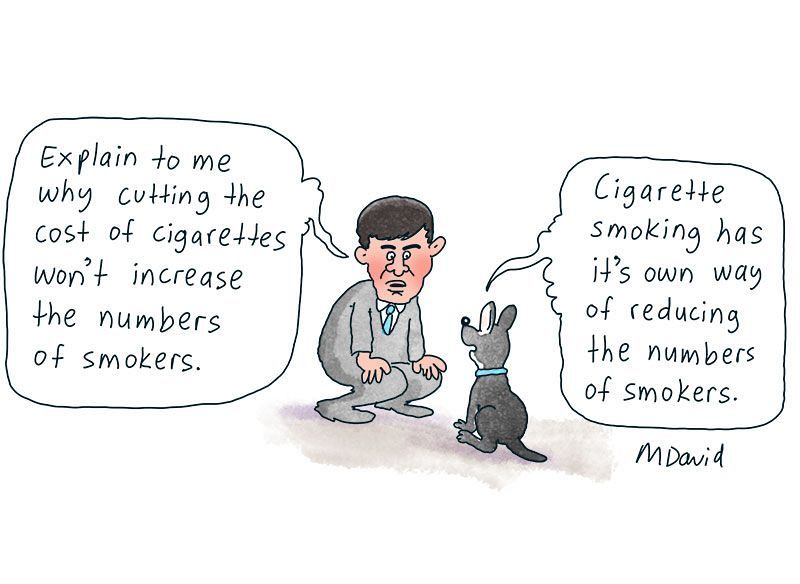
The Coalition and One Nation's plan to slash tobacco taxes won't stop organised crime but will come with a hefty public health cost, writes Wayne Hawkins.
LAST WEEK, Opposition Leader Angus Taylor stood in front of the cameras and promised to smash organised crime by making cigarettes cheaper.
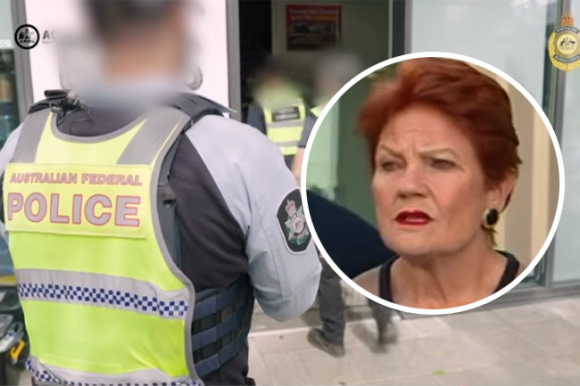
Cut the tobacco excise by 80 per cent, Taylor says, legalise vapes and nicotine pouches, and the black market withers on the vine. One Nation got there first in August with its own 75 per cent cut. Between them, the message is identical: this is a law-and-order policy, not a health or economic one.
It isn't. It's an empty promise dressed up as a crackdown and Australians deserve better than a headline that collapses the moment you poke it.
The crime won't disappear — it will just move
Start with the central claim: that undercutting illegal tobacco prices will “smash the gangs”. The Coalition's own briefing admits organised crime groups are pulling in billions from illicit tobacco and vapes. What it doesn't admit is that these are the same networks running drug trafficking, scams and money laundering. Tobacco is one product line in a diversified criminal enterprise, not the whole business.
Cut the profit margin on cigarettes and a rational crime group doesn't fold up shop — it reallocates. History backs this up. Every time governments have squeezed one illicit revenue stream without addressing the enforcement and demand side of the equation, the capital and infrastructure have simply flowed to the next opportunity.
You don't dismantle a criminal network by discounting one of its products. You dismantle it with policing, financial investigation and border enforcement — the unglamorous, expensive work that doesn't fit on a press release.
The health cost is not an afterthought
Tobacco excise has been Australia's single most effective public health lever for a generation. It is the reason smoking rates have fallen as far as they have. Slashing the excise on a pack of 20 from around $30 to roughly $6 doesn't just close a price gap with the black market, it makes smoking dramatically more affordable for everyone, including the teenagers and low-income Australians who are most price-sensitive.
Layer onto that a plan to legalise vapes and nicotine pouches outside the pharmacy system that currently restricts them, and you have two policies working in the same direction: more nicotine, more accessible, more normalised. The generation of Australians who take up smoking and vaping under this “reform” will be paying the health bill in hospital wards two and three decades from now, long after the politicians who designed the policy have left parliament.
That cost never appears in a press conference. It appears later, in cancer wards and respiratory clinics, carried by people who had no say in the decision.
A pattern, not a one-off
This isn't an isolated bad idea. The same parties pushing this tobacco policy are also the ones agitating to unwind compulsory superannuation. One Nation wants Australians to be able to dip into their superannuation early. The Liberal Party has had frontbenchers describe compulsory super as one of the biggest policy failures since Federation. Both sit alongside a tobacco policy that trades a wall of future health costs for a short-term political win.
The throughline is obvious once you see it: give people short-term relief today and let someone else – a future government, a future health system, a future retiree with an empty super account – pick up the tab. It is the same trick Australia played with the deregulation waves of the 1980s and '90s, when short-term gains were banked while the structural costs were quietly deferred. We are still paying some of those bills 50 years on.
This tobacco and vape policy and the super-access push sitting next to it look like the next instalment.
Will Labor cave too?
That leaves the harder question for Labor: will it hold the line, or start adjusting the policy to chase the same voters the Coalition and One Nation are courting?
So far, the federal position has held. Labor has argued there is no evidence a deep cut would end the illicit trade, a scepticism echoed publicly by health authorities and the Australian Medical Association (AMA). But the party isn't unified on this. NSW Premier Chris Minns has already broken ranks, arguing the excise has climbed so high it is now feeding the black market it was meant to shrink, and floating a cut of his own as both an enforcement and harm-reduction measure.
That crack matters more than one premier's opinion. It is the same pattern that has shown up after Labor's recent state losses: when a populist frame starts polling well, the instinct in Labor circles isn't to make the harder, evidence-based argument in public; it's to edge quietly toward the popular one. If that instinct wins out here, even as a partial concession dressed up as compromise, Labor will have learned the same wrong lesson again.
Borrowing the least damaging parts of a bad policy is not a rebuttal of it. It's surrender with better spin.

Ask the harder question
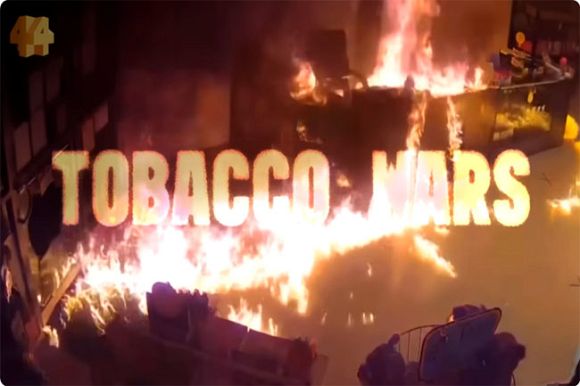
None of this is to defend the status quo. Labor's own record on the illicit tobacco trade is nothing to boast about, and the black market genuinely has become a violent, dangerous industry — the firebombings and extortion reported in Victoria are real and they demand a real response.
But “cut the price and the crime disappears” is not a serious answer to a serious problem. It's a slogan that happens to also make cigarettes and vapes cheaper and more available, which is a convenient coincidence for an industry that has spent decades funding exactly this kind of lobbying.
Voters right across the country should ask the harder question the press conference didn't answer: where does the crime money actually go once this policy takes effect and who pays the health bill in 20 years' time?
If the answer to the first question is “somewhere else” and the answer to the second is “not the politicians proposing it”, then this was never a crime policy at all. It was a tax cut wearing a police uniform.
Wayne Hawkins is the owner of Crisp N Sweet Bakery and Café in Claremont, Tasmania and an independent candidate for the Federal seat of Lyons.
 This work is licensed under a Creative Commons Attribution-NonCommercial-NoDerivs 3.0 Australia License
Support independent journalism Subscribe to IA.


Related Articles
- The top ten troubles with Taylor’s tenets
- CARTOONS: Mark David should stay away from 'populist' pool parties
- Angus Taylor could learn from Fraser and Menzies
- Why Angus Taylor’s migration cap doesn’t add up
- CARTOONS: Mark David doesn't like brown bread