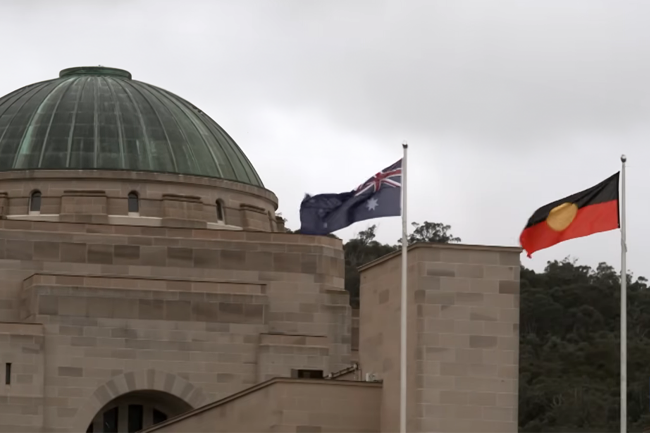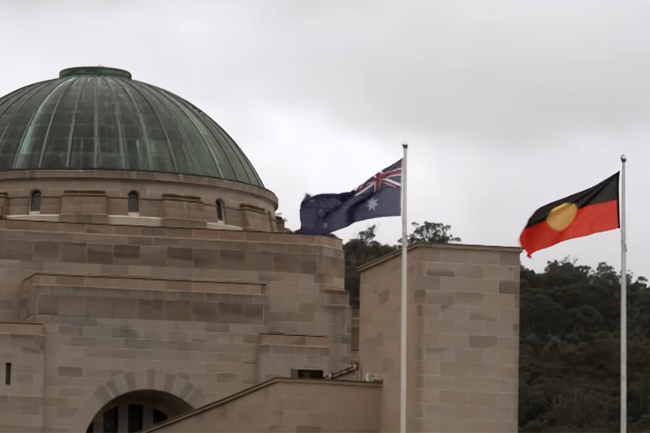
Defending Country and Defend Sacred Ground have different objectives, but they agree on the need for clarity in how the Australian War Memorial deals with frontier conflict in Australian history.
This forum has been organised with the agreement of the publishers of Independent Australia and Quadrant Online. The protagonists are each providing a 1,200-word article, a 600-word rejoinder, and a 100-word summing up.
Both publications provide for reader comment. Defending Country and Defend Sacred Ground thank Independent Australia and Quadrant Online.
- Read the 1,200-word argument for including frontier conflict in the Australian War Memorial HERE (Defending Country)
- And the argument against inclusion HERE (Defend Sacred Ground).
- Read the 600-word rejoinders HERE.
Defending Country's closing statement
Written by Professor Peter Stanley, president of Defending Country Memorial Project Inc, which argues that the Australian Wars should be properly recognised and commemorated at the Australian War Memorial.
This exchange reveals a worrisome turn in public discussion. Defending Country relies on the facts of history: settlement brought conflict across the continent for a century, and it should be remembered in places where Australians commemorate their wars.
Sadly, Defend Sacred Ground (DSG) has played the man and on emotion. It decries us as “activists” (is DSG not also?) working by stealth and insinuates that we have ignoble motives.
DSG makes an emotive case, misunderstanding and misrepresenting the Memorial, raising dust to obscure DSG’s determination to resist justifiable change. Conflict accompanied Australia’s settlement. That conflict needs to be remembered.
Defend Sacred Ground's closing statement
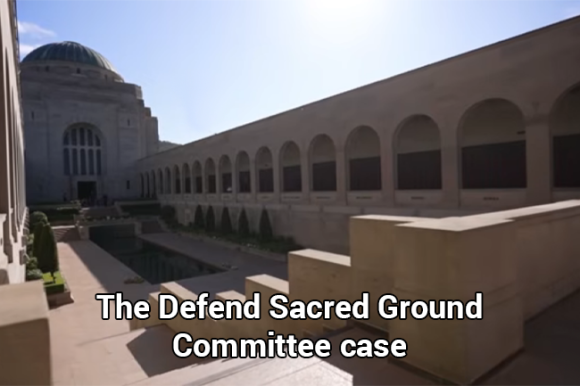
Written by members of the Defend Sacred Ground Committee, Roger Karge and Peter O'Brien Lt Col (Rtd).
The Memorial will be the last institution to fall to Aboriginal politics. It must honour uniformed Australians at war, not Aboriginal history.
“What is DSG afraid of?” We fear a Voice 2.0 activist takeover, transforming a sacred military shrine into a display of contested, anti-colonial history. We fear the racism of putting “Indigenous Australians” into the Act, omitting other colonial Australians and adding a draped Aboriginal flag over a tomb of an Unknown Aboriginal Warrior. The sacrilege will be complete with every “military in nature” conflict – from modern police killings to inter-tribal conflict – being depicted equally along with Gallipoli.
Read the arguments in full below:
The Defending Country initial 1,200-word case for including frontier conflict in the Australian War Memorial HERE:
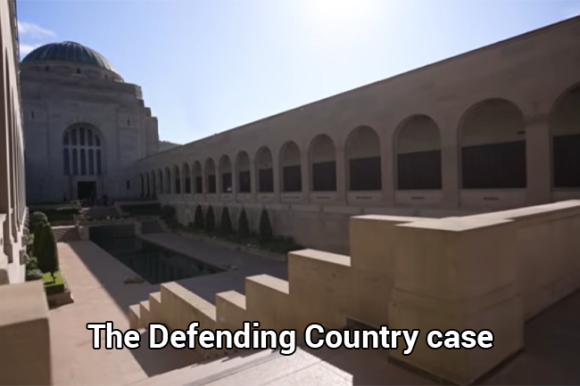
Read the Defend Sacred Ground initial 1,200-word case against including frontier conflict in the Australian War Memorial HERE:
Read the 600-word rejoinders HERE:
 This work is licensed under a Creative Commons Attribution-NonCommercial-NoDerivs 3.0 Australia License
Support independent journalism Subscribe to IA.