


From Bernard Collaery to David McBride, the evidence shows Australia’s whistleblower framework punishes disclosure while shielding executive power, writes Nigel Carney.
The assumption that breaks everything
Reflecting on his own prosecution and by oblique reference to the trial of Witness K, Bernard Collaery made a point that cuts to the heart of Australia's whistleblowing dilemma.
Australian courts proceed on a foundational assumption: that the executive arm of government will, at all times, act lawfully, ethically, morally and in the public interest. This assumption is not merely philosophical; it underpins judicial deference, statutory interpretation, secrecy regimes and the limits placed on what may be tested in open court.
That assumption becomes untenable when the executive is the wrongdoer itself.
In the Timor-Leste espionage affair, the Australian executive authorised covert acts that advantaged corporate interests while violating the sovereignty and foreign rights of a newly independent nation. When those acts were later exposed, it was not the decision-makers who were placed in the dock, but those who revealed them.
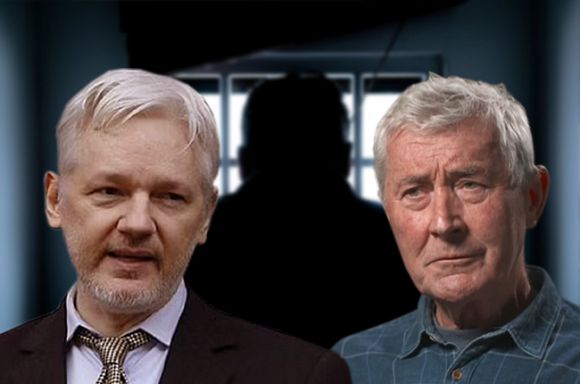
This is the dilemma at the core of Australia's whistleblower framework. Laws designed to protect disclosures presume a good-faith state. Courts presume a lawful executive. Oversight mechanisms presume ethical governance. But where the executive is influenced by corporate power, foreign interests or strategic convenience, those presumptions collapse — and with them, the protections.
In such circumstances, legality becomes performative, ethics conditional and the public interest whatever the executive says it is. Whistleblowers are not protected by the system; they are processed by it.
This is not a failure of drafting. It is a failure of assumption.
As Collaery warned in his 2022 lecture:
“There is no greater danger to the rule of law than when the executive acts unlawfully and then uses secrecy to shield itself from scrutiny.”
His prosecution and the suppression surrounding it make plain how fragile legal safeguards become when the state seeks to shield itself rather than be accountable.
The evidence
David McBride, the former army lawyer imprisoned for leaking classified material exposing alleged war crimes, said it plainly:
“We do have whistleblower protection laws, but they are a con. They do not work... whistleblowers like myself... end up in gaol as if we were criminals.”
Richard Boyle, who exposed unethical debt collection at the Australian Taxation Office, told the Walkley Awards audience:
“I personally am broken, physically, mentally and financially.”
These are not anomalies. They are predictable outcomes in a system designed to process whistleblowers rather than protect them. The issue isn't whether these cases are typical — it's whether the system works at all. The evidence suggests it does not.

The incentive gap: Economics vs ethics
Australia's whistleblower framework is fragmented, technical and unforgiving. The question is whether the system, as designed, can realistically be said to work.
The contrast with the United States is instructive — not because the U.S. system is morally superior, but because it operates on entirely different premises.
Under the U.S. Securities and Exchange Commission (SEC) Whistleblower Program, individuals whose information leads to enforcement action with sanctions exceeding US$1 million (AU$1.4 million) may receive between 10 and 30 per cent of the amounts collected. In fiscal year 2024, the SEC awarded over US$255 million (AU$366.8 million) to 47 whistleblowers.
Since the program's inception in 2011, it has paid more than US$2.2 billion (AU$3.17 billion) to 444 individuals.
These are transactional payments. The SEC treats whistleblowers as information providers in a regulatory market. Data exists because incentives are tied to enforcement outcomes. The program produces measurable outputs: tips received, cases opened, sanctions imposed and awards paid.
The False Claims Act operates on similar logic. Private individuals may bring claims on behalf of the U.S. Government through qui tam lawsuits. If successful, they receive between 15 and 30 per cent of recoveries. In fiscal year 2024, a record 979 qui tam lawsuits were filed. Settlements and judgments from cases resolved that year exceeded US$2.4 billion (AU$3.4 billion), with whistleblowers receiving more than US$400 million (AU$575.6 million). Since the qui tam provisions were modernised in 1986, total recoveries have exceeded US$78 billion (AU$112 billion).
This is not rewarding disloyalty. It is outsourcing enforcement to insiders where the state lacks visibility.
The U.S. Department of Justice launched a new whistleblower reward initiative in 2024 targeting corporate crime. Incentive-based whistleblowing is expanding. U.S. regulators see rewards as a practical enforcement tool, not an ethical compromise.
Australia has explicitly considered financial incentives for whistleblowers and declined them. Parliamentary committee material acknowledges U.S.-style reward systems but frames objections around ethical concerns and fears of vexatious claims.
The unresolved problem is this: if incentives are rejected, an alternative mechanism must exist that still produces disclosures, protects whistleblowers, enables enforcement and generates usable data.
Australia has not built that alternative.

The data illusion
The absence of reliable, end-to-end data on whistleblower outcomes in Australia is not accidental. It is structural.
Civil society organisations play a vital role in advocacy and support, but they do not control employer disclosure channels, regulatory intake points, or settlement processes. Much whistleblowing activity disappears into confidential settlements protected by non-disclosure agreements. There is no comprehensive picture of what happens to whistleblowers after they come forward.
The system is designed to make outcomes invisible. The public record often ends at lodgement, not at outcome. Harm, retaliation and deterrence effects are not captured statistically.
Australia does have reporting, but it is siloed. The Commonwealth Ombudsman publishes annual reports on the federal public interest disclosure scheme. The Australian Securities and Investments Commission (ASIC) surveys large companies on whistleblower disclosures. What is missing is cross-regime consolidation, outcome tracking and longitudinal analysis of whistleblower welfare or retaliation.
Where the U.S. SEC can report precisely how many tips it received, how many led to enforcement actions, what sanctions were recovered and what awards were paid, Australia cannot. The public cannot assess whether existing protections deter retaliation, whether regulatory responses are timely, or whether whistleblowers who follow prescribed pathways are actually better off than those who do not.
This absence of data prevents accountability. It prevents evaluation. It prevents reform grounded in evidence rather than anecdote.
The invisibility is a feature, not a bug. Settlements with confidentiality clauses protect organisations, not whistleblowers. Fragmented reporting allows each regulator to claim modest success without anyone assembling the full picture of systemic failure.

Reform without resolution
The Whistleblower Protection Authority Bill represented recognition that the system was failing. Introduced in February 2025 by MP Andrew Wilkie, with a parallel Senate version by Senators David Pocock and Jacqui Lambie, the bills proposed an independent statutory body with a whistleblower protection commissioner to support whistleblowers, investigate reprisals, provide legal assistance and exercise jurisdiction over all federal whistleblower protection laws.
The Senate referred the Bill to committee for inquiry. On 31 August 2025, the committee – with government and Coalition members comprising the majority – recommended the Senate not pass the Bill. Committee chair Jana Stewart stated it would be prudent to allow the Government to complete its stage 2 Public Interest Disclosure Act reforms before considering structural changes.
Greens Senator David Shoebridge's dissent pointed to David McBride's imprisonment and the prosecution of Richard Boyle, Witness K and Bernard Collaery as evidence the system needs fundamental reform:
You shouldn't have to risk your job, your family, your freedom and your mental health just for telling the truth.
David McBride's imprisonment, and the prosecution of Richard Boyle, Witness X and Bernard Collaery, highlight exactly why we need both a whistleblower commission and broader legal reform.
The Committee's refusal to support the Bill demonstrates a familiar pattern: acknowledgment that the system is failing, coupled with an inability to translate that recognition into durable institutional reform.
The Government's response – that incremental stage 2 reforms are sufficient – assumes the framework is sound and requires only adjustment. It assumes existing regulators, given slightly enhanced powers, will produce different outcomes. It assumes whistleblowers are failing because they do not understand the system, rather than because the system is designed to make protection difficult to access and easy to evade.
That assumption is untenable in the face of mounting evidence.
Integrity without illusion
Australia has rejected the enforcement economics that make U.S. whistleblower programs function. It has not replaced them with anything equally robust. It has built a system that depends on whistleblowers acting against their material interests, with minimal protection, in the hope that regulators will investigate, that employers will not retaliate and that the law will be applied as written.
The evidence suggests that hope is misplaced.
Without incentives, without comprehensive data collection, without a centralised authority with enforcement powers, Australia's whistleblower framework functions more as a procedural obstacle course than a protection mechanism. The committee's refusal to support the Whistleblower Protection Authority Bill confirms that political will for structural reform does not exist.
By any measurable enforcement standard, Australia's whistleblower framework is failing those it claims to protect. The system itself must be judged not by its stated intentions, but by its measurable outcomes. And by that standard, the failure is not merely inadequate — it is structural, persistent and unresolved.
Nigel Carney is a writer, economist and historian.
 This work is licensed under a Creative Commons Attribution-NonCommercial-NoDerivs 3.0 Australia License
Support independent journalism Subscribe to IA.








