Despite the Democrats’ midterm victory, Donald Trump’s lasting impact on American politics, institutions and society will prove difficult to reverse. Patrick Drennan writes.
AFTER THE MIDTERM ELECTIONS turned control of the United States Congress to the Democrats, President Trump's ability to influence American culture is significantly downgraded — yet in several ways he has already changed America forever.
Executive governance
By using executive power to target independent agencies such as the Federal Trade Commission, freeze federal hiring and reclassify career civil servants, the Trump Administration has fundamentally altered the scope of the federal bureaucracy.
According to the Federal News Network, this has resulted in extreme staff shortages causing major operational delays, including backlogs at Social Security Administration (SSA) processing centres and slower disaster response.
Despite targeted budget cuts, the overall U.S. budget deficit and total federal outlays have increased.
When Trump leaves office, the power to select federal judges, agency heads and regulators will fall to his successor, shifting the direction of federal policies, a process that will take years to reverse.
Notably, Trump has not changed the electoral college, the right to keep and bear arms and the presidential right to grant pardons for federal offences. They are incorporated in the Constitution of the United States. However, many Americans see the abuses and inequalities in these dated amendments and future senate supermajorities may challenge them.
Foreign relationships
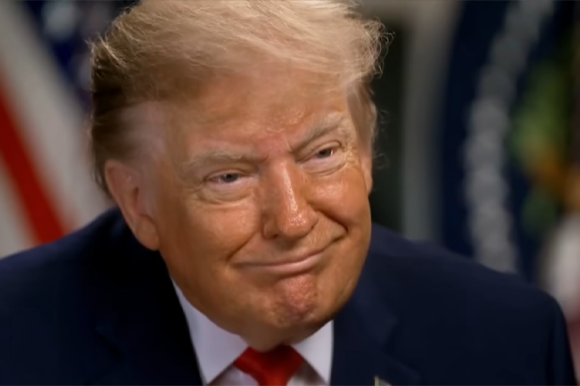
Trump’s “America First” policies and his use of aggressive tariffs have redefined U.S. relations with key partners in Europe and Asia. The on-and-off tariffs have seen reduced trust and have strained supply chains.
In the first quarter of 2026, European Union exports to the United States plummeted by roughly 30% compared to the previous year. South Korean exports to the United States declined 3.8% in 2025, while exports to China surged.
Yet these tariffs have not increased manufacturing jobs in America; while construction grew in May 2026, manufacturing jobs declined. They are estimated to add 1.5% to inflation, and the legal challenges and reparations are being funded by taxpayers.
On the other hand, the 2025 tariffs raised an estimated US$214.7 billion (AU$322 billion) in customs revenue.
These international trade supply chains take years to change. Protectionism is now embedded in American culture. Nevertheless, globalisation driven by technology and international-based business is ongoing.
The Trump Administration’s criticism of NATO has resulted in most European countries and Canada drastically increasing their defence spending in relation to GDP.
Yet, while NATO supported American-led wars in Afghanistan and Iraq, they have been reluctant to engage in the American war with Iran.
Future American administrations are likely to stabilise and restore predictability to relationships with NATO allies, the European Union and Asian allies. Colonel David Maxwell, editor of the Small Wars Journal, notes: America’s competitive advantage lies not only in military power, but in alliances and partnerships unmatched by adversaries.
Immigration
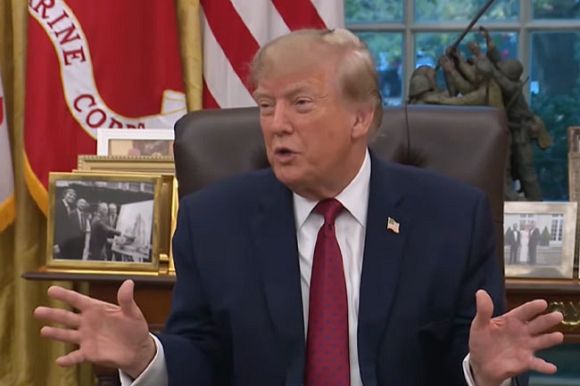
Fewer babies are being born and deaths are rising as the American population ages, making immigration the primary driver of all American population growth. The population continues to age as the baby boomer generation enters retirement; therefore, the need for workers will become critical.
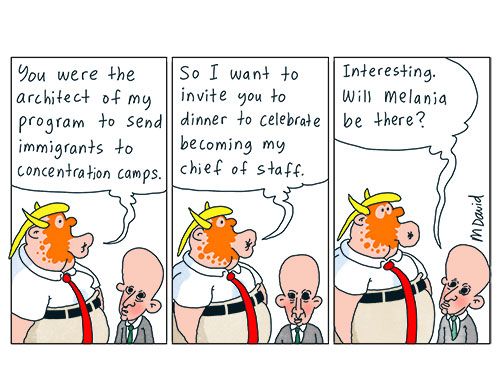
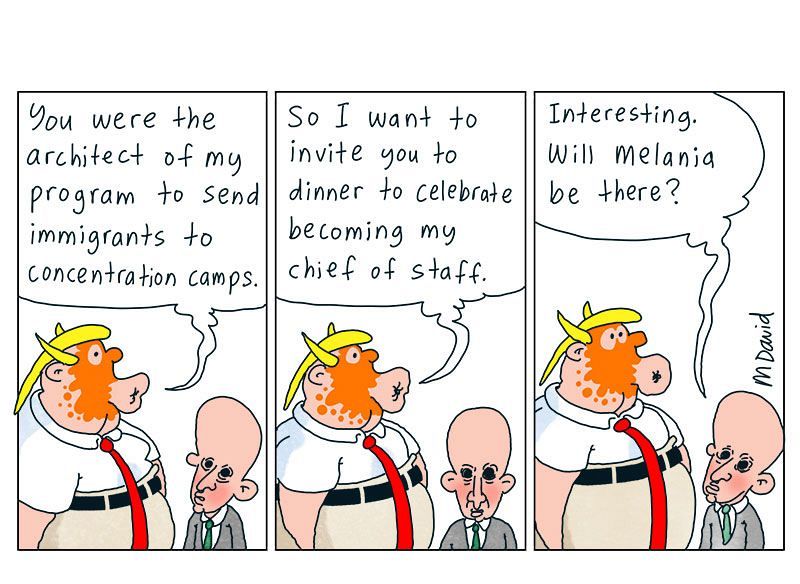
Since Trump’s election in 2024, there have been mass arrests, detention and deportation of immigrants. About 300,000 immigrants have been deported. Around 60,000 people are being held in detention at one time. The United States experienced negative net migration in 2025 and 2026 for the first time in decades.
While many Western countries look to technology such as robots and AI to offset a smaller workforce, many industries including agriculture, construction and nursing homes require more human labour.
The local, ageing workforce seldom replaces workers in these industries.
More concerning for the American economy is the lower number of Science, Technology, Engineering, and Mathematics (S.T.E.M.) students entering the United States. Since Trump’s return to office, his administration has revoked more than a thousand student visas, often without explanation.
The violence and cruelty involved in mass arrests and detentions of immigrants have shocked many Americans.
Whoever gets elected in 2028, a return to pre-2025 immigration policies is polarising and is unlikely to be repeated. Expect to see a new Bipartisan Bill like the one that was proposed in 2024.
Oil, energy and the environment
The Trump Administration actively promotes fossil fuels, primarily oil, natural gas and coal, while attempting to curtail wind and solar development through executive orders and legislative efforts. The Administration's core policy agenda includes fossil fuel deregulation, mandates forcing older coal-fired power plants to remain operational well past their planned retirement dates.
The United States derives the vast majority (60%) of its energy from fossil fuels, with petroleum, natural gas and coal leading, followed by nuclear power (19%), and wind and solar (14%).
Yet the cost of electricity has risen with demand, including power-hungry AI data centres. And these policies are failing to stabilise costs and outpace modern grid needs.
In May 2026, for the first time, solar panels supplied more of the nation's electricity than coal. More than 320,000 acres in rural America are slated to become home to utility-scale solar farms between 2026 and 2027.
The Iran war has glaringly demonstrated that America’s reliance on fossil fuels is flawed.
Despite the Trump legislative attempts to replace renewable energy with fossil fuels, historical determinism is ensuing. Technological advances ensure that renewable energies are now cheaper, faster to deploy and structurally more efficient than fossil fuels.
Politics
Trump's dominance has reshaped the Republican Party into a more populist, protectionist and nationalist party. His eventual absence will be filled with people who promote these ideals, although his incredible powers of communication will be difficult to replicate. Already we are seeing the rise of imperfect but popular young candidates like James Talarico and Elise Stefanik.
Of course, a “lame-duck” President who still has the support of millions is capable of further disruption.
Patrick Drennan is a journalist based in New Zealand, with a degree in American history and economics.
 This work is licensed under a Creative Commons Attribution-NonCommercial-NoDerivs 3.0 Australia License
Support independent journalism Subscribe to IA.


Related Articles
- The race that stops the nation: Australia caught in Trump's political fallout
- Trump's assault on International Criminal Court sparks global backlash
- U.S. election result is not normal because Trump’s MAGA is not normal
- JEFF MCMULLEN: Trump's midterm humiliation signals democratic correction
- CARTOONS: Trump feeling 'blue' after midterm mauling