As the manosphere feeds misogyny to young men, fathers, brothers, coaches and mates must step up before algorithms fill the void, writes Wayne Hawkins.
THIS WEEK, several Sydney Swans players were named in media reports after Victoria Police confirmed they were investigating a report of sexual assault at a Melbourne hotel.
No charges have been laid. No one has been named by police. The players interviewed did so voluntarily, not under arrest. Whatever happened in that hotel in the early hours of Monday morning is still genuinely unknown — and it should stay that way in the public record until an investigation says otherwise.
But the way this story has already been told tells us something true, regardless of what the investigation finds.
Some coverage moved fast on scene detail – descriptions of a woman “hysterical” and crying, of club officials confronted in a hotel foyer – the kind of granular colour that turns an unresolved allegation into a public spectacle before a single fact has been tested.

Other outlets ran the drier institutional version: club statement, police statement, “shocked and disappointed”. Social media did what social media does, in both directions at once — a portion of it convicting the players outright, a portion of it doing the older, uglier work of picking apart the woman's account before it's even been heard by anyone with the authority to weigh it.
None of this is new. In 2004, a 20-year-old woman alleged she'd been gang-raped by Bulldogs players in Coffs Harbour. No charges were ever laid and the club's response was to tell its players to say nothing.
Two decades later, Johnathan Thurston – who wasn't even involved – described the fallout as being “gagged” while “everyone was tarnished with these allegations”. Silence protected no one. Not the woman, whose allegation went nowhere. Not the players, who carried public suspicion for years with no chance to answer it. The only thing club silence reliably protects is the institution's own liability.
That's the pattern worth naming: footy clubs run a crisis-management script, not a truth-seeking one. It's the same script in 2000, 2004 and now — regardless of what actually happened in any of those hotel rooms.
The part that worries me more is upstream of all this.
I'm old enough to remember exactly where the objectification of women lived when I was young — under a mattress, in a shoebox, passed quietly between mates with a kind of embarrassment attached to it. The attitude itself was ugly, but it came with a lid on it. Shame kept it contained, even if shame was never really the right response and respect should have been.

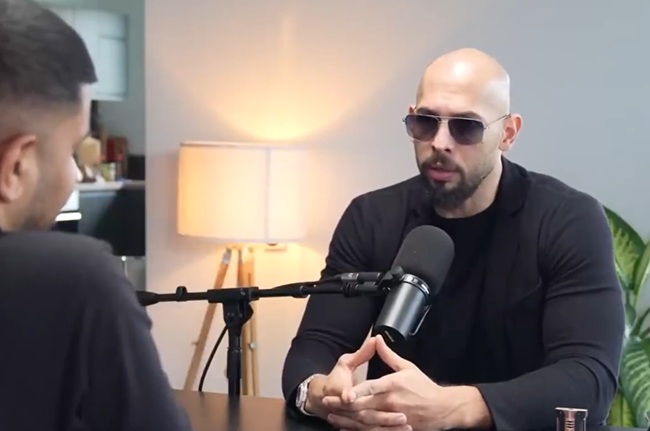
That lid is gone. A recent Australian survey found 92 per cent of young men are familiar with Andrew Tate's content and one in four look up to him as a role model — not a fringe subculture, close to the mainstream.
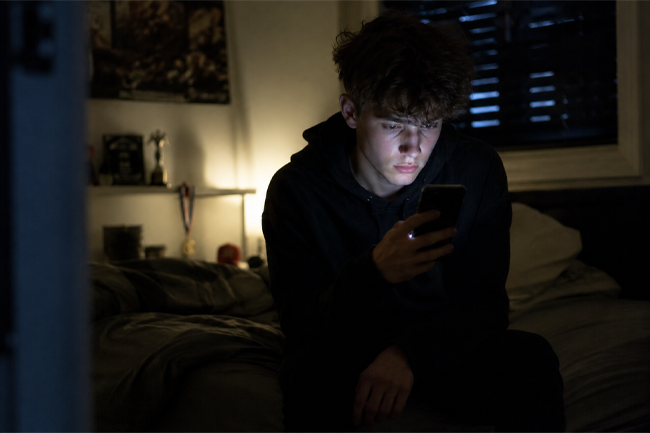
Researchers studying Australian schools have found students exposed to this content are picking up genuinely troubling views on relationships, including the normalisation of controlling and violent behaviour. Where a boy once had to go looking for that material and risk being caught, an algorithm now delivers it to him unasked, dressed up as fitness advice or “self-improvement” before he's old enough to know what he's being sold.
Some researchers argue we shouldn't overstate the influencers themselves — that figures like Tate amplify an old problem rather than create a new one, and that the deeper drivers are loneliness, alienation and unaddressed grievance that predate any app.
I think that's right and it matters, because it points to where the actual fix has to happen — not in a content moderation policy, but in the gap a lonely 15-year-old is trying to fill when he goes looking for someone who seems to have answers.
That gap is where fathers, older brothers, coaches and mates come in. Governments can fund programs. Schools can run modules. Neither reaches a boy the way a man he actually looks up to does, sitting him down and telling him plainly that none of it is true — not the contempt, not the entitlement, not the idea that respect is a weakness.
This has always, in the end, been men's work to do with other men. We've just been slower to pick it up than the algorithms have been to fill the space we left empty.
The mattress is gone. The shame that used to sit under it hasn't gone anywhere — it's just moved somewhere we can't see it and somewhere it's doing a great deal more damage than it ever did folded up in a shoebox.
Wayne Hawkins is a small business owner in Hobart, Tasmania, and an independent candidate for the federal seat of Clark at the 2028 Election.
 This work is licensed under a Creative Commons Attribution-NonCommercial-NoDerivs 3.0 Australia License
Support independent journalism Subscribe to IA.