A year after the El Fasher atrocities, Sudan’s suffering continues to expose the Australian media’s selective outrage and global indifference. Wayne Hawkins writes.
ONE YEAR AGO this week, a city in western Sudan was wiped off the map of human concern. Most Australians never heard its name.
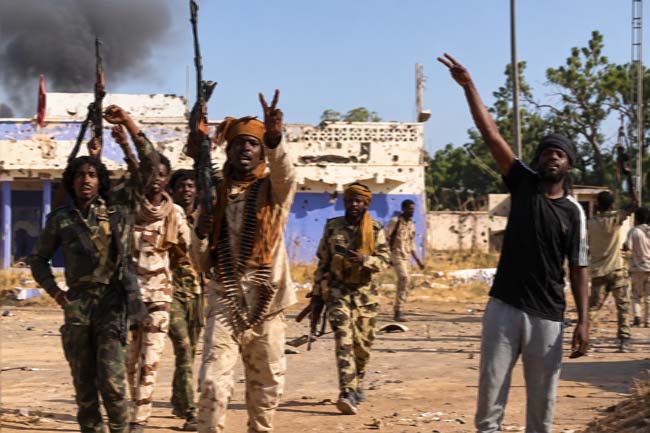
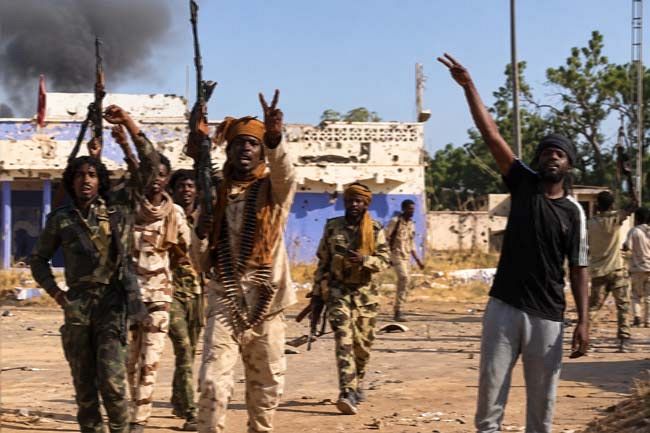
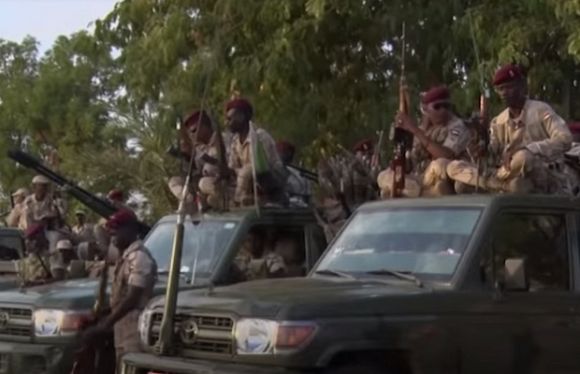
On 26 October 2025, the Rapid Support Forces (RSF) stormed El Fasher, capital of North Darfur, after a siege of roughly 500 days. What followed was one of the worst mass atrocities anywhere in decades. Thousands were killed. People trying to flee were kidnapped and held for ransom. UN investigators have since found that the killings bore the hallmarks of genocide against the region's non-Arab communities.
A year on, tens of thousands of people are still unaccounted for. Before the war, El Fasher held more than a million people. Fewer than 70,000 remain. Amnesty International interviewed 19 of them this month, and 17 said they had been detained by the RSF, many for months. Some have been forced to work unpaid for their captors, collecting bodies and cooking for fighters. Nobody has been held to account.
If you missed the anniversary, you are not alone. That is the point.
Sudan is the largest humanitarian crisis on the planet. More than 9 million people are displaced inside the country. Another 4 million have fled across its borders. Nearly 19.5 million face hunger and famine is spreading through Darfur and Kordofan.
In June, the Norwegian Refugee Council ranked it the world's most neglected displacement crisis, judged on three tests: funding, political will and media attention. Its chief, Jan Egeland, said a crisis on the scale of Syria or Ukraine at their peak was getting worse almost unnoticed.
The coverage numbers bear him out. Over the 12 months to May 2026, the New York Times published 892 articles referencing Sudan and 3,113 referencing Ukraine. Australian outlets do not do better. A day of anniversary pieces came and went and the feeds moved on.
The killing has not paused for our attention span. In the first three weeks of this month, drone strikes alone killed at least 306 Sudanese civilians, according to UN human rights chief Volker Türk. One strike on a market in the disputed Abyei region killed more than 150 people.
Why do we look away? Part of it is practical. Foreign journalists can barely get into Sudan and Sudanese reporters are killed, displaced or silenced. Most international coverage is filed from regional bureaus in Cairo or Nairobi, a step removed from the ground. There is little footage and what exists is drowned in propaganda from both sides.
Part of it is framing. The war is routinely described as two rival generals fighting for power. That is true as far as it goes, but it flattens a story with victims, perpetrators and outside backers into a quarrel nobody can be expected to follow. A story without a side is a story editors can skip.
And part of it is harder to admit. When a crisis is African and protracted, the world starts to treat it as weather rather than news. Tens of thousands dead in Darfur, again, does not register as a shock. It registers as background. That is not a judgment about Sudan. It is a judgment about us.
Here is the part that should sting. Australian media has never lacked interest in Sudanese people. It has only lacked interest in their suffering.
In 2018, “African gangs” in Melbourne dominated front pages and breakfast television for months. Sudanese-Australian teenagers were turned into a national threat, at a volume and intensity the crime statistics never justified. The headlines named a community, not individuals, in a way crime by Anglo-Australian offenders seldom is. It sold papers. It drove clicks. It also told a whole community they were suspects in the country that had given them refuge.
Many of those families came here fleeing earlier rounds of the same violence, in Darfur and in the south. Now their relatives are being massacred in what UN investigators describe in the language of genocide, and the same outlets have little to say. Sudanese Australians are newsworthy as a danger and invisible as victims. Which Sudanese stories get told says a great deal about what our media values: outrage that sells, over suffering that doesn't.
Nor is this a distant war with no Australian fingerprints. Canberra has given more than $60 million in humanitarian aid since the conflict began in April 2023, according to the Department of Foreign Affairs and Trade (DFAT). That money matters. But spread over three and a half years, against the world's largest hunger and displacement crisis, it is modest.
Australia's aid peak body, the Australian Council for International Development (ACFID), called last November for an extra $40 million just to match earlier commitments.
Then there is the United Arab Emirates. UN sanctions monitors, Amnesty International and Human Rights Watch have all documented weapons linked to the UAE in RSF hands. The UAE denies arming the RSF. It has also been reported as Australia's biggest weapons export market, taking almost $300 million in Australian arms and munitions over five years.
Nobody has shown that Australian weapons reached Darfur. But campaigners have asked the Foreign Minister to review exports to the UAE for exactly that risk. In August 2025, 64 civil society groups, including the Australian Council of Trade Unions (ACTU), Amnesty and the National Council of Churches, called for a parliamentary review of our arms trade.
These are reasonable questions. They deserve answers, and they will only get them if someone keeps asking.
Wars like this are not lost in a single day. They are lost in the silence between news cycles, when the perpetrators learn that nobody important is watching. The RSF told the world El Fasher was safe to return to. Survivors say otherwise. The gap between those two claims is filled only by people who keep looking.
That is the job now: a continuous voice, not a once-a-year candle. It means editors running Sudan when there is no anniversary peg. It means MPs asking Canberra what it is doing with its aid budget and its arms licences. It means Australians asking the Sudanese families in their own suburbs how they are coping, and listening.
We cannot stop this war from Tasmania. We can refuse to forget it. One year after El Fasher, that is the least we owe the people still searching for their dead.
Wayne Hawkins is the owner of Crisp N Sweet Bakery and Café in Claremont, Tasmania and an independent candidate for the Federal seat of Lyons.
 This work is licensed under a Creative Commons Attribution-NonCommercial-NoDerivs 3.0 Australia License
Support independent journalism Subscribe to IA.