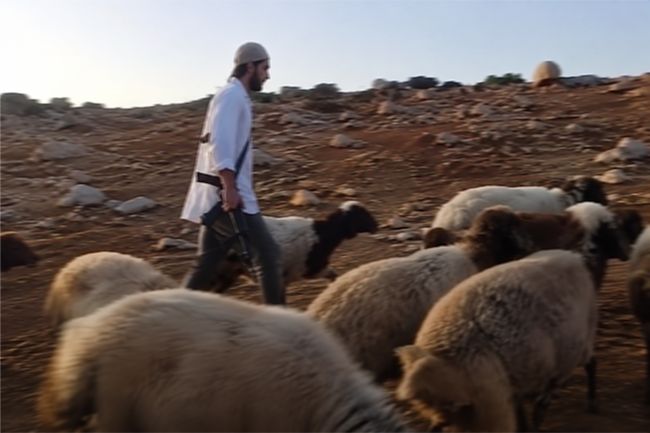
Israeli settlers are systematically killing and stealing Palestinian livestock as part of a broader campaign to force communities from their land, writes Wayne Hawkins.
*Content warning: This article discusses animal abuse
FOOTAGE CIRCULATING from the South Hebron Hills in recent weeks shows Israeli settlers stealing a donkey from a Palestinian farmer, tying it to a tractor and dragging it until it dies.
It is grim viewing. It is also not an aberration — it is the latest entry in a documented, years-long pattern in which the killing of Palestinian livestock functions as a deliberate instrument of land seizure.
The temptation is to read incidents like this as isolated acts of sadism by individual extremists. The evidence says otherwise. Strip away the shock value and what remains is a method: attack the animals and the people leave the land.
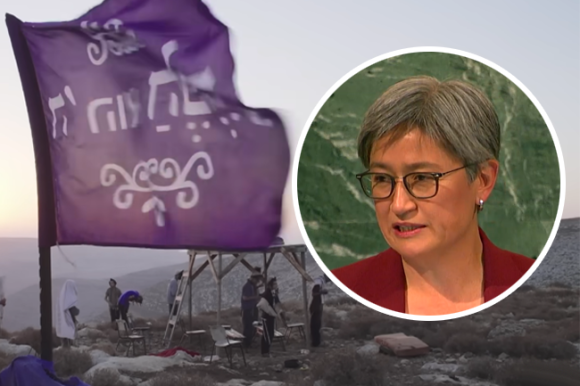
A catalogue of method, not madness
The tactics repeat with enough consistency across enough locations to qualify as doctrine rather than impulse.
Poisoning: In September 2024, settlers contaminated the water supply used by sheep belonging to two brothers in the Bedouin community of Arab al-Mleihat, near Jericho, killing 50 animals. In al-Mughayyir, a toxic substance was thrown into a grazing area; Israeli troops were reportedly in the vicinity shortly before the dead sheep were discovered. In Susya, in Masafer Yatta, farmer Jihad Nawajah lost most of his flock to poisoning in 2010. He rebuilt his livelihood around beekeeping — only for settlers to return in 2016 and destroy 100 hives.
Direct killing: In July 2025, settlers shot and stabbed close to 200 sheep they had stolen in Hammamat al-Meyta, in the northern Jordan Valley, killing at least 120 of them. Near Hebron, Israeli forces fired live ammunition at a shepherd and his herd, killing three sheep outright.
Mass theft: More than 1,000 sheep were stolen from communities east of Ramallah within a single week, with some killed in the process. The donkey in the South Hebron Hills footage was taken the same way, before being killed by dragging.
Filmed abuse: In November 2025, settlers were caught on camera abusing sheep inside a Palestinian family's barn — during the olive harvest, the period when settler violence against farmers reliably spikes each year.
Four methods. One purpose.
The evidence is not the problem
What makes this pattern so difficult to dismiss as rumour or exaggeration is that so much of it is filmed — often in broad daylight, in view of security cameras, bystanders' phones and the victims themselves.
In November 2025, a Palestinian resident of the South Hebron Hills, Mahmoud Drameen, filed a police complaint over an attack in which masked men – later identified by Drameen as local settlers – slaughtered his sheep, killing or maiming ten of them and gouging out the eyes of some before they died. The complaint came with security camera footage attached.
It was not the first attack on Drameen's property; months earlier, eight or nine settlers had raided his home, smashed windows, sprayed tear gas inside and killed livestock while his relatives were hospitalised. No suspects have been charged in either case.
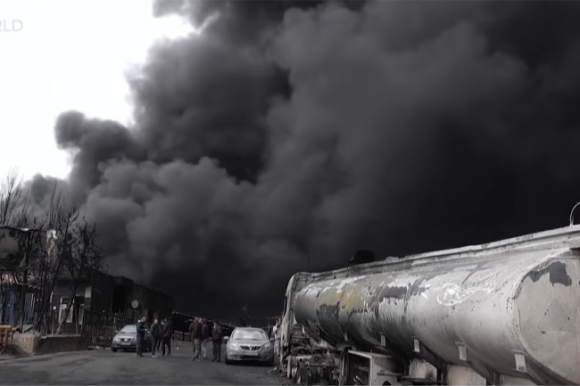
Six months later, near Nablus, a settler was filmed running over a flock of sheep with an ATV – fitted, notably, with a bull's skull mounted on the front bumper – before stepping off to beat the Palestinian man who was filming him. The footage was clear enough to identify the vehicle and the act; Israeli police opened an investigation and, as with Drameen's case, no arrest followed.
The next day, a different masked settler was filmed beating a dog in the same district. The government-issued ATVs used in these raids, incidentally, were distributed to settlers the previous year under the justification of “self-defence”.
This is the pattern within the pattern: the visual evidence is not scarce, contested, or hard to obtain. It is often abundant, high-resolution, geolocatable and – per one Israeli military officer's own account passed up to the Prime Minister's office – consistent with internal Israeli Defence Forces (IDF) data suggesting the overwhelming majority of recorded incidents in the West Bank are Jewish attacks on Palestinians rather than the reverse.
Israeli police routinely confirm an investigation has been “opened”. Arrests, let alone convictions, remain the exception.
Put simply: this isn't a case that turns on establishing what happened. It turns on whether anyone with the power to act is willing to get involved.
The purpose is stated plainly
This is the part that should trouble anyone still inclined to treat these as unconnected crimes: the people documenting them and, in some cases, the settlers themselves, describe the intent openly. Hassan Mleihat of the Al-Baydar Organisation for the Defence of Bedouin Rights has said plainly that these attacks form part of a sustained campaign to pressure and displace Palestinian farmers from their land.
Amnesty International's West Bank report, published in June 2026, places livestock killing and theft inside a broader framework of systematic targeting of Palestinian livelihoods — alongside restricted access to grazing land, contaminated water sources, and the destruction of crops and farmland.
Critically, Amnesty documents that Israeli authorities do not merely fail to prevent this violence; they arm settlers and, through the army and police, actively facilitate it. Palestinians who report these attacks have themselves faced interrogation, fines or arrest.
This is the mechanism by which ethnic cleansing is dressed up as land dispute: make the land unlivable, make the consequences of complaint worse than the loss itself and wait.
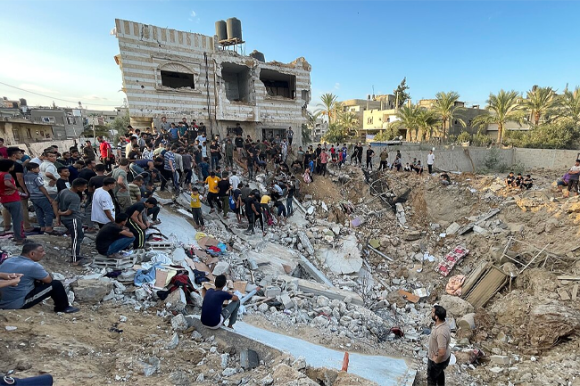
Why livestock is the target
For pastoral and Bedouin communities across Area C, the Jordan Valley and the South Hebron Hills, livestock is not incidental to survival — it is survival. A flock of sheep represents years of accumulated labour, breeding and inherited knowledge.
When 23 pregnant ewes die from poisoning in a single night, as happened to farmer Muath Sawalha near Nablus, the loss is not 23 animals. It is the next two years of lambs, the income they would have produced, and very often the last asset standing between a family and abandoning land their family has worked for generations.
That is precisely why it works as a displacement tool. Bulldozing a home generates headlines and, occasionally, legal challenges. Poisoning a water trough generates neither — it is deniable, it is slow and by the time the animals are dead, there is rarely a settler left standing over the scene. It is dispossession that launders itself as misfortune.
The same impunity, every time
None of this happens in a vacuum of accountability, because there is no accountability. The same pattern that lets a man film himself shooting a Palestinian activist – as happened to Awdah Hathaleen in Umm al-Khair in July, with the shooter released to house arrest within days – extends to the animals. Prosecutions for livestock attacks are effectively non-existent. The Israeli military's role ranges from passive presence to, in Amnesty's documented cases, active support.
This is worth stating without euphemism: a state that arms the people doing the killing, protects them from consequence and punishes the victims for objecting, is not failing to prevent settler violence. It is running it.
What follows from this
The donkey dragged behind a tractor in the South Hebron Hills will generate outrage for a news cycle and then fade, as the sheep poisoned in Arab al-Mleihat and the hives destroyed in Susya faded before it. That fade is not accidental either — it is what impunity is designed to produce: a public conditioned to treat each atrocity as isolated, never as the next data point in a pattern with a name and a purpose.
It has a name. It is displacement by attrition and killing the animals is simply the cheapest, most deniable way to carry it out.
Wayne Hawkins is a small business owner in Hobart, Tasmania, and an independent candidate for the federal seat of Clark at the 2028 Election.
 This work is licensed under a Creative Commons Attribution-NonCommercial-NoDerivs 3.0 Australia License
Support independent journalism Subscribe to IA.


Related Articles
- Australia's sanctions aren't stopping Israel's settler funding
- Israeli pressure fails to sway Labor on Gaza
- Israel: The most dangerous nation on Earth
- Hungary turned its back on the Hard Right — Israel can’t
- The hardening of youth in Israel’s nationalist enclave