
Two people can own the same LLC in equal shares, yet that does not always mean both can bind the company to the same deal. Ownership answers who holds an interest in the business. Signing authority answers a different question: who can commit the LLC to a lease, loan, supplier contract, or other obligation?
When founders are still setting up those basics, a business starter kit can combine LLC registration with a domain, business email, hosting, and marketing tools for the first year, while state filing fees still apply. That helps with launch infrastructure, but it does not decide which owner, manager, or employee has authority to sign for the company.
The distinction matters most when the first large contract arrives. A landlord may want proof that the person signing a five-year lease can act for the LLC. A bank may ask who approved new borrowing. A supplier could deal with an employee who regularly places orders, even though the owners intended to limit that employee's spending. Clear rules turn these questions into routine checks rather than last-minute disputes.
Ownership does not automatically equal signing authority
Member-managed and manager-managed LLCs work differently
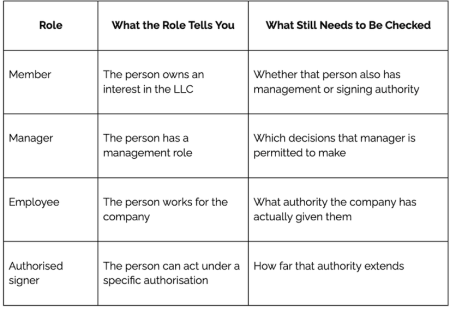
State law and the LLC's governing documents determine how management works. In a member-managed LLC, members generally take part in running the company. In a manager-managed structure, management is placed in one or more managers, who may or may not also own part of the business.
That difference can change who has authority to act. The 2025 Montana Code section on the agency power of LLC members and managers provides a useful official example. Under that statute, a member can generally bind a member-managed LLC when acting in the usual course of its business, subject to stated limits. If management is vested in managers, a member acting solely as a member is not an agent of the LLC, while a manager can act as its agent in the ordinary course. State rules differ, so founders need to check the law where their company was formed.
Routine contracts and major commitments need different rules
A company does not need a member vote every time someone orders office supplies. It may, however, want both owners to approve a $200,000 loan or a 10-year property lease. Operating agreements and written resolutions can draw that line.
The rules work best when they are concrete. One manager might have authority to sign ordinary supplier contracts up to a set amount. Borrowing money, selling major assets, admitting another member, or guaranteeing someone else's debt could require broader approval instead.
That approach keeps routine work moving without giving one person unlimited power.
Put authority into the company's working rules
Internal limits need to match daily practice
Writing a spending limit into an internal document is only part of the job. The company's real practices should support it.
Suppose an employee repeatedly negotiates purchases, approves prices, and signs orders while the owners accept the results. A third party may reasonably believe that the employee has authority to keep doing so. Whether the LLC is legally bound depends on the facts and applicable law, but loose practice can create a dispute that better controls might have prevented.
Contract approvals, purchasing access, banking permissions, and signature rights should therefore follow the same structure. When someone's role changes, those permissions should change too. An old title or informal understanding is a poor control for a large financial commitment.
Big contracts may require proof of authority

For an important transaction, the other side may want evidence before accepting a signature. A bank, landlord, investor, or buyer might ask for the relevant operating agreement provisions, a member or manager resolution, or another record showing that the deal was properly authorised. What is appropriate depends on the transaction and the state.
The signature itself matters as well. Someone signing for an LLC should make clear that they are acting for the company and identify their representative role. Otherwise, the document can create unnecessary uncertainty over whether the obligation belongs to the business or the individual signer.
Before a major agreement reaches the signature page, the owners should be able to answer four basic questions: who manages the LLC, which decisions require extra approval, who has signing authority, and how that authority can be demonstrated to the other party.
Those questions are much easier to settle before a lease, loan, or acquisition is waiting for approval. Ownership gives someone a stake in the company, but authority determines who can act for it. Clear authority rules let the company sign with confidence.