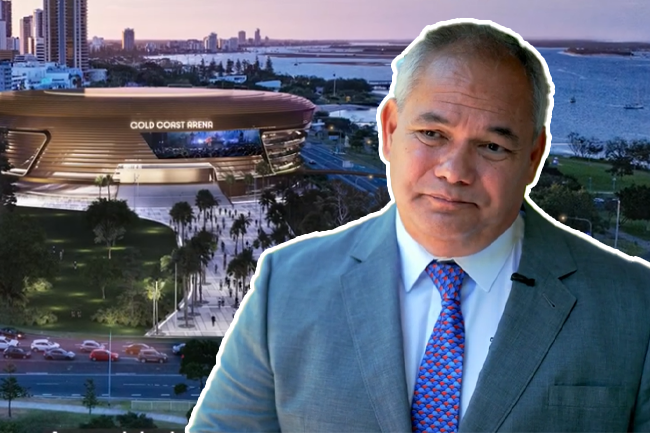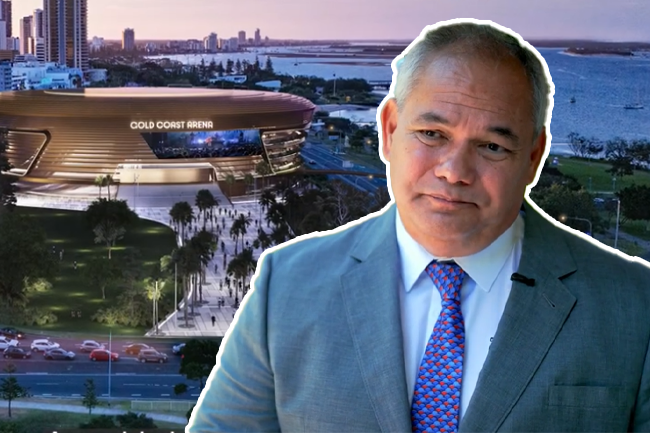
Independent Australia has conducted a very long investigation into Gold Coast Mayor Tom Tate, who made the news again last week for all the wrong reasons.
But as prominent Gold Coast community advocate and local historian Don Magin writes, Tate is just the symptom of a much larger malaise in the heart of civil administration.
AT THE HEART of all democratic governance lies a fundamental, unyielding distinction between the public interest and the private interest.
A collective moral imperative drives the public interest: to protect and enhance the long-term well-being, equity and social health of an entire population. It measures success not in monetary dividends, but in civic dignity, environmental resilience and universal liveability.
Conversely, the private interest operates entirely within the boundaries of the commercial market, prioritising short-term financial returns and capital accumulation.
A local authority exists primarily as the structural embodiment of a community's shared conscience, duty-bound to uphold collective human dignity and ensure that the foundational elements of a fair society are guaranteed to all citizens equally. When a civic administration functions as a faithful guardian of the public interest, it treats the city as a home to be nurtured for all generations and civic creeds.
However, when it treats civic affairs on the basis of profitability, it abandons its mandate, viewing citizens as consumers and shared public assets as liquid real estate.
Under this corporate civic model, the unwritten social contract is fractured and the foundational elements of a balanced society are systematically dismantled.

The systemic disease: A state re-engineered for profit
To understand why irreplaceable public assets are vulnerable across Queensland, we must lay bare the overarching systemic rot.
Using the City of Gold Coast – widely recognised as the premier “developers' paradise” – as the defining empirical catalyst, we see a profit-driven model that has reshaped the very DNA of civic governance through three critical battlegrounds:
1. How land is zoned: The developer’s canvas vs the citizen’s sanctuary
- The prostitution of density: Zoning codes are regularly bent, overwritten, or bypassed through “impact-assessable” applications and performance-based planning. High-rises creep into areas never designed to support them, stealing sunlight, fracturing neighbourhood character and placing immense strain on local infrastructure.
- The erasure of the buffer: Narrow green strips and environmental buffers are viewed by a commercial council as “wasted footprints”. Under a corporate lens, if a patch of land isn't generating a dollar yield per square metre, its zoning is vulnerable to being changed behind closed doors.
2. How budgets are allocated: The glamour projects vs suburban integrity
A public-interest budget is an exercise in equity, ensuring funds collected from the entire community are distributed to maintain foundational infrastructure — fixing suburban footpaths, upgrading local community pools and keeping neighbourhood streets clean.
- Subsidising private profit: Hundreds of millions of dollars are poured into stadium precincts and massive entertainment infrastructure. While framed as “economic stimulus”, the reality is public ratepayer money is used to de-risk private corporate investments.
- The suburban deficit: To fund these glamour projects, everyday suburbs –where families actually live and work – are put on an infrastructure starvation diet. Sidewalk repairs are delayed for years and community centres are starved of operational funding under the guise of “fiscal constraint”.
3. Who the city is ultimately built to serve: The consumer vs the citizen
This is the ultimate philosophical crisis unfolding across Queensland. When a council operates on a profitability matrix, it shifts its entire definition of who its primary stakeholder is.
- The deification of the transient: Cities are increasingly designed to cater to the tourist and high-wealth investor. Infrastructure is built to attract external capital rather than to support internal community life.
- The exile of the resident: The everyday resident is pushed to the margins. Public spaces where you can gather for free, without pressure to spend money, are systematically choked out. The city becomes an alienating, user-pays corporate landscape.

The build-up: Community capacity building vs the profit matrix
This systemic disease is most visible in how local administrations value social infrastructure. Essential spaces and services – such as libraries, swimming centres, open spaces and parks – are classic examples of community capacity building. They are social infrastructure, not corporate enterprises.
- Libraries and swimming centres: These assets do not exist to turn a financial profit. Their true return on investment is social, preventative and intellectual.
- The universality of open green space: Public parks provide universal liveability. A natural open space serves as an environmental and acoustic shield, offering free, uncommercialised sanctuary.
When a profit-driven council views these assets through a commercial lens, it catches them in a predatory profit trap. To execute this shift without public uproar, secretive administrations have weaponised the fundamental decay of Queensland’s planning laws.
The historical transition from the Sustainable Planning Act 2009 to the current Planning Act 2016 represented a catastrophic dismantling of prescriptive town planning rules. Subsequent amendments have delivered a highly liberalised, open-ended and performance-based framework.
Complicit council administrations across the state have filled this vacuum with vague corporate “motherhood statements” — utilising the Act's regulatory flexibility as a deliberate fog to hide the abandonment of public accountability.
The historical trust: A legacy of civic humility
Sixty years ago, civic leaders across Queensland understood that securing open space was a sacred duty. In 1966, dedicated trustee leases and public reserves were established to permanently safeguard vital coastal and regional green spaces for the community.
These historic efforts ensured that narrow green buffers would remain held in public trust, forever free from commercial encroachment. This legacy stands in stark, devastating contrast to the modern dictatorial elitism of administrations that seek to undo decades of public stewardship for short-term corporate gains.
The extreme abuse of public trust: The secret legal dismantling of Carey Park
Nowhere is this corporate elitism clearer than in the fate of Carey Park in Southport, on the Gold Coast. Traditionally a narrow green buffer strip separating heavy highway traffic from the city centre, Carey Park was gazetted as Crown land explicitly restricted to “Park and Recreation”, with the City of Gold Coast acting strictly as its statutory Trustee.
The community has been told that the proposed 12,000-seat Gold Coast Arena on this site is a “greenwashed” community benefit. In reality, placing a massive commercial stadium on this narrow open space erases its environmental purpose, replacing a free universal asset with a restricted, user-pays corporate footprint.
Because the State Government's 2024 Land Act amendments are not retrospective, historical actions must be judged strictly against the rigid public-interest protections of the Land Act 1994 as it stood at the time.
- The mid-2023 market admission
While the public was kept in the dark, the council's own Community Engagement Report (Page 4 of 34) confesses: ‘The concept of a Gold Coast Indoor Entertainment and Sports Arena (Gold Coast Arena) was taken to the market in mid-2023 via a “Problem and Opportunity Statement Process”...’. This confirms the Council was actively shopping public land before legislative protections were weakened and before the park was covertly converted to freehold title in 2026. - The fiduciary betrayal: A statutory breach of the trust
This timeline exposes a profound violation of the council’s fiduciary obligations under the Land Act 1994. As the designated statutory Trustee, the City of Gold Coast was legally mandated to manage and protect Carey Park exclusively for its gazetted public “Park and Recreation” purpose. By actively seeking to develop Carey Park with inconsistent commercial uses – as detailed in the the mid-2023 market-testing process – the Council acted entirely contrary to the explicit purpose of the lease and therefore offended the Land Act 1994.
This systematic evasion also manifests at 14 Ocean Street, Burleigh Heads. Records reveal the Burleigh Heads Library site (Reserve 907) remains Crown State Land mandated as a “Library”. In defiance, the Council has closed it without regard for its legally gazetted framework.

The statutory double standard: Violating heritage mandates
Even under pro-market legislation, Section 4(1)(a)(iii) of the Economic Development Act 2012 mandates ‘recognising the cultural heritage significance of places’. The Gold Coast City Council (GCCC) has flagrantly ignored this. Carey Park is listed twice on the local heritage register (LHR0041) for its fig and paperbark plantings and its historic sea wall. Treating this historic sanctuary as a blank developer canvas directly violates these statutory protections.
To protect these corporate outcomes from public challenge, the overarching statutory framework of Priority Development Areas (PDAs) is routinely deployed as an administrative escape hatch. While the parent Economic Development Act retains explicit clauses mandating the protection of heritage values under Section 4(1)(a)(iii), the declaration of a PDA allows a complicit administration to engage in a profound statutory deception.
By redefining “recognition” to mean minimal, tokenistic tree retention or cosmetic landscape additions, the Council uses the absolute planning power of the PDA to strip residents of their third-party appeal rights.
This legal loophole creates an environment of unrestricted development where the core dictates of the parent Act are selectively ignored, leaving the original public trustee obligations completely unprotected.
The statewide pathology: Queensland-wide patterns of systemic evasion
While the premier developer's paradise of the Gold Coast serves as the definitive empirical baseline for the hollowing out of public assets, the underlying administrative mechanics are a repeatable, statewide pathology. Every local authority from the southern border to the far north functions under the exact same statutory constraints.
When local governments pivot to a profit-driven matrix, they utilise this identical legislative architecture to override local town planning limits and escape public scrutiny.
A striking regional parallel manifests in the northern tourism hub of Airlie Beach, managed by the Whitsunday Regional Council. Mirroring the precise patterns documented at Carey Park, community advocates in the Whitsundays have been forced to contest top-down manoeuvres to reconfigure and commercialise public foreshore parkland and walkways to accommodate high-density, non-town-plan-compliant commercial footprints.
Whether it is the hollowing out of building setbacks and environmental buffers in Southport, the outright closure of gazetted state library reserves in Burleigh Heads, or the alienation of public coastal commons for private development infrastructure at Airlie Beach, the core deception remains identical. Across Queensland, when local authorities treat civic affairs through a matrix of profitability, the statutory protections of the land are selectively manipulated to lock out the public interest and completely abandon the sacred duty of care explicitly mandated by the historical trustee lease framework.
Conclusion: A call to reclaim civic balance
In late 2024, the City of Gold Coast issued a PR document titled ‘Gold Coast Arena’, stating it will be the next city-shaping project to establish the region as one of Australia's entertainment capitals. After site investigations, Council provided in-principle support for Carey Park to encourage investment, create hundreds of jobs and boost the visitor economy. The council claims community benefits include generating $1.5 billion in economic output over the first ten years and creating 740 full-time operational jobs.
Tellingly, there is no header for “detriments” in this document. To ensure total secrecy, Council authorised the Gold Coast Arena (Priority Investment Project) to be managed by Invest Gold Coast (IGC). As a fully owned and controlled entity, IGC provides a shield of “commercial in confidence”, effectively excluding the public interest and severe adverse impacts from the process.
Carey Park stands as an extreme warning to the entire state. It is time for Queensland residents to reject this dictatorial corporate mentality and demand a return to a fair and balanced civic society.
You can read more of IA's Tate Town investigation HERE.
 This work is licensed under a Creative Commons Attribution-NonCommercial-NoDerivs 3.0 Australia License
Support independent journalism Subscribe to IA.


Related Articles
- EXCLUSIVE: GC CEO secretively pushes through Tate pods development twice rejected by Council
- EXCLUSIVE SUMMARY: Tom Tate and his Baker's pods collapse GC democracy
- EXCLUSIVE: GC CEO secretly pushes through Tate development twice rejected by Council
- EDITORIAL: GC Mayor makes millions selling Bowls Club to Chinese developers
- EDITORIAL: Have-a-go Tate and the saga of the Surfers Plaza Resort