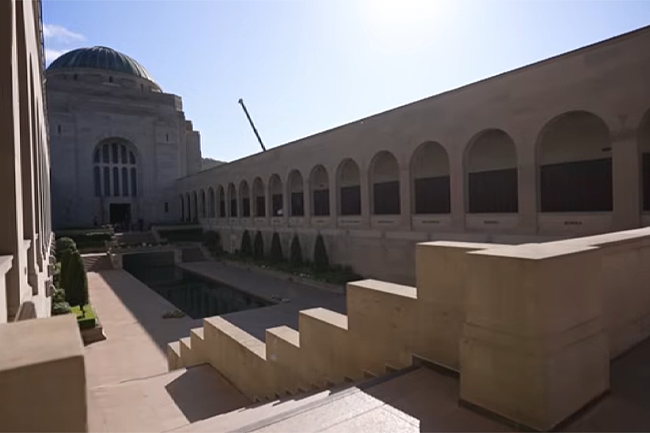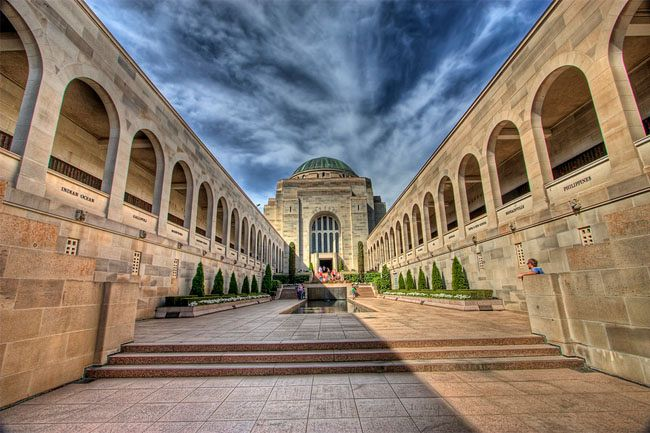
The Australian War Memorial has taken tentative steps towards recognising the Frontier Wars, but its conflicting messages reveal an institution still struggling to confront Australia's full military history, writes Dr David Stephens.
“It’s just a jump to the left/And then a step to the right.”
~ ‘Time Warp’, The Rocky Horror Picture Show, 1975.
That sums up the recent history of the Australian War Memorial as it comes to grips with our foundational conflict, the Australian Wars, sometimes called the Frontier Wars.
Jumps to the left: April-June
First, interviewed by Peter FitzSimons (published 19 April), War Memorial Director Matt Anderson confirmed that “frontier wars” would be recognised:
“Because, you know, it was warfare, it was guerrilla warfare and they should be given the dignity of people understanding that they formed war councils, that they actually fought a war of manoeuvre. They were outgunned, they were outmanned, but they still resisted, and they resisted in war-like ways, and that’s the story that will be told in the galleries.”
Then there was the Memorial’s submission (signed off by the director on 29 May) to the Inquiry by the parliamentary Joint Standing Committee on Aboriginal and Torres Strait Islander Affairs (JSCATSIA) into racism, hate and violence against First Nations Australians.
The submission said the Memorial would focus on ‘warlike actions’ and ‘organised resistance’, not on Indigenous ‘victimhood’, but that its treatment of the Australian (Frontier) Wars ‘is an important step in reconciliation in Australia’.
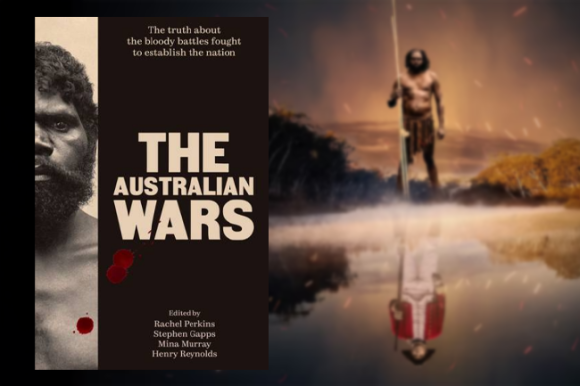
Before that letter appeared on the JSCATSIA website on 24 June, we heard from the Memorial at Senate Estimates on 2 June:
Mr Hitches [Memorial executive director, development]: There are two specific galleries either side of the main concourse where you walk into the memorial. One side of that will be totally devoted to the Frontier Wars.
Senator David Shoebridge [Australian Greens]: Is it half Frontier Wars, half other pre-1914 conflicts?
Mr Hitches: That’s correct. We currently have 204 square metres.
This was a notable jump to the left: for years the Memorial had insisted that the 204 square metres would include the Australian contingents to the New Zealand Wars 1845-72 and the Sudan 1885, as well as the Australian Wars.
Finally, in late May or early June, a Labor MP received a letter from the office of Veterans’ Affairs Minister Matt Keogh. It contained words like those in the Memorial’s JSCATSIA submission and Estimates evidence. (This author has seen the letter.)
A step to the right, 23 June
On 23 June, the Memorial opened its new Atrium and Anzac Hall (part of its $550 million redevelopment).
The Memorial’s media release said:
‘Visitors now can visit three major new galleries on modern conflicts: Afghanistan, Peacekeeping, and the Middle East. The new space also houses dynamic reimagined displays from the Second World War including G for George in Bomber in Command, [the Battle of] Milne Bay and Sydney Under Attack [from Japanese submarines].’
Afghanistan (2001-21), Peacekeeping (from 1947) and the Middle East (from 1990) were all newish, doing more on these topics than previously at the Memorial. On the other hand, there was the “beloved” (the Memorial’s word) G for George, the Lancaster Bomber that had been a centrepiece of the old Anzac Hall for decades, plus two well-known episodes from 1942.

The members and senators who attended the opening – the Prime Minister had adjourned Parliament early – were on familiar territory. The Governor-General and the Prime Minister gave copybook remembrance-related speeches, like those made on Anzac and Remembrance Days for decades.
The PM paid tribute to the crews of G for George, flying “against the odds, ever deeper into enemy skies”, without mentioning the destruction wreaked beneath. That emphasis on Australian heroes in the air, rather than German victims on the ground, was how the Memorial had done that story for many years.
Charles Bean (1879-1968), journalist, war correspondent and historian, central to the founding and early development of the Memorial, received a good workout, as he often has in the place’s long history. The Governor-General mentioned him three times. Director Anderson squeezed six Beans into his speech and added another in a media release tidying up after an altercation between his head of communications and a press photographer.
So, we had reverence, familiar tropes, the inevitable Bean, and a middle-aged to elderly, predominantly Anglo-Celtic audience, with some military uniforms. Conservative, comfortable, predictable, but with some new exhibits on the old theme of “service and sacrifice”. Safely in traditional territory.
Given the Memorial’s concurrent small jumps regarding the Australian Wars, it was surprising they were missing at Anzac Hall. Charles Bean’s extensive published work had overlooked frontier conflict and it was still pretty much absent at the big Anzac Hall reveal.
There was a nod – hardly a jump – at the start of the Governor-General’s remarks (emphasis added) :
“I pay my respects to elders, past and present, and all First Nations people here today, particularly those who have served our nation in uniform.”
No recognition of service by First Nations people not present, let alone of defence of country by First Nations people not in uniform. Cautious indeed.
The Memorial’s Indigenous liaison officer, Ngunnawal/Gomeroi man Michael Bell, gave the Welcome to Country, for which the director thanked him. Bell sat in the front row, next to the Defence Minister. (Bell spoke for some 15 minutes. We have tried but failed to obtain a text of his remarks or find the address on YouTube or Facebook.)

If the Welcome to Country was a small jump to the left, the Memorial’s media release for the opening sidled the other way:
‘The AWM is still in the process of completing galleries with the Pre-1914 and Discovery Zone Interactive Learning Centre to be delivered in 2028. The Pre-1914 galleries are currently recruiting for experts.’
There was no mention there (or in the director’s speech) that the Pre-1914 galleries are to include the Australian Wars and that the experts being recruited are First Nations.
Conclusion
The inconsistency between the Memorial’s messages – the little jumps to the left, the big Bean-infused stride to the right – is puzzling. Perhaps it’s a case of horses for courses, or messages tailored to audiences.
Corporate plans set out how an entity intends to implement its policies.
A deep dive into its current Corporate Plan 2025-2029 (2025-26 update, dated 2025) suggests the Memorial has very little real interest in the Australian Wars, given:
- the word ‘Indigenous’ appears just once, referring to the work of Michael Bell (page 14);
- the words ‘frontier conflict’, ‘Frontier Wars’ or ‘frontier violence’ appear not at all; and
- the chart on page 17 does not include ‘First Nations’ or similar as a “Key Stakeholder” of the Memorial, though it does include these 11 stakeholders: Australian Defence Force; ex-service associations; Federal Government; Department of Veterans’ Affairs; council staff volunteers; ACT Government; visitors (onsite/online); schools/education(onsite/online); Memorial supporters (public, corporate, philanthropic); cultural sector; tourism sector.
Why is the Memorial so cautious on the Australian Wars?
The final paragraph of director Anderson’s submission letter gives a clue:
‘We are under no illusions; this work will be challenging. We understand that regardless of what we put in our galleries, print in our publications/website or host in public programs, it will be too much for some and not enough for others.’
That’s a good statement of a perennial problem in public policy — balancing competing interests. The Memorial should try harder to solve it. Australia needs our premier commemorative institution to firmly and bravely confront our history.
Dr David Stephens is editor of the Honest History website and a member of the Defending Country Memorial Project, campaigning for the Australian War Memorial to properly recognise and commemorate the Australian Frontier Wars.
 This work is licensed under a Creative Commons Attribution-NonCommercial-NoDerivs 3.0 Australia License
Support independent journalism Subscribe to IA.