Explore safe teeth-straightening options at home, what really works for teeth alignment and how clear aligners can help you straighten teeth without braces.
A straighter smile can support confidence and oral health, but many people prefer to avoid traditional metal braces. This has made teeth straightening at home an increasingly popular option for those seeking a more convenient approach. However, there are no natural or DIY methods that can safely move misaligned teeth into new positions. Oral exercises and myofunctional exercises may support proper tongue, lip, and jaw posture, but they do not physically reposition teeth.
For people who want to straighten their teeth at home, clear aligner treatment is the only appropriate option. This guide explains how at-home clear aligner treatment works, what results to expect, and why professional oversight remains important throughout the process.
Straighten teeth without braces using clear aligners at home
If your goal is to straighten teeth at home without braces, clear aligners are the only option for suitable cases. These removable trays are designed to apply controlled pressure to specific teeth according to a planned sequence.
Unlike traditional braces, clear aligners do not use metal brackets and wires. Their discreet appearance and removable design make them appealing to people who want a less noticeable approach to orthodontic treatment.
However, clear aligners are not a DIY solution. A suitable treatment plan should consider your current alignment, bite, dental health, and the amount of movement required.
For people exploring professional options, teeth straightening can provide an alternative to traditional orthodontic appliances.
What natural habits can support teeth alignment?
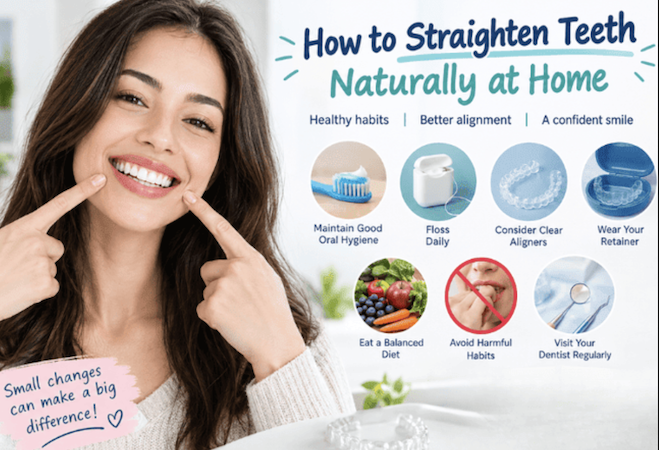
Although natural methods cannot replace orthodontic treatment, certain habits can support healthier teeth and gums.
Maintain consistent oral hygiene
Crowded teeth can create areas that are difficult to clean. Plaque can accumulate between teeth, increasing the risk of cavities and gum problems. Brushing thoroughly and cleaning between teeth can help maintain the oral health needed for any future teeth straightening treatment.
Avoid DIY pressure on your teeth
Trying to straighten teeth with homemade devices, elastic bands, or constant finger pressure can damage gums and supporting tissues. Tooth movement needs controlled forces applied according to a treatment plan rather than unpredictable pressure.
Address harmful oral habits
Some habits can influence dental development and tooth positioning, particularly in children and adolescents. Persistent thumb sucking, certain tongue-thrusting patterns, and other oral habits may affect alignment. Discussing these concerns with a dental professional can help determine whether intervention is appropriate.
Wrap up
Wanting a straighter smile does not mean you have to rely on DIY methods or traditional metal braces. Healthy oral care can support your teeth and gums, while professionally planned clear aligners can provide a convenient way to work toward better teeth alignment at home.
If you are considering teeth straightening, explore your options and choose a treatment approach based on your individual dental needs. With the right guidance, you can work toward a healthier, more confident smile without attempting risky at-home tooth-moving techniques.
FAQs
1. Can I straighten my own teeth at home?
A: No. Avoid DIY methods. Professionally guided clear aligners may allow safe teeth straightening at home.
2. How to fix crooked teeth quickly?
A: Clear aligners or braces can correct crooked teeth, but treatment time depends on your individual alignment.
3. What straightens teeth the fastest?
A: The fastest safe option depends on your case. A dental professional can recommend the most suitable treatment.
4: Can teeth be fixed naturally?
A: Healthy habits improve oral health but cannot significantly straighten crooked teeth. Orthodontic treatment is usually needed for alignment.