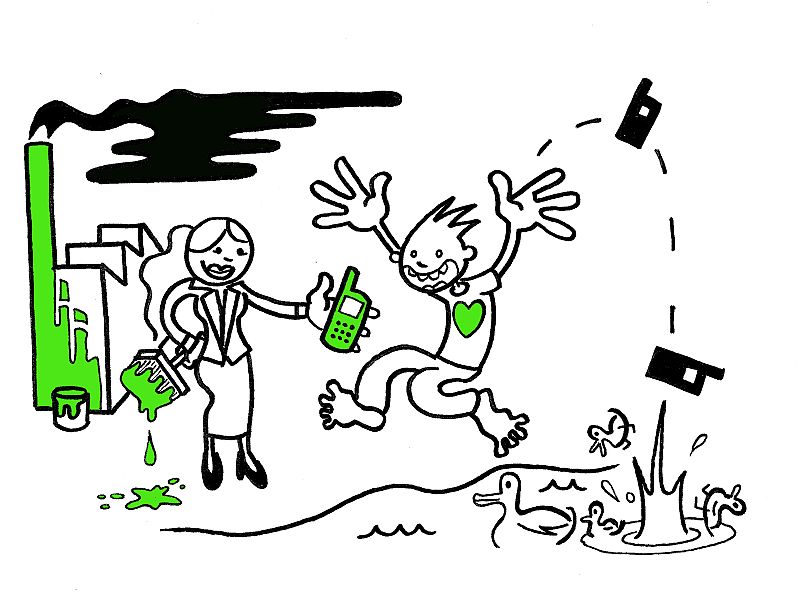
You’ve probably seen it before: a huge company decides to go “green”.
Their packaging suddenly depicts leaves or trees, and their advertisements claim that they’re “saving the planet”. Their website has a whole section dedicated to sustainability. It sounds great in theory, but the evidence isn’t there when you go looking for it.
This is what’s called greenwashing.
What’s greenwashing?
Greenwashing is essentially when a company claims to be environmentally friendly but does little to nothing to back that claim up. It’s more about marketing and sales than actual action and environmental protection or awareness. It’s when a company tries to clean up its image rather than fixing the problem.
This is a huge issue in Australia. In fact, it’s one of the Australian Competition and Consumer Commission’s (ACCC) biggest concerns. But why is it such a problem in Australia? The reason is simple: more Australians than ever are trying to shop sustainably.
When companies fake or overrepresent their green credentials, they're not only tricking shoppers, but also making it harder to tell which businesses are actually doing the right thing.
Why do companies do it?
The answer, as usual, is pretty simple — it’s all about generating sales and manufacturing a good perception in the public eye.
More and more people are concerned about sustainability. Australia in particular has seen a huge surge of people wanting to do their part for the planet, or at the very least, reduce their carbon footprint.
People want to recycle and they want companies to do the same. Companies know that people care about the environment, so they’ll do anything to appeal to those values. It’s much easier to appeal to those values than to make actual changes in their supply chain.
Common ways companies practice greenwashing
Once you know the signs of greenwashing, you can start spotting them more easily. Here are some common ways companies practice greenwashing:
Vague marketing language
It’s easy to say that a product is “eco-friendly”, “natural”, and “green”. But does that actually mean anything or is it just an empty marketing term? If you don’t know how it’s “eco-friendly”, then it’s possibly just marketing.
Irrelevant claims
A product claims to be "CFC-free" — but does that actually mean anything? CFCs have been banned in Australia for decades. It's not exactly a bold commitment. This is a common tactic: highlight one positive attribute while ignoring the bigger picture. Recyclable packaging, for instance, doesn't offset high carbon emissions.
No proof
If a company makes big promises but offers no proof, no data, no certifications, or no reports, then it might be a red flag.
Why it matters — especially in Australia
Australia is on the front lines of environmental change. From increasingly severe bushfires to the declining health of the Great Barrier Reef, sustainability isn't a trend here: it's a reality we're having to live with.
Greenwashing is slowing us down, creating a false sense of progress while we’re actually going backwards. It also makes it more difficult for genuinely green businesses to shine.
To the average citizen, it’s a form of deception, making us think we’re making a positive choice while actually being duped.
How to spot the real deal
You don't have to be a scientist or a researcher to spot the real deal:
- Check for certifications like Australian Certified Organic or the Energy Rating logo.
- Check to see if the company publishes detailed, audited reports about its sustainability efforts.
- Be wary of marketing buzzwords without any real information to back them up.
- Do a quick search to see if the business has a history of criticism or investigation.
When researching a company's environmental track record, consider doing so privately. Finding the best VPN for Australia can help you browse without your searches influencing the ads and targeting you late.
Are things getting better?
Despite understandable scepticism, things are slowly getting better. Australian authorities are finally cracking down on greenwashing. The ACCC is getting serious about enforcing environmental laws. New guidelines are out, requiring companies to be more transparent.
Some companies are actually doing the right thing, reducing waste, using clean energy and being honest about progress, even if it’s imperfect. But there’s a long way to go.
What you can do as a consumer
You have more power than you think. Ask questions, choose carefully and vote with your money. If enough people demand real sustainability, companies will respond. You don’t have to be perfect: small steps, like checking labels or supporting transparent brands, still help.
The bottom line
Greenwashing is successful because it sounds so believable. It plays on your good intentions and makes you think that things are improving. But making a difference for the environment takes effort, investment and accountability.
The next time you see a product that boasts about being "green", look closer. Take a little time to dig a bit deeper and support brands that are genuinely trying to make a difference.

Related Articles
- How Australians are taking their health back into their own hands
- How to manage a Niseko property investment from anywhere in the world
- How to know when it's time to restring your racquet
- Why academic progress stalls and how to get back on track
- Australia's used car market growing from strength to strength