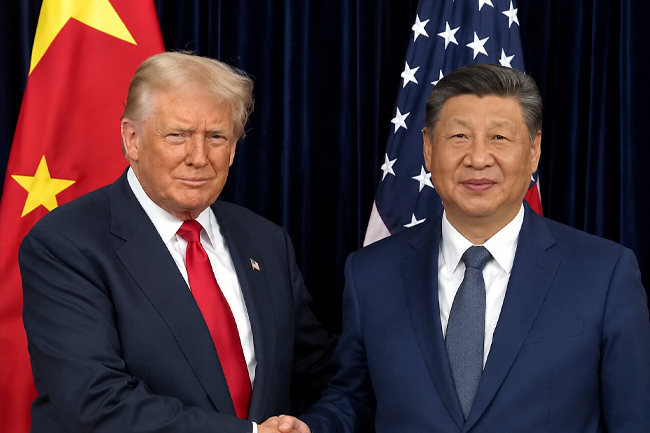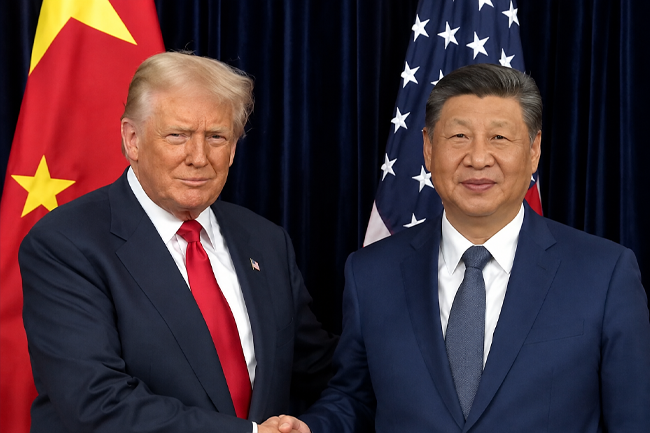
As Trump and Xi prepare to meet, the world’s mounting crises demand cooperation that neither leader seems willing or able to deliver, writes Dr Mark Beeson.
ANY MEETING between the world’s two most powerful men is potentially a good thing.
Diplomacy is better than conflict; exchanging views could help us understand the key issues that threaten our collective future, wherever we may live.
The dangers are well known: war, climate change and perhaps most urgently of all, the recursive development of AI. People living in some of the global south’s more impoverished or conflict-prone countries may object that this is a good set of problems to have, but we literally are where we are.
The chances of Chinese President Xi Jinping and U.S. President Donald Trump doing anything collaborative or meaningful about any of these problems are vanishingly small. Trump has been unable to stop his own forever war of choice, and Xi seems reluctant to get involved in conflicts that involve allies like Iran or Russia.
This is especially unfortunate as Xi may be the only person who might be able to talk Russian President Vladimir Putin into ending his deranged ambition to make Russia great again.
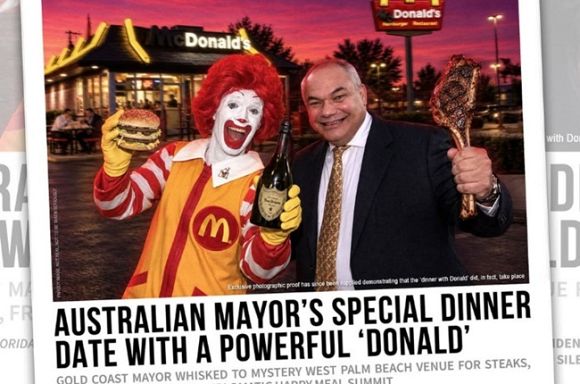
Speaking of deranged leaders keen to make their countries great again, neither Xi nor Trump is likely to give ground on their own megalomaniacal ambitions. Trump is increasingly delusional and surrounded by people too frightened or self-interested to speak truth to power.
The one glimmer of hope in this context is that even the tech titans who influence Trump’s views on the future of AI are calling for the industry to be regulated because the dangers posed by recursive self-improvement are potentially so great.
Will the real prospect of artificial intelligence (AI) wiping out humanity encourage Trump and Xi to put the collective interest ahead of the national variety? Hardly. Not only is Trump convinced that it’s essential for the U.S. to “win” the AI race with China, but he and his family are personally making billions from its continued development.
American policymaking is hostage to greed and insider trading and dominated by an old man who won’t have to live with the consequences of decisions he makes.
Xi is unlikely to be any better. True, China has rapidly emerged as a leader in adopting green energy. AI will wipe us out, but given Trump’s enthusiasm for fossil fuel development, this is effectively a non-starter for collaboration. Still, it literally may no longer matter if some of the predictions of AI’s breathtakingly rapid development turn out to be accurate: we may not be around to worry about it.
We might hope and expect that leaders confronted with the non-negligible possibility that humanity might be wiped out would want to at least have a chat about it. Perhaps they will, but the likelihood of action and a joint position are probably zero. Xi is just as worried as Trump is about “losing” the AI race and risking the other side getting a decisive strategic advantage if AI disables their war-fighting capabilities and undermines deterrence.
Xi’s also got his own non-negotiable unfinished geopolitical business to consider, of course, especially as he’s getting on a bit, too. Getting Taiwan back would look good on his CV and ensure his place in the pantheon of Chinese leaders. And given that his opposite number is currently bogged down in Iran and rapidly running out of expensive bombs, this might be a good time to ramp up the pressure.
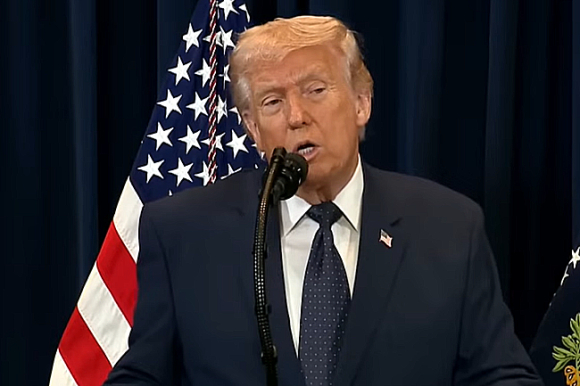
That might be one thing Trump could make a deal on, too. After all, he’s a bit mystified as to why he’s committed to underpinning the security for all these allies on the other side of the world who don’t pull their weight. I’m sure China would pay quite a bit for him to turn a blind eye.
I’m sure I’m just being paranoid and thinking the worst of someone completely lacking in principles, empathy and any understanding of the consequences of his own actions — for anyone other than himself and his family, at least. But even if we all dodge a very expensive strategic bullet, we’re still stuck with the problem of climate change, which still threatens the continuation of civilisation-as-we-know-it, something even the World Economic Forum recognises.
At least both sides ought to have an interest in trying to stabilise the economic relationship and avoid tariff tantrums. Given that the continuing expansion of economic activity on a finite planet may not be possible, this may not be a cause for celebration, but it does reflect our collective preferences.
It will be interesting to see what, if anything, counts as a “deliverable” from this iteration of the G2. The fact that it’s happening at all, and that Trump and Xi seem to have some sort of rapport, is not nothing. Jaw-jaw is better than war-war, as Churchill famously pointed out. But if they don’t actually do something to address the very real threats facing humanity, then “we” can be forgiven for despairing about the world’s political leaders.
Yet another reason that the world’s lesser powers should band together and try to encourage a change in thinking and behaviour on the part of the big two, perhaps. But that would require our leaders to change, too. Not much chance of that in Australia’s case.
Dr Mark Beeson is an adjunct professor at the University of Technology Sydney and Griffith University. He was previously Professor of International Politics at the University of Western Australia.
 This work is licensed under a Creative Commons Attribution-NonCommercial-NoDerivs 3.0 Australia License
Support independent journalism Subscribe to IA.


Related Articles
- CHRIS HEDGES: Trump’s assault on the midterms threatens American democracy
- CARTOONS: Trump's name-changing bender takes another turn
- CARTOONS: Donald Trump shrugs off 'catering-gate'
- Middle powers must step up where Trump won't
- Donald Trump: A presidency of metaphors