A sweeping social media ban ignited mass youth protests in Nepal, leaving dozens dead, thousands injured and the nation’s leadership in turmoil, writes Anny Chau.
ANTI-GOVERNMENT protests erupted in Nepal on 8 September 2025 following a social media ban by the Government. Protestors are expressing concerns about government corruption and economic inequality.
Despite the Prime Minister’s resignation, public discontent remains high. Sushila Karki was appointed as interim Prime Minister on 12 September 2025.
What fuelled the protests
Anger toward the Government had been building for some time. The young generation was facing significant frustration due to the limited economic opportunities. According to the World Bank, the unemployment rate for Nepal youth aged 15-24 was 20.8 per cent in 2024, which is two 0.2 times higher than Australia.
Meanwhile, the hashtag “Nepo Kids” gained attention online, revealing the lavish lifestyle of the children of Nepali government officials. The posts showed luxury cars, expensive clothes and exclusive holiday destinations while the average monthly salary of Nepali is only approximately AU$860, according to World Salaries. This trend attracted millions of views and has fueled outrage over the corruption.
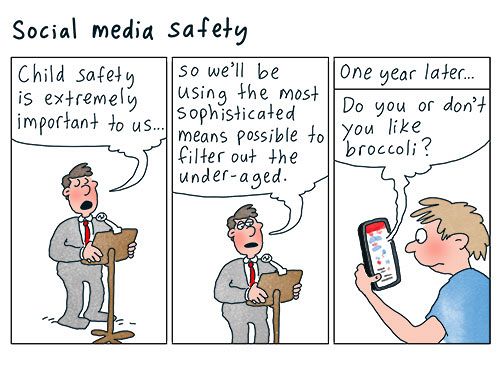
The protests were sparked when the Government decided to ban 26 social media platforms on 9 September 2025, including Instagram, Facebook, WhatsApp and YouTube. The Nepali Government claimed the ban is due to the failure of companies to register with the Government before the deadline.
The Government also justified the ban as a way to tackle fake news, hate speech and online fraud. However, the proposed bill was criticised as a restriction on the freedom of expression.
The young Nepali started to go on the street and fight against the Government.
“Gen Z felt frustrated over the corrupted governance and wanted a change for the country,” said Kristina Bishowkarma, a Nepali student currently studying in the United Kingdom, who continues to support the movement from afar.
What happened during the protest
On 8 September, thousands of students and Gen Z activists demonstrated in Kathmandu, the capital of Nepal, opposing the ban, corruption and misgovernance.
Protesters gathered near the Parliament and blocked highways. Events turned deadly when police fired live rounds, water cannons and tear gas to disperse the protesters as they approached the Parliament. Amid the chaos, some protesters vandalised a gate at the Parliament and set it on fire.
The situation intensified when 19 people were reported killed that day. Although the social media ban was lifted late that night, it had little effect on the unrest.
On 9 September, the demonstrations escalated into riots.
Protesters defied curfews, stormed the Parliament and set fire to Singha Durbar, a major government complex that serves as Nepal’s central data hub. The Supreme Court also faced storming, leading to an indefinite postponement of all pending cases.

The presidential palace, the Prime Minister’s official residence and several politicians’ homes were all torched. Videos shared on social media showed protesters attacking Nepali Congress party leader Sher Bahadur Deuba and Arzu Rana Deuba, the current Foreign Minister, at their homes.
Hilton Hotel, the tallest building in Kathmandu, was also set on fire, leaving behind significant damage. The hotel had opened in July 2024. The Tribhuvan International Airport was also temporarily shut down till Wednesday.
The chaos spread beyond Kathmandu. Inmates took advantage of the protest and tried to escape; at least 13,000 inmates were reported to have escaped from gaols in all 77 districts during the protest.
The Ministry of Health confirmed at least 72 people had died in clashes since 8 September, with over 2,113 injured. The Nepal Police also reported the deaths of three officers.
Gen Z organisers emphasised that their core movement called for peaceful protests. “Killing people, demolishing things, vandalising, looting — this is not our generation,” said activist Tanuja Pandey to The Times of India.
Bishowkarma aligned with Pandey’s statement:
Our plan was to peacefully protest for our rights and get the message out to the Government in hopes they’ll come to their senses.
It’s really sad that violence was involved just to get the message across… the past cannot be reversed or changed now, so what we really need to aim for is a bright future that we always looked forward to.
In a video message, Nepalese Army Chief Ashok Raj Sigdel urged protesters to stop the demonstrations to prevent further loss of life and property and to engage in dialogue.
Nationwide curfews were imposed until Thursday morning. The military, which took control of Kathmandu and other cities, warned that violence and vandalism would be punished.

What’s next after the protest
Prime Minister Khadga Prasad Oli announced his resignation after his office was stormed by protesters on 9 September. The Minister for Agriculture, Water and Health also resigned, while Home Minister Ramesh Lekhak stepped down on 8 September, following the violence.
Oli stated before his resignation that his government was “not negative toward the demands raised by the Gen Z generation” and expressed deep sadness over the incidents.
Oli’s resignation left the political system paralysed. The President, Ram Chandra Poudel, accepted his resignation and appointed Oli to lead a caretaker government until a new one is established. However, it was unclear where Oli was.
Bishowkarma said:
“After the resignation, we need to choose a new leader for our country and this needs to be done very wisely for us to truly fulfil our dreams of creating a new Nepal.”
The President appealed to the protesters for a peaceful resolution and called on youth protesters to “come to talk”.
Student leaders were consolidating a fresh list of demands and discussing appointing an interim leader to run the country.
On 12 September, Sushila Karki was appointed as the interim Prime Minister by Gen Z demonstrators, marking a historic step as the first female Prime Minister in Nepal.
Karki, a former chief justice, was one of two presiding Supreme Court judges who gaoled a serving government minister for corruption in 2012, a first at the time for Nepal, trying to go against the culture of graft.
Bishowkarma said:
“We want a good leader for our country, no more corruption, we want rapid development with the facilities, infrastructure, transport network and lots of opportunities in the country for the people.”
Anny Chau is a student journalist originally from Hong Kong, currently pursuing a journalism degree in Australia.
 This work is licensed under a Creative Commons Attribution-NonCommercial-NoDerivs 3.0 Australia License
Support independent journalism Subscribe to IA.