A sharp appellate ruling has struck down NSW’s ‘social cohesion’ protest laws as unconstitutional, placing Queensland’s speech crackdown and looming federal legislation squarely in the legal firing line, writes M Dalton.
A UNANIMOUS NSW Court of Appeal has struck down the Bondi-era Public Assembly Restriction Declarations (PARD) scheme as an unconstitutional burden on the implied freedom of political communication.
The ruling's reasoning reaches directly into the Queensland speech-law prosecution adjourned to 29 April, the Commonwealth's proposed Combatting Antisemitism, Hate and Extremism Bill and the Federal Government's ASIO warrant expansion proposals.
The “social cohesion” justification has now failed judicial scrutiny at the highest appellate level in the country's most populous state. Legislators drafting to the same rationale should take notice.
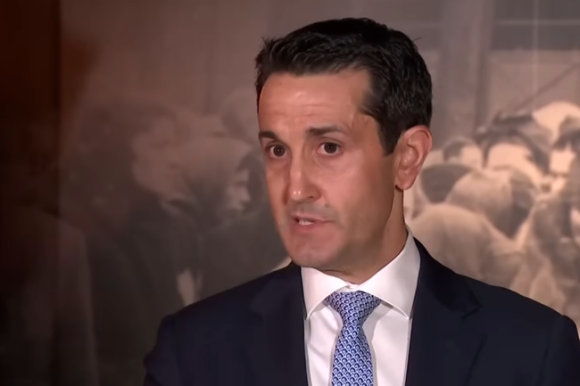
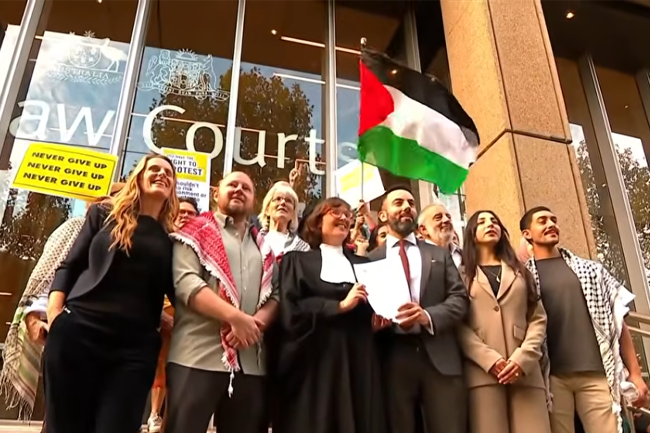
On Thursday 16 April 2026, the NSW Court of Appeal handed down a unanimous judgment that the Minns Labor Government's Bondi-era protest restrictions were unconstitutional. Chief Justice Andrew Bell, President of the Court of Appeal Julie Ward, and Justice Stephen Free held that the PARD scheme, rushed through the NSW Parliament on Christmas Eve 2025 in an emergency sitting, impermissibly burdened the implied freedom of political communication under the Commonwealth Constitution.
The decision, delivered in Sydney's Banco Court, is the second Minns Government anti-protest law to be found unconstitutional in six months. That pattern is about to become a problem for more than just New South Wales.
The scheme the court struck down
The PARD scheme empowered the NSW Commissioner of Police to make a declaration restricting all authorised public assemblies in a defined geographic area for a defined period following a suspected terrorist act. The impugned provisions were Part 2 Division 3A of the Terrorism (Police Powers) Act 2002 (NSW), specifically sections 23B(2), 23C and 23D, read with sections 27A and 27B of the Summary Offences Act 1988 (NSW).
While a PARD was in force, the ordinary form 1 authorised-assembly system was extinguished across the declared area. No public assembly could be authorised. Police retained move-on powers under separate provisions to enforce the restriction. The declaration could be renewed.
The scheme was used once, at scale. NSW Police Commissioner Mal Lanyon issued a PARD covering Sydney's central business district and eastern suburbs, extended it several times through the summer, and kept it in force for approximately two months.
The restricted period coincided with the visit of Israeli President Isaac Herzog in early February, which drew large protests and, according to a watchdog investigation, allegations of widespread police misconduct. The restrictions were lifted shortly after Herzog left the country.
The challenge
Three plaintiffs filed a constitutional challenge on 7 January 2026 in the NSW Supreme Court proceeding 2026/00007005: Gumbaynggir, Bundjalung and Dunghutti activist Elizabeth Jarrett, representing the Blak Caucus; Palestine Action Group organiser Joshua Lees; and Jews Against the Occupation '48 organiser Michelle Berkon.
Their plaintiffs' submissions, filed 26 January 2026 and publicly accessible through the NSW Supreme Court documents repository, sought declarations that the impugned provisions impermissibly burdened the implied freedom of communication on governmental and political matters and were invalid.
David Hume SC appeared for the plaintiffs. Brendan Lim SC appeared for the State.
The United Nations Special Rapporteur on the Promotion and Protection of Human Rights and Fundamental Freedoms while Countering Terrorism intervened in the proceedings, filing submissions on 27 January 2026 and granted leave to appear as amicus curiae.
The Rapporteur's submissions framed the PARD scheme against international human rights law standards, including International Covenant on Civil and Political Rights Article 21 and Human Rights Committee General Comment 37 on the right to peaceful assembly. The UN intervention elevated the case's standing under international norms.
What the Court found
The Court of Appeal applied the Lange / McCloy framework. The implied freedom of political communication, first articulated by the High Court in Lange v Australian Broadcasting Corporation in 1997, is a structural limit on both Commonwealth and State legislative power. The current operative test, from McCloy v New South Wales (2015) and refined in Brown v Tasmania (2017), is a three-stage structured proportionality analysis. A law that burdens political communication is constitutionally valid only if it is suitable (rationally connected to a legitimate end), necessary (there is no obvious less-restrictive alternative) and adequate in its balance (the importance of the end is not outweighed by the burden on the freedom).
The State argued the PARD scheme's purpose was “protecting the community and enhancing social cohesion” in the aftermath of the Bondi Beach attack. The State's legitimate-end argument had a problem of its own record. At the 26 February hearing, Justice Free put to the State's counsel that NSW Attorney-General Michael Daley had said publicly that the law was intended to “signal to the community that assembling in public spaces in the designated area is discouraged”.
The State's reply, through Brendan Lim SC, was that the purpose was not to discourage protests. The Court was unpersuaded.
The reported judgment language, carried by RNZ and confirmed in contemporaneous reporting by The Guardian Australia, ABC News, The Sydney Morning Herald and the Australian Financial Review:
“But that does not make it any more constitutionally permissible to seek to address the social repercussions of the event by quelling all public assemblies in a particular area in the name of preserving social cohesion.”
The scheme was declared invalid. Charges laid during the PARD period are now liable to withdrawal. Greens MLC Sue Higginson, a lawyer and the party's justice spokesperson, said publicly on the day of the ruling that the charges “need to be withdrawn” and that civil liability exposure for the State was “in the tens of millions”.
Premier Chris Minns said in a statement that the Government was “disappointed” by the ruling but stood by its decision to introduce the legislation, citing the 15 lives lost in the Bondi attack.
Why Queensland is next
On 8 April 2026, Liam Parry became the first person charged under Queensland's Fighting Antisemitism and Keeping Guns out of the Hands of Terrorists and Criminals Amendment Act 2026, introduced on 10 February 2026 by Police Minister Dan Purdie of the Crisafulli LNP Government and assented on 11 March 2026.
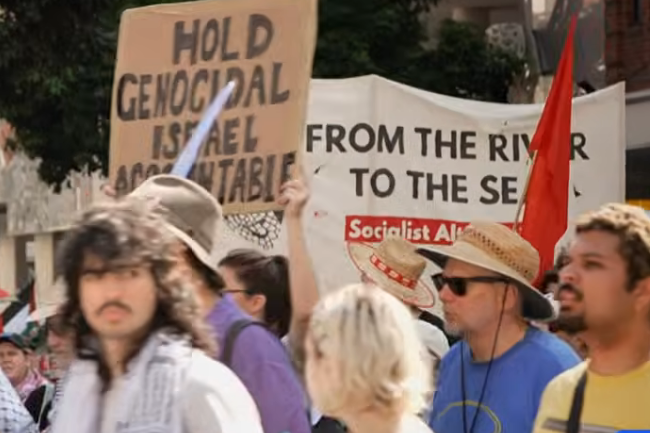
Purdie delivered the introductory speech articulating the Bondi rationale. Parry was arrested on 11 March for reciting the phrase “from the river to the sea” at a pro-Palestine protest outside Queensland Parliament. His matter was briefly heard at Brisbane Magistrates Court on 8 April and adjourned to 29 April, where the defence is expected to challenge the constitutionality of the law on implied-freedom grounds.
Queensland Deputy Premier Jarrod Bleijie has been the law's public defender since Parry's arrest, telling the ABC on 8 April that ‘he was confident the laws against “venomous, poisonous rhetoric” were valid’.
Outside the courthouse the same day, 70-year-old Mark Gillespie was warned by police for holding a sign that read ‘from the sea to the river’, a twist on the banned phrase that swapped the word order. Gillespie agreed to put the sign down after police told him the law could capture phrasing that resembled the prohibited expression. He was not arrested or charged.

Gillespie is not the only 70-year-old the law has reached. On 18 March 2026, Catholic anti-war activist Jim Dowling was charged for displaying a banner outside the Brisbane headquarters of Boeing that read ‘From the River to the Sea, Brisbane will be free of Boeing’. Dowling, also 70, appeared at Brisbane Magistrates Court on 14 April, attempted to plead insanity, was granted bail and adjourned to 29 April.
Jim's son, Franz Dowling, was also initially raided by police over a similar banner; his charges were dropped and he was let off with a warning. The Dowling cases extend the law's reach well beyond any plausible reading of its antisemitism rationale. A protest banner critical of a defence contractor, caught by a law Parliament ostensibly drafted to counter antisemitism, is the textbook McCloy adequacy problem.
The Jarrett ruling is not binding on Queensland courts. A decision of the NSW Court of Appeal is, however, a highly persuasive appellate authority, particularly on reasoning. The Queensland law relies on adjacent “community safety” and “fighting antisemitism” rationales that track the same architecture. After Jarrett, that architecture has lost at the appellate level.
University of Queensland public policy professor Katharine Gerber told ABC Brisbane earlier this month that the Queensland law is “extremely vulnerable” to a constitutional challenge and unlikely to survive a High Court challenge. The Jarrett reasoning gives that prediction considerably more force. The Human Rights Law Centre described the Queensland law at passage as ‘divisive and discriminatory’.
Students for Palestine convenor Ella Gutteridge, speaking outside court on 8 April, summarised the public argument:
“They're unconstitutional and they fundamentally undermine freedom of speech in this country.”
A defence that was an uphill argument on 7 April is now a McCloy-grade argument on 29 April.
The Commonwealth problem
The Commonwealth's Combatting Antisemitism, Hate and Extremism Bill 2026 is presently before the federal Parliament. Its explanatory memorandum, publicly accessible through AustLII, relies on the same rationale architecture as the NSW and Queensland laws.
It states, in terms, that ‘the right to peaceful assembly is limited by the new listing’ and that assemblies advocating violent extremist conduct may lawfully be restricted. The framing ‘protection of public safety and public order’ and the appeal to ‘social cohesion’ run throughout the justification documents.
If the Jarrett reasoning transfers to a Commonwealth challenge – and there is no obvious reason it would not – the Commonwealth bill faces the same McCloy adequacy problems the PARD scheme faced. Because the Commonwealth bill is a content-based restriction (it targets specific IHRA-aligned speech categories) rather than a content-neutral one, it potentially attracts stricter scrutiny at the McCloy suitability limb as well.
Content-based restrictions have always been harder to defend than content-neutral ones. Broader geographic reach (national) and broader subject-matter reach (defined speech categories) compound that difficulty, not ease it.
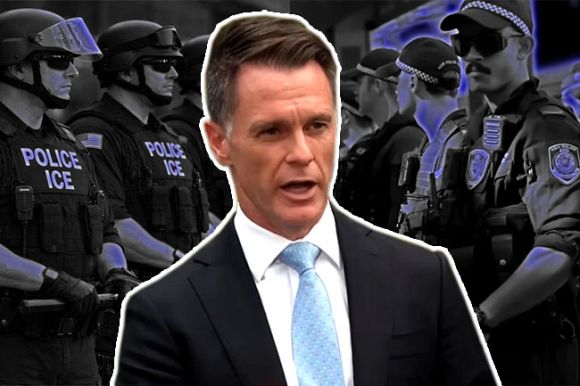
Senior voices had already raised these concerns during consultation. John Lyons, the ABC's global affairs editor and a former Middle East correspondent, documented the structural pressures on Australian discourse on Israel/Palestine in Dateline Jerusalem: Journalism's Toughest Assignment (Monash University Publishing, 2021).
Bob Carr, former Australian Foreign Minister and NSW Premier, reviewed the book in Pearls and Irritations on 9 October 2021 and added his own inside-government observations. Peter Fray, former editor-in-chief of The Sydney Morning Herald, reviewed it in Crikey on 8 October 2021 from a senior editorial perspective.
The Australia Palestine Advocacy Network maintains a public register of parliamentary travel sponsored by pro-Israel advocacy organisations, drawn from the Parliamentary Register of Members' Interests. These are primary-source documents on the pressures surrounding legislation and media coverage of Israel-Palestine in Australia. The rationale architecture they describe is the same rationale architecture that failed McCloy scrutiny in Jarrett.
The ASIO angle
Proposals to expand ASIO's warrant powers on “communal violence” grounds, canvassed in 2025 and 2026 federal budget statements, share the PARD scheme's rationale architecture.
The language is nearly identical: enhance social cohesion, respond to community safety concerns, restrict the prospect of assemblies that might disturb public order. The rationale architecture has failed at the appellate level in Jarrett. Whether McCloy vulnerability transfers directly to intelligence powers is a separate constitutional question that turns on whether a warrant expansion is properly characterised as burdening political communication in the McCloy sense.
That is a contested threshold question, not a settled one. But the rationale-architecture problem transfers immediately. The Commonwealth cannot continue to rely on “social cohesion” justifications without reckoning with the fact that, at the appellate level, that justification has failed on its own merits.
What to watch
Four things, in declining order of certainty.
First, whether NSW applies for special leave to appeal to the High Court. Minns' initial statement stops short of announcing an appeal. Legislative response is more likely than judicial challenge: a redrafted scheme narrowed in scope and tied to specific triggers, attempting to survive a fresh McCloy analysis. Watch for drafting instructions to NSW Parliamentary Counsel over the next two weeks.
Second, the 29 April Brisbane Magistrates Court hearings in Parry's matter and Dowling's matter. Defence will cite Jarrett. The magistrate's handling of the citation will signal whether Queensland's appellate bench is ready to follow.
Third, the Commonwealth Bill's trajectory. If the Attorney-General's Department is reading Jarrett properly, we should see drafting amendments circulated over the coming weeks. If not, the Bill will proceed unchanged and face its own constitutional challenge on arrival.
Fourth, civil liability exposure. Charges laid during the PARD period are liable to withdrawal. Individual actions for false imprisonment, wrongful arrest and breach of implied-freedom-protected political communication are now on the table. “Tens of millions” may prove an undercount.
A structural observation
The antisemitism environment the NSW, Queensland and Commonwealth Parliaments were responding to is real. Incidents of antisemitism in Australia have risen since October 2023, and the Bondi attack was its worst manifestation. The Jarrett ruling does not say otherwise. What it says is that the constitutional limit on State power to respond to that environment through suppression of assembly has not been lifted by the gravity of the occasion.
Six months ago, a court struck down the Minns Government's first attempt at anti-protest law. On Thursday, the Court of Appeal struck down the second. Two defeats in six months, on the same constitutional ground, for the same government. That is no longer a political setback. It is a pattern of legislative overreach that the Court is prepared to correct.
The lesson the Court keeps telling these governments is not subtle. “Social cohesion” is not a shorthand that exempts a law from McCloy scrutiny. “Community safety” in the aftermath of an attack is not a trump card. The implied freedom of political communication is not a preference the Executive can override by citing public order. It is a structural limit.
Queensland's magistrates will see that lesson first, in Parry's and Dowling's matters on 29 April. The Commonwealth will see it next, in whatever form the current bill takes when it reaches its final reading. Whether either jurisdiction learns from it before drafting the next “social cohesion” rationale into statute is, as of this weekend, the open question.
M Dalton is an independent researcher with a civil liberties and constitutional law focus.
This article draws on publicly available primary-source documents, including plaintiff submissions and intervenor submissions filed with the NSW Supreme Court in proceeding 2026/00007005, the Queensland Fighting Antisemitism and Keeping Guns out of the Hands of Terrorists and Criminals Amendment Act 2026, and the Commonwealth Combatting Antisemitism, Hate and Extremism Bill 2026 explanatory memorandum accessible through AustLII.
 This work is licensed under a Creative Commons Attribution-NonCommercial-NoDerivs 3.0 Australia License
Support independent journalism Subscribe to IA.


Related Articles
- Anti-Israel protests being banned amid claims of anti-Semitism
- Right to protest in Queensland under threat
- Criminalisation of protests may increase draconian laws