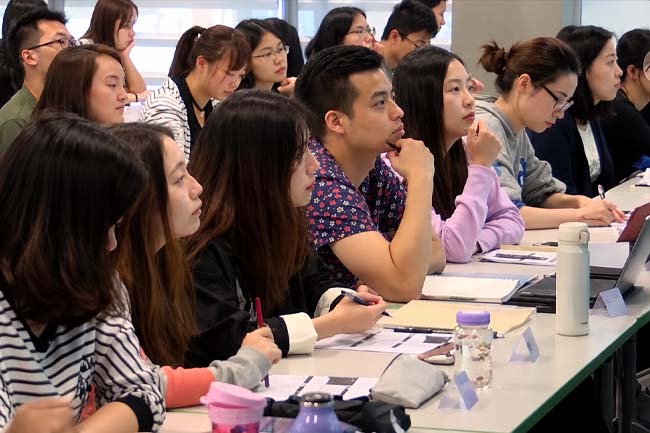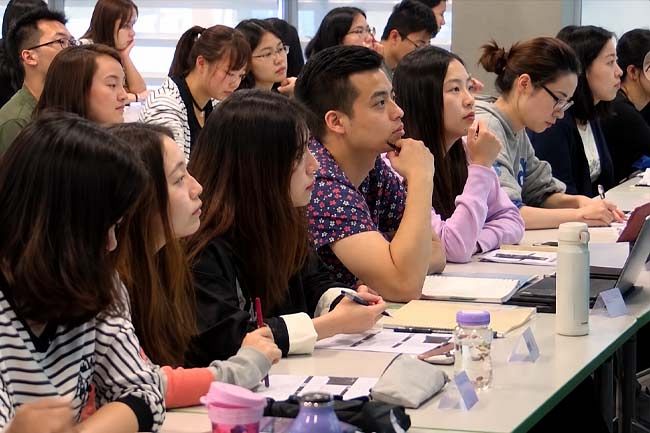
International students contribute billions to Australia's economy, yet rising visa fees and harsh migration policies threaten to drive away valuable talent, writes Madhu Rawal.
AT A TIME OF diminishing productivity, labour shortages and global competition, international students add a lot to our economy, contributing in ways that extend beyond classrooms and campuses right into the core of national growth.
These students work largely in isolation, new to the country, with little to no social support. Yet our leaders, for their political gains, treat them as uninvited and superfluous time and again.
During my years working in the Aged and Disability sector as a case manager, I could only think of the care and compassion migrants have given to White Australians.
Out of so many experiences, the one that stayed with me is of an Australian 35-year-old software programmer who, at the peak of her career, lost use of all four limbs due to a rare arthritis condition.
When I took charge of the case, her first instruction was that I would not replace her carer, whose gentleness and daily care gave her the strength to live with dignity.
For the record, the carer was an international student of Asian origin.
While immigration policy in Australia is formally non-discriminatory on racial grounds, the immigration discourse continually reinforces sentiments of exclusion and undermines community cohesion.
It is fairly reasonable to say that the Federal Labor Government has overhauled migration settings amid fierce political debate fuelled by the rise of Senator Pauline Hanson's One Nation and the short-term political stance of the Opposition.
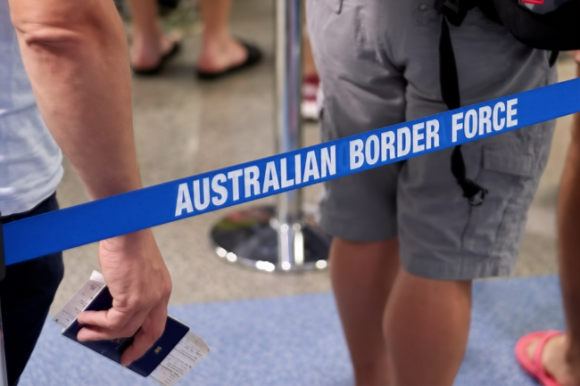
Using the harshest political language, ‘who arrives, who stays and who leaves’, Home Affairs Minister Tony Burke announced migration reforms, claiming a step towards restoring the integrity of our education system. Rather than accepting their failures in handling rogue migration agents or overcoming their own complacency, the Labor Government scapegoats students.
Selling vain hope and not taking responsibility
Often, international students come from the poorest backgrounds, where parents take out loans against their homes to send their kids to study abroad. These kids navigate rough waters, living under the burden of their parents' sacrifices and their own aspirations.
It is naive to believe the Australian Government is unaware that marketing and recruitment agents representing our universities abroad often sell young people and their families the prospect of permanent residency.
No trial for the Government
From top universities to regional TAFEs, tertiary education institutions rely on international student fees, with foreign enrolments making up 47% of the University of Sydney's total cohort and 35% of the University of Melbourne's. International students at Australia's leading universities can pay between $50,000 and $65,000 annually in tuition fees, substantially more than domestic students in government-subsidised places studying equivalent courses.
In return, no successive government has established a regulatory body that requires universities to protect international students' interests.
When it comes to our own children, not that they don't deserve it, we prefer to ignore these figures. According to official government figures, outstanding H.E.L.P. debt totalled $82.2 billion across almost 3 million Australians in 2024–25, before the Government's subsequent 20% student debt reduction.
Beyond the loan, the Government is implementing a retrospective 20% cut to all student debts, backdated to 1 June 2025, wiping roughly $16 billion in balances to ease recovery pressure.
Unwarranted rise in visa fees — deterrent for future applications
From this multibillion-dollar sector, which generated almost $55 billion in export income in 2025, the Australian Government collects revenue through visa application fees, including those paid by applicants whose visas are subsequently refused.
According to research by Studymove Consultants, student visa applications generated an estimated $518.2 million in 2024, rising to $734.5 million in 2025. The latest increase in visa fees substantially offsets revenue lost from the proposed lower student intake. This uncalled-for change will only impact overseas candidates considering our universities.
Currently, the application fee for the Skilled Independent visa (subclass 189) is $6,135, while the Skilled Nominated visa (subclass 190) is $6,140 for the main applicant.
The costs don't end there.
In the words of Sanchi Meshram:
‘Students have to cover the costs of English tests, skills assessment, medical examination, police check and other expenses on top of that the ever-increasing visa fees.’
The latest reforms may prove to be a measured response to genuine problems. However, students deserve a reasonably predictable policy environment. The Government is blaming students for “visa hopping”, but there is another side of the story. Often, these decisions are driven by changes to the skilled occupation list.
We are shooting ourselves in the foot
While Australia invests heavily in educating and developing these individuals, a significant portion of that talent is more keen on exploring opportunities in other countries.
For Mrinal Singh, a student at the University of Technology Sydney, staying in Australia is no longer the only desirable option:
‘International students pay very high tuition fees and a big part of that investment is the chance to gain international work experience.’
Historically, Australian employers have preferred experience to degrees; here, we risk losing bright students who, along the way, develop unmatched work ethics to survive in today's expensive world.
The Australian business sector has long argued that retaining people who understand Australian business practices, are multilingual, culturally adaptable and have hands-on experience is vital to our economy.
A country seeking growth and prosperity should avoid weakening mutual trust and relationships and instead ensure an equitable, consistent and well-intentioned system.
Madhu Rawal is a regular contributor at The Indian Sun.
 This work is licensed under a Creative Commons Attribution-NonCommercial-NoDerivs 3.0 Australia License
Support independent journalism Subscribe to IA.


Related Articles
- Australia, UK, Canada move to stem international student intake
- The Australian Government's shameful exploitation of international students
- The struggle of being an international medical student in Australia