Our new series, WARFARE TO WEALTH, is a progressive critique of the Federal Government's defence and foreign policy trajectory. It provides in-depth analysis of Australia's $368 billion AUKUS commitment and the broader militarisation of our economy.
It is timed to precede the ALP national conference (23-25 July) – which will shape the Government's policy platform and strategic direction for at least the next two years – in the hope that, along with growing pressure from the broader community, the arguments against this militarisation may be compelling enough to make their mark.
This article is part five of the series, From Warfare to Wealth: Redirecting Australia's Future. You can read the other chapters in this series HERE. The next chapter will be published soon.
Part 5: Why parliament must decide before Australia goes to war
Sending Australians to war should require a vote of Parliament, not the stroke of a minister's pen, writes former Federal ALP Senator Doug Cameron.
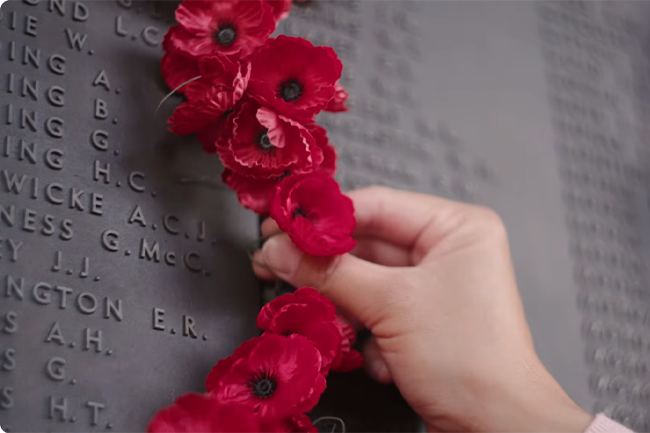
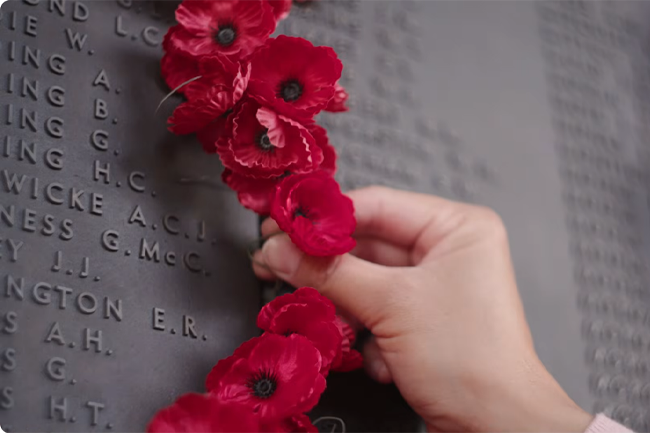
THE AUSTRALIAN WAR MEMORIAL lists all 103,000 deaths as a result of Australian military operations, including Korea, 340 dead, Vietnam, 524 dead, Afghanistan, 47 dead and Iraq, five dead.
These deaths resulted from decisions by executive government, not the parliament of Australia.
Many of the deaths resulted from what Professor Clinton Fernandes describes as ‘wars of choice’, as distinct from “wars of necessity”.
The recent decision by the Albanese Government to retain executive power to send Australians to war is, in my view, wrongheaded and dangerous. It is also undemocratic, especially in Australia, where the electorate is compulsorily engaged in the electoral system that elects the parliament and the senate from which the executive is appointed.
The Government seeks to maintain an exclusionary, outdated and undemocratic power inconsistent with its stated objective of greater parliamentary transparency, accountability and oversight.
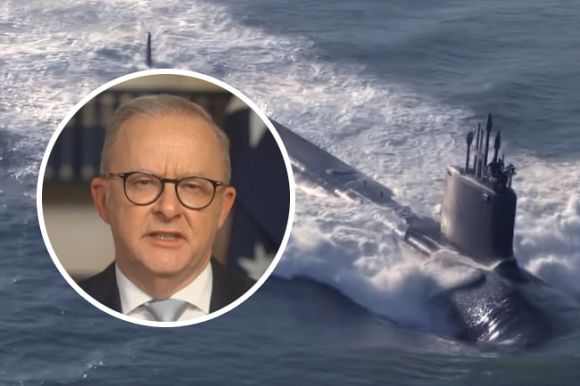
The Prime Minister, in February this year, was the first international leader to back the U.S. attack on Iran when he said in a joint statement:
‘We support the United States acting to prevent Iran from obtaining a nuclear weapon and to prevent Iran continuing to threaten international peace and security.’
This was despite the fact that the U.S. and Israel acted in contravention of international law and the so-called “rules-based order” in support of which successive governments have been so full-throated.
Statements by the Labor leadership demonstrate how far we have subjugated ourselves to the USA and highlight the growing reluctance of the caucus to challenge top-down decisions.
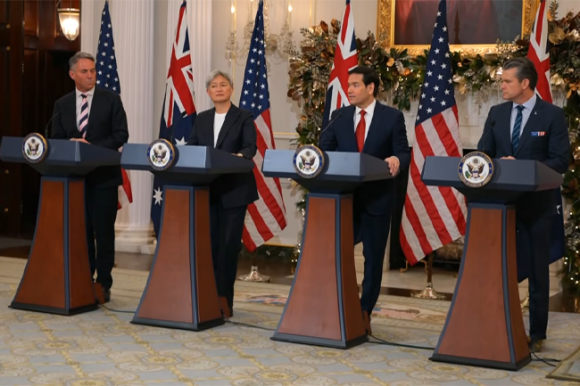
On 16 June 2025, Acting Prime Minister Richard Marles stated that Australia would inevitably be involved in a conflict if a war broke out between the U.S. and China.
No attempt was made to justify the reasoning behind this statement.
No attempt to analyse the economic and social implications of attacking our most important trading partner.
In 2022, Marles also argued that:
‘Under Australia’s Westminster system of government, decisions about the deployment of the ADF into international armed conflicts are within the prerogative powers of the Executive. I am firmly of the view that these arrangements are appropriate and should not be disturbed.’
When Foreign Minister Penny Wong was asked whether there was an imminent threat from Iran when it was attacked by the U.S. and Israel, she responded:
“I will leave it for the United States and Israel to speak of the legal basis for the attacks.”
Wong attempted to justify this approach by asserting that:
“We are not at the centre of the issues in the Middle East, but we obviously play a role in the international community.”
We were not at the centre of issues in Korea, Vietnam, Afghanistan and Iraq, yet executive prerogative was used to send Australians to their death and many more to a life with physical handicaps and mental health issues as a result of injuries during these conflicts.
The statements by the Labor leadership demonstrate how far we have subjugated ourselves to the USA and highlight the growing reluctance of the caucus to challenge top-down decisions.
Without checks and balances and parliamentary debate, more Australian troops could be sent to fight and die in overseas wars designed to maintain U.S. imperialism and hegemony.
These examples also illustrate how substantially our sovereignty has been forfeited when critical decisions impacting the lives of our Australian Defence Force (ADF) personnel are taken by foreign powers and simply endorsed by our own government, without parliamentary consideration or debate.
We urgently need robust legislative checks and balances on executive power.
Without checks and balances and parliamentary debate, more Australian troops could be sent to fight and die in overseas wars designed to maintain U.S. imperialism and hegemony.
In 2015, Tom Uren, a Labor giant, died. He was one of Labor’s greatest advocates for peace, nuclear disarmament and social justice.
It was an honour to march shoulder to shoulder with Tom on Sydney’s annual Palm Sunday peace march, where community groups, faith groups, concerned citizens and unions marched in opposition to militarism and war.
Several current Labor parliamentarians, who now denigrate peace activists as “appeasers” and who accuse them of being uninformed and living in the past, marched alongside Tom.
Their hypocrisy is monumental.
In 2003, the late Simon Crean, then-Leader of the Labor Opposition, made a principled, courageous speech to the National Press Club, where he opposed sending Australian troops to Iraq and called for them to be brought home to Australia.
Simon was anxious to explain that the commitment by then-Prime Minister John Howard to join the U.S. in an illegal war compromised our national independence.
Unfortunately, not too many of our current executive leaders display the leadership, courage and morality epitomised by Tom Uren and Simon Crean.
Simon Crean gave these assurances to the Australian people in his speech to the National Press Club:
- As Prime Minister, I will never allow our foreign policy to be determined by another country.
- I will never commit to an unnecessary war while peace is possible.
- And I will never send Australia's young men and women to war without telling them the truth.
I would propose an additional point to those eminently sensible propositions from Simon Crean; that is:
- No young Australian will be sent to war without a democratic decision following a debate and decision of both houses of parliament.
The recent Defence Legislation Amendment (Parliamentary Joint Committee on Defence) Bill 2024 was an attempt to give the impression that there will be increased scrutiny of decisions to send Australians to war.
Nothing could be further from the truth.
The legislation is based on existing legislation that determines the operation of the Joint Committee on Intelligence and Security.
It is amongst the weakest legislation in comparable democratic nations, including the U.S., Canada and the UK.
It is a denial of reality that the press generally describes the PJCIS as “powerful” when it has no capacity to oversee or inquire into the operational activities of Australia’s security services.
The Government concedes that the Parliamentary Joint Committee on Defence is modelled on the PJCIS.
This is the epitome of form over substance.
The committee functions include:
- considering publicly released documents dealing with Australian defence strategies, planning and contingencies, such as the biennial National Defence Strategy;
- scrutinising Australia’s defence capability development, acquisitions and sustainment, including the integrated investment program;
- examining and being apprised of war or war-like operations and ongoing conflicts in the event of a decision by the Executive to enter into armed conflict; and
- monitoring the involvement of the Australian defence agencies in significant non-conflict operations domestically and internationally.
Submissions to the joint inquiry into international armed conflict decision-making by legal experts, former military personnel, defence academics and concerned citizens have been ignored.
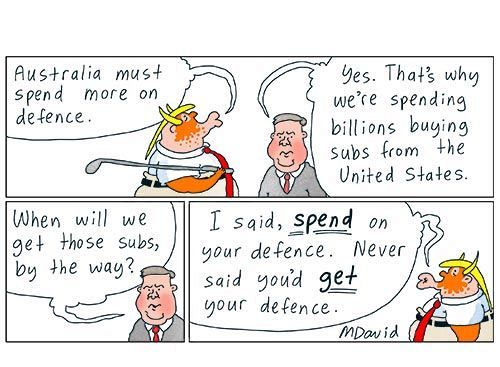
Who would have thought that Australia would become the Deputy Sheriff for Donald Trump under a Labor Government?
Establishing a toothless Parliamentary Joint Committee on Defence – the members of which are all vying for appointment to the leather-upholstered front bench – will not increase democratic oversight of decisions to send Australian defence personnel to war. Nor will it increase transparency or accountability.
It continues the failed and flawed decision-making process that allows a handful of the political elite to make life-and-death decisions by sending military personnel to war.
I do not expect that the forthcoming National Conference of the ALP will challenge contentious national issues such as:
- the democratic process to send troops to war;
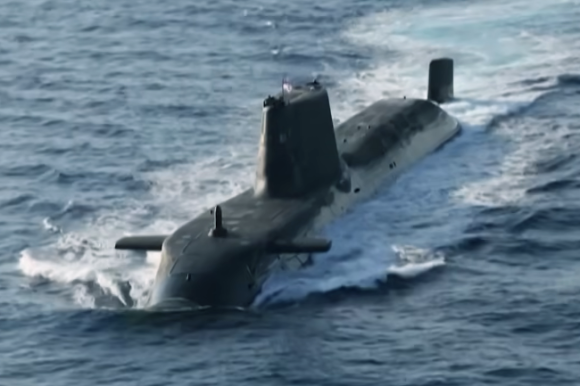
- making Australia a high-profile nuclear target as a result of the crazy AUKUS “deal”;
- sacrificing our sovereignty to the United States under the guise of Submarine Rotational Force – West;
- facilitating a U.S. Marine base in Western Australia;
- turning a blind eye to U.S. nuclear-armed submarines, B-52 bombers and F-22 fighters at Tindal in the Northern Territory;
- the “rotation” of 2,000 U.S. Marines in the Northern Territory;
- the increasing militarisation of the economy and the manufacturing sector; and
- the implications of siding with the United States in a conflict with China.
This is the inevitable outcome when power comes before principle, individual ambitions come before courage, deals are done and robust debate is suppressed.
Too many have abandoned peace for power.
Who would have thought that Australia would become the Deputy Sheriff for Donald Trump under a Labor Government?
I can only hope that a new Tom Uren, a new Simon Crean, emerges from the predetermined and controlled outcomes of the National Conference to challenge militarism, U.S. hegemony and the outrageous allegations of appeasement against those who stand for peace and against militarisation.
However, we must do more than hope; we must educate, organise and fight for a more democratic, transparent and peaceful Australia.
Doug Cameron is a former ALP Senator for NSW (2008-2019), Parliamentary Secretary for Housing and Homelessness, and Shadow Minister for Skills and Apprenticeships.
This article is the fifth in a multi-part series, FROM WARFARE TO WEALTH, examining the real costs of our current defence trajectory and exploring the alternatives proposed by the Make Peace a Priority (MPAP) campaign.
Read the other chapters in this series:

 This work is licensed under a Creative Commons Attribution-NonCommercial-NoDerivs 3.0 Australia License
Support independent journalism Subscribe to IA.


Related Articles
- FROM WARFARE TO WEALTH — The AUKUS illusion and the death of statecraft
- FROM WARFARE TO WEALTH — The myth of American idealism
- FROM WARFARE TO WEALTH — Australia's struggle for strategic independence
- FROM WARFARE TO WEALTH — The $368 billion question: What AUKUS is really costing us