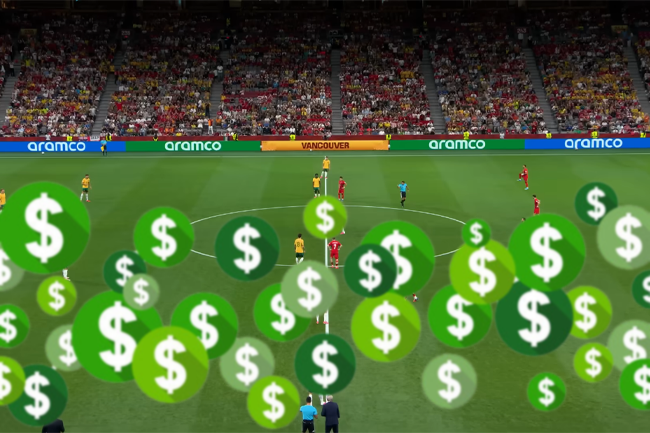
The 2026 World Cup exposed how modern sport increasingly treats fans not as spectators, but as products whose attention is constantly being sold, writes Jack Waters.
I’D BEEN LOOKING FORWARD to this year’s World Cup for months.
As a lifelong football fan, it’s always been one of those rare events that lets me completely switch off from the world and tune into the game I’ve grown up on.
But this tournament was different. I didn’t feel inspired or deeply satisfied like I used to.
I felt dirty.
For me, this tournament was a culmination of the absolute worst parts of where our world is heading. The constant advertising of artificial intelligence (AI) that we’re already sick to death of hearing about, the fast food and the gambling ads, and those awful “hydration breaks” (more on that shortly).
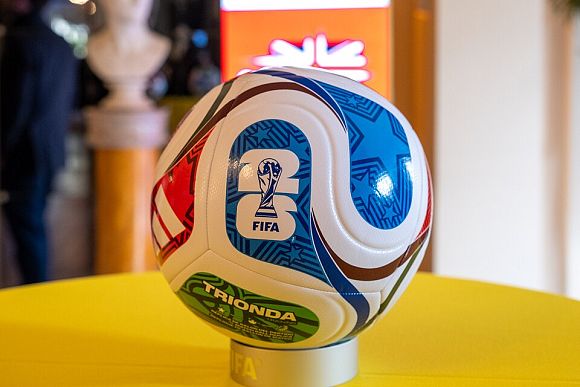
This World Cup did a really great job at reminding me of my place in the world — I am a consumer.
And throughout this tournament, I felt like nothing but a consumer.
Remember the humans in WALL-E? The ones floating around in automated chairs, permanently glued to a screen while advertisements flashed in front of their faces? That’s somehow exactly how I felt watching this World Cup.
Now, you’re probably thinking to yourself, “What do you mean? The World Cup and football in general have always been commercialised”.
And yeah, you’re right.
But don’t you think it used to be a hell of a lot subtler? Sure, there were ads around the pitch, a halftime sponsor, maybe a few commercials during the broadcast. But this was on another level.
Every break in play became another opportunity to sell me something.
And how lucky were we to get two extra advertising breaks every match?
Oops, sorry, I mean “hydration breaks”. You know, the ones we somehow still needed in air-conditioned stadiums and rain-affected games?
Whether that was their primary purpose almost doesn’t matter. What matters to me is how normal it felt.
We’ve become so accustomed to having every moment interrupted that we barely notice it anymore.
That’s why the World Cup bothered me so much, because it didn’t feel like an escape anymore. And to be honest, it was pretty crap to see something I once viewed as an escape from the world become a perfect reflection of it.
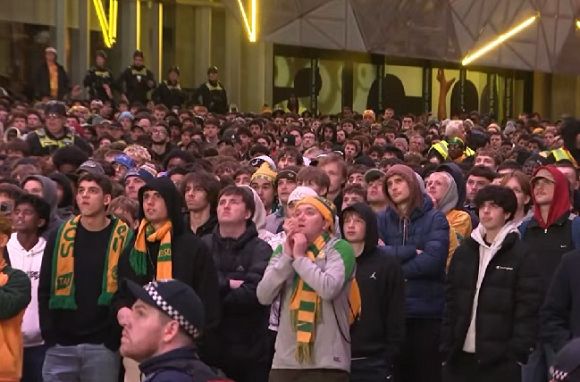
Maybe this is nostalgia and maybe every generation probably believes the things they loved were better before they became commercialised.
But I don’t think that’s all this is, because the scale of it feels different now.
If one of the biggest sporting events on Earth can find a way to cram advertising into every waking moment of the viewing experience, then why wouldn’t every sporting code, streaming platform or concert promoter do exactly the same?
That’s what worries me.
Not the World Cup, I’m over that now. But the precedent it has set for literally everything else. Because if we keep accepting this, it suddenly becomes the new normal.
Then the next event pushes it a little bit further, then the one after that, until eventually we forget there was ever a time when every spare second wasn’t another opportunity for our attention to be monetised.
I’d be lying if I said I had an easy solution. I’m not suggesting we boycott football or pretend advertising can disappear. But I do think we should pay attention to what we’re giving away and in almost every case, it’s our attention.
The World Cup reminded me that it’s becoming increasingly difficult to just enjoy something for what it is.
I miss being able to watch a game without feeling like I’m the product.
I miss being a spectator.
And I’m not sure we’re encouraged to be one anymore.
Jack Waters is an Australian writer and former journalist who writes about modern life, attention and our relationship with work and technology. There are plenty of examples of his work at www.byjackwaters.com.
 This work is licensed under a Creative Commons Attribution-NonCommercial-NoDerivs 3.0 Australia License
Support independent journalism Subscribe to IA.