Readers may think I'm unnecessarily using the race card and that I'm using race as an excuse for my children's lack of opportunity due to perceived poor performance. Let me be clear. I am. Because this is one of those many instances where the race issue exists, and the card must be dealt , writes Leon David.
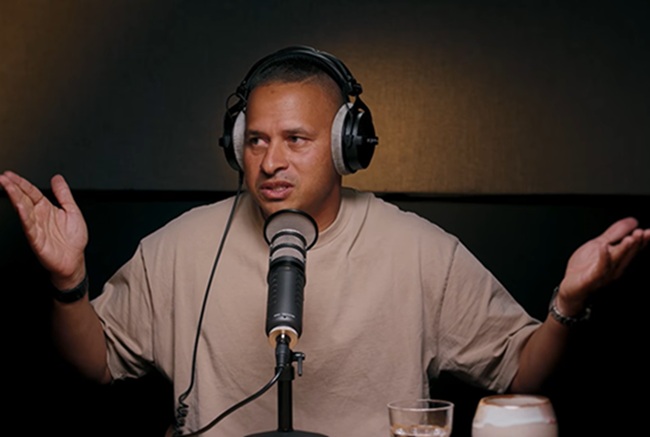
IT IS INESCAPABLE that the criticism that Usman Khawaja has faced throughout his career has had racist undertones.
People of colour know the code words. Someone doesn't "fit in". Someone doesn't have the right "attitude". Someone is not a “cultural fit”.
For someone who hasn't been the victim of racism, these words are benign. They provide a convenient cover for those who are actually saying that a brown guy doesn't deserve his place.
But it's time to be honest. One can agree or disagree with Khawaja's allegations. However, one fact is hard to deny. If a “traditional” member of the Australian team had written the book, his allegations would be taken more seriously.
The whole "angry brown man" narrative wouldn't exist, and that would give the allegations the clear air and seriousness they deserve. Race wouldn't be part of it at all.
It’s hard to look past the fact that a brown guy has accused a bunch of “traditional” Aussies of impropriety.
In response, many of these, including the Australian captain, are essentially saying that the brown guy is lying. Likely something that Khawaja and the many others who look like him have faced before.
And for us, the people of colour, we all know how it ends. It's not about cheating. It’s not about courage. It's not about truth. It's about tearing a brown guy down and making sure that everyone knows "he’s not one of us" so his words can be disregarded.
To children who look like mine do, Australian cricket is largely a closed shop with systemic and structural racism ever present. If you're South Asian, you can't just be good; you must be better.
Issues with race are known across the cricketing landscape and to start the process of addressing this, Cricket Australia released its Multicultural Action Plan in December 2023.
This aspirational and commendable plan included several initiatives aiming to increase the level of South Asian representation in the Australian cricket system. Within, the document indicated that there were 1.5 million people in Australia of South Asian heritage as of 2021 - once the 2026 census is complete, this figure is likely to have increased significantly.
It is natural that immigrants of South Asians gravitate towards cricket, the essentially national sport in most South Asian countries.
However, notwithstanding the presence of the CA Multicultural Action Plan, South Asian representation, particularly at the top levels of the Australian cricket system, remains woeful and entirely out of touch with the demographic reality.
There are likely numerous reasons for this. One factor is the significant focus on educational achievement at the expense of everything else, including professional sport. Whilst this can partially explain the drop-off in participation as South Asian origin children reach their late teens, it doesn't explain the precipitous reduction entirely.
For evidence, just look at the Australian team now. Look at the names being floated for future Australian Test teams. Teams are largely comprised of players from an Anglo-Saxon or European background.
Whilst some South Asian names have been included as potential future prospects, their numbers are a fraction of what is represented at a more junior level.
And, whilst these players may indeed be the best Australia has to offer, it is noticeable that the demographic largely omits South Asian players, especially when considering how many South Asian children play the sport to a reasonable level, especially across the larger Australian cities.
The CA Multicultural Action Plan had several initiatives aiming to increase the level of South Asian representation in Australian cricket. One of the most critical is the push to reduce unconscious bias. Specifically, it indicated the following:
'Unconscious bias training designed and delivered across Cricket Australia' in Year 1 (2024) and enhanced in Year 2 (2025): 'Unconscious bias training program updated and adjusted to be rolled out across the remainder of Australian Cricket administrators.'
Great ideas, but as of 2026, I question its effectiveness.
At his retirement press conference earlier this year, Usman Khawaja made several comments with regard to race and the discrimination he faced.
Predictably, most of these were criticised by many parts of the media. But most telling was the following when referring to his perceived lack of fitness and laziness:
"These are the same racial stereotypes I've grown up with my whole life… we obviously haven't fully moved past them."
He further went on to say that his brothers always told him the following:
"[And] that if I wanted to make it, I would have to work harder than everyone else, score more runs than the rest, and make sure I don't give them any excuse not to pick me.’ ‘I'll never forget those words, and you were 100 per cent right."
Having spent so much time watching junior cricket, Khawaja's words ring completely true and, in fact, may be slightly understating the depth of the problem in Australian cricket, and potentially Australian sport and society as a whole.
Apart from criticism of his comments, some criticised his timing, suggesting that he should have said something earlier. This is unfair. Had he said something earlier, his career may not have lasted as long as it had.
And I’m not going to blame a person of colour who has managed to break down the many barriers to be part of the Australian team for keeping quiet and concentrating on fitting in as much as he could. Ultimately, players like Khawaja do not have the licence to speak out that their white colleagues do.
My children are passionate cricketers, keen to progress as far as their talent can take them. They feel that talent is everything.
As an observer from the sidelines, however, talent is clearly not enough. Hard work is a big part of it, sure. But to me, the stark reality is this: you can be talented; you can be a hard worker, but if you're brown, the opportunities you receive will simply not be the same as your peers with white skin.
Whilst a young Khawaja may not have given his coaches the opportunity not to pick him through sheer number of runs, I see too many coaches not even giving youngsters the chance to show how good they really are.
To children who look like mine do, Australian cricket is largely a closed shop with systemic and structural racism ever present. If you're South Asian, you can't just be good; you must be better. And not just better. Your parents must be better. They need to flatter the coaches. They must share similar interests. If they don't, the opportunities to display their talent simply die away.
It's a hard lesson for my children and countless others like them. They're starting to realise at a young age that the system is not fair. They're too young to be cynical and bitter, but it's the system that will lead them to be that way.
There are countless examples of where South Asian kids in junior cricket simply don't get the opportunities the white ones do. Sure, they may be selected to play. But how many opportunities do they get?
Does the specialist batter open or must play at number ten every game? Does the strike bowler get more than two overs? And what happens when the bowler or batter fails? How many chances do they get compared to the white kid, getting smashed around by the batters, but still being provided with the full ten-over allotment?
Why does the brown child repeatedly get pulled from the attack after one wicketless over, but the other child, despite bowling worse, gets repeated opportunities to succeed? How is that fair? And how can it happen game after game after game?
How's the unconscious bias training from CA working out?
It's about colour, but it's also about being "one of us." I've grown up here, so I know the secret codes used by those running the various clubs.
Do parents spend time with those in power? If they do, do they say the same things? Do they support the same footy team? Do they join in wholeheartedly during the morning tea, or do they refrain due to their dietary restrictions? Do they have an accent? Ultimately, are they white?
These things may not seem like much. But they matter. And they are the KPI's a parent and child need to meet to progress. Many people know what it is like to be in the "in" crowd vs the "out" one. There are no written rules. There's no charter. It's all unspoken and often hard to articulate.
But it's these difficult-to-articulate rules, these intangibles that are in place to provide plausible deniability for the white leaders to pretend that there is no exclusion. But for us, the people of colour perennially on the fringes, there is.
They feign inclusion, always knowing that they are the ones who hold the keys to power, to success, to aspiration. They have the power to make or break. That may not be the Australia that the white kids see. But it is for our kids who have the misfortune, the perceived misfortune of being brown. Through this exclusion, those of ability eventually give up and walk away. Everyone has their breaking point.
Unless the players have the talent of Usman Khawaja or Steve Smith, they are not going to succeed. The brown kid must be better and more flawless than the white one to succeed. The white kid can fail and try again. The brown kid who fails is done. The white kid may be worse. But he'll get numerous chances. And if he's good, he'll eventually succeed.
The brown kid gets no such latitude or kindness. For the small cohort of players from diverse backgrounds that do get an opportunity, they need to ensure they act in a manner that represents the traditional ideal of what an Australian player should act like.
Whilst they cannot mask their colour or their name, they must ensure that their ethnic behaviours and characteristics are left at home. Just as importantly, they must ensure they play the game and go home — don’t call out injustice; don’t call out unfairness; and keep the ‘woke’ attitudes out of it. Just be grateful.
In defence of the people I'm accusing of prejudice, in many cases, they probably don't even realise how exclusionary and biased they're being. This is likely the "unconscious bias" that CA is referring to in its report. That's not a satisfactory excuse.
Part of being human is to be alert to the discomfort and sadness of others. I simply cannot believe that a rational adult can be completely blind to unfairness and bias. If they are, it's willful - “if I didn’t see it, it didn’t happen”.
I also understand that it's a rational human response to want to retain the status quo. I doubt there are many people who have willingly given up an advantage. People of colour can be just as bad as others in this regard. But the time for denial and excuses needs to end.
The intangibles i speak of are too numerous to ignore. It can't just be a coincidence. It's structural and it's ingrained, and CA needs to do better.
The race card exists because racism exists.
No racism = no race card.
It also must be said that not all coaches are culpable. I've seen some "traditional" Aussie coaches who have been incredible. Unbiased, supportive and nurturing. CA needs to identify these coaches who, along with the South Asian community, can be the champions for the goal of reducing prejudice and unconscious bias.
The saddest fact about my observations is that most of these kids are Australian. They may be brown, but they're just as much a part of this country as anyone else. They don't start out dreaming of representing India, or Sri Lanka, or Pakistan or Bangladesh. They dream of playing for Australia, walking out in the green and gold at the SCG or the MCG.
But it seems that even now, in 2026, the system that is Australian cricket doesn't want them. And that is the tragedy.
Instead of having a team that represents the best cricketers in the country, we will be left with the best white cricketers in the country.
And that is clearly not the best team , and that is not the Australia that people claim to want.
And people complain that our kids support the teams of their parents' birth? It's because they give the illusion of representation. Of belonging. The Australian cricket system does not do that, and it's not progressed enough to show a proper change.
It's pleasing to know that Cricket Australia has a multicultural action plan in place with the involvement of players such as Usman Khawaja and Alana King. But I'm afraid that unless the coaches at each and every club are educated, no plan will ever work.
It can't just be education either; there need to be sanctions and penalties to address racism. There needs to be independence, a person (or group of people) who can see what is actually happening at the grassroots level.
There needs to be a concerted push to stamp out the behaviours that are all too prevalent. This is not about quotas. It is about fairness.
I was so hopeful that my children wouldn’t have to deal with this shit.
If a future Australian squad is made up of entirely white players after all players have been given the same opportunity, then that’s entirely reasonable. But that is not how the structure of cricket in Australia is functioning at present. It may claim to do so, but it is failing.
Readers may think I'm unnecessarily using the race card and that I'm using race as an excuse for my children's lack of opportunity due to perceived poor performance. Let me be clear. I am. Because this is one of those many instances where the race issue exists, and the card must be dealt.
The race card exists because racism exists. No racism = no race card.
During a recent juniors match, I thought I was the only one getting annoyed and angry about the injustice and unfairness of it all.
But I looked around the room. Four parents, all with brown children, all missing out on opportunities. All four parents were frustrated. All it took was for one to voice their inner thoughts out loud. It proved it wasn't just me.
And it wasn't just us in the room. I've heard this time and time again. This is the Australia we see. Readers may not be happy, and they can deny what I'm saying. But this is our reality.
Maybe I could have said something to the coaches. But I've lived here long enough to know the response. I'll be called oversensitive. I'll be told that "not everything's about race, mate".
I'll be told that they wanted local boys and that colour doesn't matter. But I know the truth. I know local means white. Especially when my son was playing for one of the whitest localities in the city. It'll be a gaslight and it will be futile.
Me speaking out will not help; it will only harm my children’s progress. There’s simply no point in confirming their stereotypes of the angry Indian.
It's 2026, and I expected it to be better.
The shame is that it is this kind of racism, the structural, systemic type that has the biggest detrimental impact.
Thomas Sewell, Pauline Hanson and their type may have grabbed the headlines with their blatant racism, marches and Pied Piper processions of Far-Right rhetoric, but this is the stuff that really hurts.
Sport (along with the corporate world) remains one of the few places where one can be racist or at least biased and get away with it.
Racist or biased decisions can be cloaked under supposed poor performance or cultural fit.
It creates lasting damage caused by people who don't think they are the problem. But they are. It is heartbreaking. It is frustrating.
As a parent, it leaves me feeling utterly helpless. I was so hopeful that my children wouldn’t have to deal with this shit that I thought was from a darker time. It turns out that my children aren’t the only naïve ones.
Leon David is an IA contributor.
 This work is licensed under a Creative Commons Attribution-NonCommercial-NoDerivs 3.0 Australia License
Support independent journalism Subscribe to IA.


Related Articles