Experiences abroad show how to heal Australia’s debilitating social malaise, reports Alan Austin.
THE ALBANESE GOVERNMENT'S freshly repaired economy is not only the best-performed in modern history, but arguably now the best in the world. That’s based on the four key outcomes recently updated by the Reserve Bank and the Bureau of Statistics.
Yet just as these impressive numbers were released, the boffins at ANZ-Roy Morgan warned that consumer confidence has hit an all-time low.
What is going on?
Australia’s global ascendancy
We saw here last week that for the first time since records have been kept, Australia achieved these excellent results throughout 2025 via:
- jobless rate below 4.5%;
- inflation below 4.0%;
- interest rates within the band 3.0% to 5.0%; and
- annual GDP growth above 2.5%.
Global data confirms that no other developed Western nation achieved those outcomes last year. The only economies that did, besides Australia, were Saudi Arabia, Israel and the United Arab Emirates in the Middle East and Vietnam.
There were 16 nations which achieved three of those four outcomes. These included powerhouses Norway, Denmark, Taiwan, Hong Kong and Singapore. The rest of the world managed two, one or none.
Disturbingly, five advanced OECD members achieved none of those four desired outcomes: Estonia, Hungary, Iceland, Slovakia and the United States.
Where Australia outclasses Saudi Arabia, Israel, the UAE and Vietnam are in higher GDP per capita, much more wealth per adult, and triple-A credit ratings with all agencies.
Australia also leads the world – or is very close to – on superannuation savings, budget management and political stability. It is also, surprisingly, setting a cracking pace on sustainable tourism.
We could, of course, consider other variables, including debt to GDP, national savings, business profitability and the Gini coefficient. So ultimately, the world’s best economy is subjective. By any criteria, however, Australia is at or near the summit.
Media messages matter
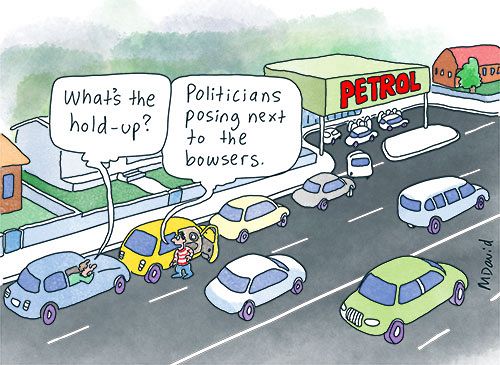
Many observers, including this column, are dismayed that, while Australians now enjoy their highest living standards ever, they remain miserable and depressed. The latest world happiness rankings showed Australians tumbled from tenth last year to 15th this year. Intriguingly, Iceland, which achieved none of the four ideal outcomes, ranked second in the world on contentment.
Finland, the happiest country for the ninth straight year, ended 2025 with the jobless at 9.8%, annual GDP growth at 0.1% and public debt blown out to 89% of GDP. Disastrous!
Headlines in both those countries bolster the thesis advanced previously: that newsrooms in Australia instruct citizens to remain morose and pessimistic, while elsewhere they do not.
Despite Iceland’s dreadful recession-plagued economy, its media remained resolutely upbeat, with headlines like:
- ‘Booming investment a key driver of robust GDP growth’ (Íslandsbanki, 2 June 2025);
- ‘IMF: Economic outlook generally positive’ (RUV, 26 June 2025);
- ‘Bank: inflation figures “good news” for households’ (RUV, 28 November 2025); and
- ‘2025: decent GDP growth in a challenging environment’ (Íslandsbanki, 27 February, 2026)
So did Finland’s. Closer to home, New Zealand achieved just one of the four optimum outcomes last year. It succeeded with inflation below 4.0%, but had its jobless rate rise to 5.4% and suffered poor GDP growth.
As with Iceland, Finland and most of the developed world, New Zealand’s media remained generally cheerful with headlines such as:
- ‘Nicola Willis is right: NZ's economy isn't as bad as the "merchants of misery" claim’ (The Post, 5 October 2025);
- ‘Five reasons to feel positive about the New Zealand economy’ (RNZ, 10 October 2025); and
- ‘Economic recovery gathers pace, from the south up’ (New Zealand Herald, 20 November, 2025).
Constant falsehoods drive pessimism
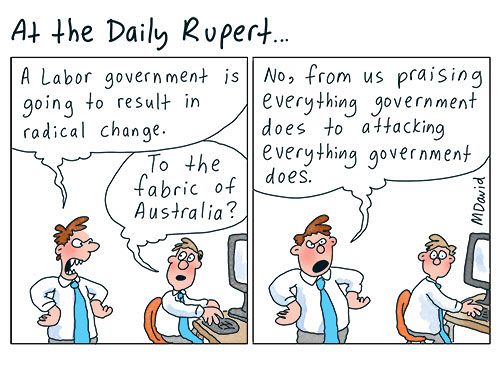
The insidious influence of the liars in Australia’s newsrooms is shown starkly in year-end reportage of the New Zealand and Australian economies.
Annual growth for the December quarter across the Tasman was just 1.3%. This was historically weak, and well below the OECD average of 1.76%.
Kiwi newsrooms, however, saw no cause for anxiety, running with headlines like:
- ‘Tepid GDP growth a disappointment, but many industries bouncing back’ (Waikato Times, 19 March 2026);
- ‘New Zealand GDP Turns Positive in Q4 2025 After Three-Quarter Slump’ (Forex News, 19 March 2026); and
- ‘New Zealand’s GDP Growth Slowed, Giving The RBNZ More Wiggle Room’ (Finimize, 19 March 2026).
Australia’s annual growth of 2.65% through 2025 was much better than New Zealand’s — and, in fact, stronger than almost everywhere.
But according to the newsrooms, we may as well all swallow a bottle of pills, then leap from high windows and slash our wrists on the way down.
The following headlines stated:
- ‘Rate hike warning: Strong economy means more pain for homeowners’ (Daily Telegraph, 4 March 2026);
- ‘Australia's economy grows 2.6 per cent but productivity remains flat in December quarter, adding to inflation worries’ (Sky News, 4 March 2026);
- ‘Rising profit margins turbocharged Australia’s latest inflation figures – but something worse is just around the corner’ (The Guardian, 26 March 2026); and
- ‘Greatest stagflation risk in the 21st century: economists’ (Australian Financial Review, 1 April 2026).
Finding a way forward
The national broadcaster is another offender with destructive distortions broadcast frequently by “journalists” who should know better, leading with:
- ‘The cost of taming inflation could be crashing the economy, says HSBC economist’ (ABC News, 16 March 2026);
- ‘Stagflation is about to push unemployment higher’ (ABC News, 26 March 2026); and
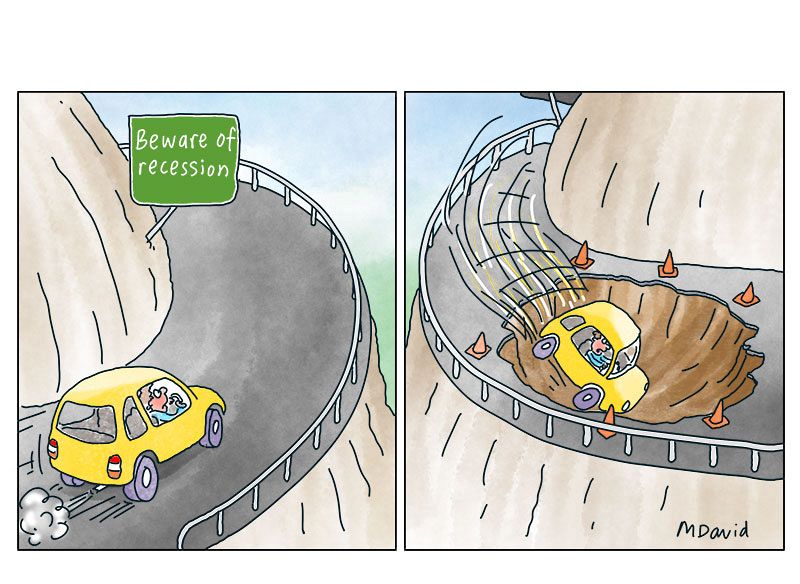
- ‘The government says it is “situation normal” but are we already in a recession?’ (ABC News, 1 April 2026).
Australia’s economy is not crashing and is nowhere near a recession. Good grief!
So for Australia to recover its former robust self-confidence, the liars in the commercial newsrooms must be boycotted out of existence.
ABC News might also be shut down and that money spent on... oh, I don’t know... sustainable tourism?
Alan Austin is an Independent Australia columnist and freelance journalist. You can follow him on Twitter @alanaustin001.
 This work is licensed under a Creative Commons Attribution-NonCommercial-NoDerivs 3.0 Australia License
Support independent journalism Subscribe to IA.