Australia’s failure to adopt proven whistleblower protections is costing taxpayers billions in lost fraud recoveries and leaving those who expose corruption without adequate support, writes Dr Kim Sawyer.
CHARLES BABBAGE is often seen as the founder of computing and possibly artificial intelligence.
Babbage was Professor of Mathematics at Cambridge University between 1828 and 1839, the Professorship that was held by Newton and Hawking. Babbage is best known for the invention of an analytical engine, a calculating machine that was the ancestor of the modern computer.
In those days, Cambridge was known as the Holy City of Mathematics. Babbage was religious with a strong commitment to benevolence. His views were detailed in a little-known volume of musings about how his machine may proxy God, perhaps a preamble to arguments about AI.
The Ninth Bridgewater Treatise has one section that reads like a parable of whistleblowing:
Let us suppose the wealthy resident near a small village, returning from the neighbouring town, to have observed from a distance that the bridge across a rapid stream has been carried away by a flood, and that the blind postman who makes his daily journey along the causeway to the neighbouring town, unconscious of what has happened, is just approaching the torrent. Setting spurs to his horse, he dashes forward, and clearing the broken bridge, has just time to alight and catch the postman on the verge of destruction.
Let us now suppose another village, another stream — and another postman starting, like the former one, at an early hour, before the villagers are abroad. We will imagine too the wealthy resident near this other village to have been out on the preceding day amongst the distant mountains, from which the torrent which passes the village is fed; and that observing the quantity of rain which has fallen in those parts, he foresees that the resulting flood will in all probability destroy the bridge across that stream; and knowing from his experience that several hours must elapse before the rain which falls in the mountains produces its full effect on the stream in his neighbourhood, he sends off one of his attendants in time to reach the broken bridge just before the moment when the stream would be crossed by the unsuspecting traveller, who is thus saved from death.

Both are acts of benevolence but, as Babbage asserts, the benevolence that is guided by insight rather than by observation, while not having the same intensity, may have even more value. Babbage alluded to the importance of pre-emptive thinking.
Over the course of many years, I have seen the failure of policy makers to be pre-emptive; the failure to introduce changes early enough; the failure to anticipate the response to policies; the failure to adopt policies which have proved to work in other countries. When I appeared before Senate Committees in the early 1990s, it was clear there was a need for strong whistleblowing protections to counter the emerging corruption associated with privatisation of public assets. Policy makers needed to be pre-emptive.
Since 1996, I have advocated for a False Claims Act (FCA) for Australia. On 2 March 1863, Abraham Lincoln signed the Act that is known as the most effective whistleblowing legislation anywhere. The FCA is different because it has a Qui Tam provision that allows whistleblowers to litigate against those making false claims on public funds.
The FCA protects against retaliation, including reinstatement to employment and compensation for damages. The FCA operates under a lower standard of proof, preponderance of the evidence and the onus of proof is reversed. The whistleblower becomes the plaintiff; the false claimant is the defendant. The whistleblower gets on the front foot.
In the U.S., when the Department of Justice intervenes, the whistleblower’s litigation costs are met by the Government and the whistleblower is guaranteed a share of the Government’s recovery of fraud in a successful prosecution. Payments to Qui Tam plaintiffs average more than 16 per cent of the proceeds of the actions.
The FCA also confers a substantial intangible benefit as a deterrent against fraud. The value of deterrence is difficult to estimate. An estimate 20 years ago commissioned by the Taxpayers Against Fraud Centre in Washington is that the FCA Amendments of 1986 deterred more than a hundred billion dollars of fraud.
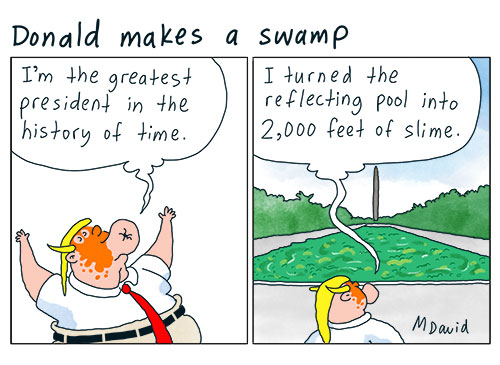
Even in the dark age of Trump, the False Claims Act has been working. In fiscal year 2025, more than $6.8 billion in settlements and judgments was secured under the Act. Since the 1986 amendments, the total has exceeded $85 billion.

When Trump falls, there will be an explosion of whistleblower lawsuits, and an explosion of fraud recoveries. The FCA will be one of the most powerful weapons of redress. Lincoln would be pleased.
In a 2011 study, Lincoln's Law: An Analysis of an Australian False Claims Act, I showed how effective an Australian FCA could be, pointing to the possibility of billions of dollars of fraud recovery and even more of fraud deterrence. However, there is reluctance to adopt an FCA. Perhaps it is the culture for whistleblowers to sacrifice themselves without being compensated.
In 2004, I wrote an opinion article in The Age arguing for an FCA. But two days later, The Age editorialised with the headline, ‘Protect, not pay, whistleblowers’.
In 2008, I had a long discussion with the then Attorney-General Mark Dreyfus about the need for an FCA, but he said it was too early for Australia. There was the same reluctance when I conducted a study for the review into the Building Education Revolution in 2011 and the same reluctance when I argued for a FCA on the ABC.
Nonetheless, there are other advocates for an FCA, including the Australian Federal Police, the Tax Justice Network, various law firms, some legal academics — and, of course, whistleblowers themselves.
Incentivising people to speak out against wrongdoing and compensating them for the risk is the principle which underpins the False Claims Act. It is doubtful that The Age would have so editorialised if I had been a member of another minority group advocating better protection against discrimination.
But then again, I was a whistleblower. Whistleblowers are in a special category. They can advocate, but not fully. They are listened to, but not fully. Their submissions are read, but not fully. Their arguments are accepted, but not fully. It is the price they continue to pay for their whistleblowing. It is the loss the nation pays for not listening to them.
Dr Kim Sawyer is a senior fellow in the School of Historical and Philosophical Studies at the University of Melbourne.
 This work is licensed under a Creative Commons Attribution-NonCommercial-NoDerivs 3.0 Australia License
Support independent journalism Subscribe to IA.