Australia’s leaders proclaim a rules-based international order, but fall conspicuously silent when the world’s most powerful ally tramples it, writes Mark Beeson.
IF THERE'S ONE THING we can be confident about at moments of national or international uncertainty, it’s that politicians will start invoking the national interest.
Although it’s generally ill-defined, it’s a useful catch-all signifier for everything our leaders would like us to believe about ourselves and the world we inhabit. It also serves as a substitute for actually having to think about a rapidly evolving geopolitical universe.
To be fair, Prime Minister Anthony Albanese has at least tried to lay out some principles that ought to guide Australian foreign policy. In principle, they are admirable; in practice, they are likely to be studiously ignored. Either way, they are currently being put to a searching examination by U.S. President Donald Trump, who cares nothing about the rule of law or America’s self-appointed role in upholding the international variety.
Kidnapping the elected leader of another country flouts the most fundamental principles of international law and behaviour that the United Nations epitomises and tries to encourage. True, Trump is contemptuous of the UN as well, but at least it represents the possible basis for international cooperation, something that is currently conspicuous by its absence. It is also an institution that Australia, when in creative middle power mode, helped to establish.

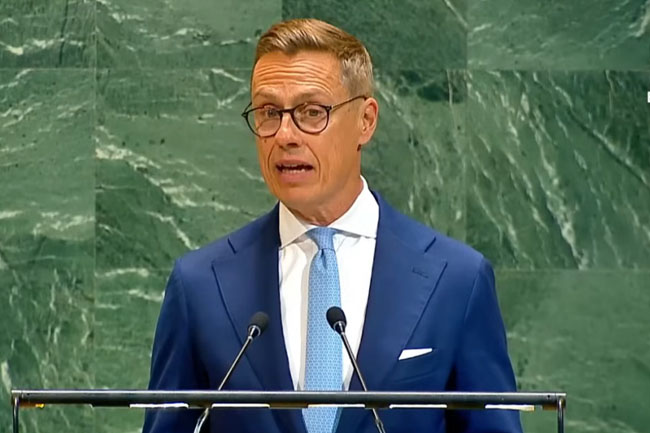
As Albanese rightly noted in his recent address to the UN, one of the greatest dangers to the international community’s ability to work cooperatively in dealing with a range of old and new problems is “tyrants who invade sovereign nations to further their own ambitions”. The Trump Administration is currently demonstrating just how accurate that claim was. The key question for the Australian Government is how it responds to a regime that is arguably both the greatest threat to global security and our principal strategic ally.
Some readers may feel that Russia and Israel ought to be considered as greater dangers to international peace, given that both are locked in either long-running wars and/or genocidal policies designed to eliminate historical enemies. But the self-styled peace president could really do something about these abominations if he weren’t quite so willing to give comfort to their respective architects.
As if that wasn’t bad enough, Trump is now showing a similar enthusiasm for utilising his own, unparalleled and highly effective coercive power to achieve national objectives. In Venezuela’s case, he freely concedes America’s actions are largely driven by a desire to exploit Venezuela’s resources, to the possible benefit of Trump himself and his supporters and cronies. The world should not be surprised or shocked by this outcome; after all, it’s been his modus operandi since he returned to power.
Our Prime Minister also told the UN that “if ever we had the luxury of imagining that breaches of international law were not our concern, or that conflict and turmoil in another part of the world could not affect us, those days are long gone”. Quite so.
Given such principled declarations, we might expect Albanese to be at the forefront of leaders condemning the unilateral takeover of another sovereign state, no matter who runs it. Apart from a handful of Venezuela’s nervous neighbours, full-throated denunciations of the world’s most powerful rogue state are noteworthy by their absence.
The Australian Government is apparently “monitoring developments” and urging dialogue and diplomacy. Albanese isn’t alone in his underwhelming pusillanimity: many other world leaders are choosing their words carefully, frightened of offending a president who harbours grudges and cannot tolerate even the mildest criticism.

Not that there was ever the slightest chance that anyone in the Australian Government or Opposition was ever going to say anything untoward, despite Albanese claiming to want a world in which we can “build a world governed by rights and rules, not fear or force. Where the sovereignty of every nation is respected”. Except for countries the Americans don’t like, apparently.
These are not just cheap shots about a government – and a country, it seems – that can imagine no other world other than one in which we support and rely on America no matter what it does and who runs it. Even in our modest middle power way such subservience and silence give comfort to despots everywhere.
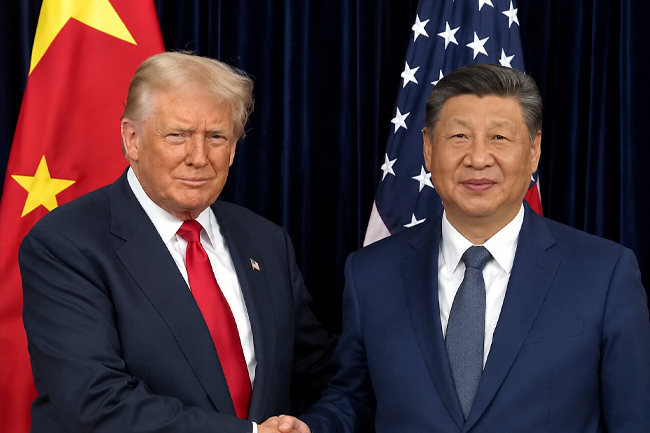
It may also provide China with a great opportunity to “assert sovereignty” over Taiwan, which it regards as a domestic issue and part of its sphere of influence. This would be a historical irony of breathtaking proportions given our entire security strategy is predicated on helping the Americans to deter China from acting aggressively or undermining the regional status quo.
But there are some hopeful exceptions to the culture of fealty and conformity that grips this country and its leaders.
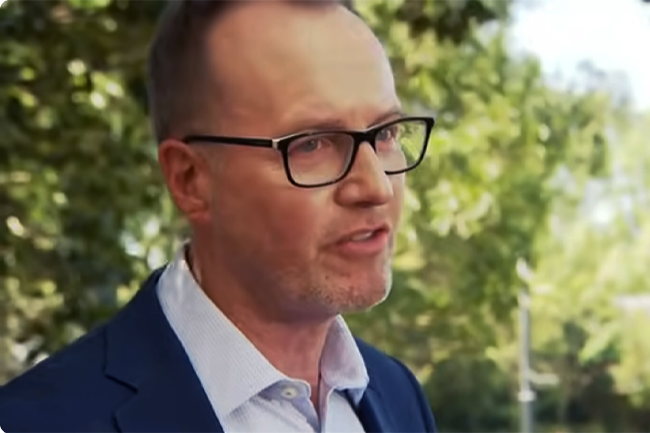
Greens Senator David Shoebridge spoke out for what is hopefully a growing number of people when he said:
“Australia must urgently reassess its relationship with the U.S., which was previously sold on shared values of democracy and an international rules-based order. That relationship, if it ever truly existed, is now in tatters. This is a moment in time to start removing U.S. troops and bases from Australia and to gain military and economic independence from the U.S., not to double down on AUKUS.”
Quite so. I don’t fancy Shoebridge's chances of even facilitating a serious and open-ended debate about our relationship with the U.S., but it does demonstrate that some people can think the unthinkable. Perhaps if the U.S. invades Greenland, as it continues to threaten, attitudes could change in this country, at least among “ordinary” people, if not political elites.
But perhaps we really could imagine a different basis for international policy and the national interest, one that privileges cooperation amongst the world’s less powerful and rightly nervous states. A “coalition of the unwilling” that included the European Union, ASEAN, Mercosur and the African Union, for example, might refuse to cooperate with great powers bent on carving up the world into archaic spheres of influence in which they can act as they choose.
Perhaps Australia could even set a good international example by following Senator Shoebridge’s sage advice. Linking the national interest to the international variety and cooperating with similarly positioned states really couldn’t be worse than continuing with policies and practices we might have hoped were discredited a century ago.
But as Donald Trump reminds us, we can never underestimate the power of self-interest, or stupidity, for that matter.
Mark Beeson is an adjunct professor at the University of Technology Sydney and Griffith University. He was previously Professor of International Politics at the University of Western Australia.
 This work is licensed under a Creative Commons Attribution-NonCommercial-NoDerivs 3.0 Australia License
Support independent journalism Subscribe to IA.


Related Articles
- From rules-based order to rule by fear: America’s democratic unravelling
- CARTOONS: Donald Trump is not 'falling asleep' in the White House
- Trump’s decline into open corruption signals the end of America’s authority
- Trump’s Security Strategy: A delusional blueprint for disaster
- Trump scores an own goal for FIFA