The ANZAC story overlooks vital contributions from First Nations peoples and diverse global communities, which deserve greater recognition, writes Mainul Haque AOM.
THE ANZAC LEGACY is central to Australia’s national identity, but it tells only part of the story.
Australia’s First Nations peoples, along with soldiers and labourers from the Indian subcontinent, including present-day India, Pakistan and Bangladesh, African soldiers and Muslim communities affected by the First World War, all played vital roles in the war effort, yet their contributions remain largely absent from public remembrance. In a modern multicultural Australia, this history deserves fuller acknowledgment.
Each year on ANZAC Day, Australians pause to remember those who served in war, reflecting on their courage, sacrifice and the legacy most closely associated with Gallipoli. It remains one of the most significant and emotional moments in the national calendar, shaping how the country understands its past and identity.
Yet our collective remembrance still captures only part of a much broader story. Beyond the familiar narrative of Australian and New Zealand troops lies a wider history of shared service involving people from many parts of the world, whose roles have not been equally recognised.
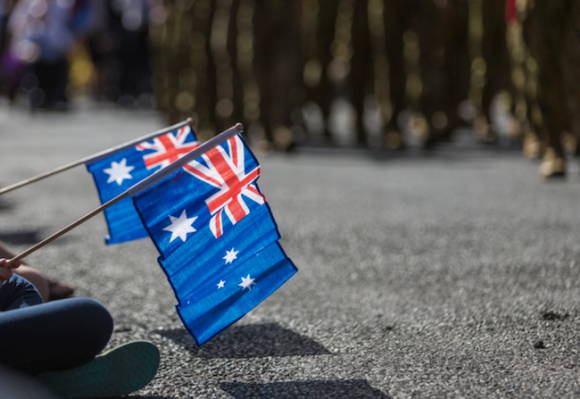
For generations, the ANZAC story has been told primarily through the experiences of Australian and New Zealand soldiers. Less often acknowledged is that they operated within a vast, interconnected war effort that depended on contributions from across the globe.
At Gallipoli alone, around 15,000 to 16,000 troops from the Indian subcontinent served under the British Indian Army, with about 1,500 killed. Historical records from the Australian War Memorial and the Commonwealth War Graves Commission highlight the scale of this contribution. These soldiers were drawn from across British India, including regions that are now present-day India, Pakistan and Bangladesh, as well as Gurkha soldiers from Nepal.
These soldiers came from regions that today form India, Pakistan and Bangladesh, alongside Gurkha troops from Nepal. They represented a remarkable diversity of language, culture and faith, reflecting the complexity of the societies from which they were drawn.
Among them were Muslims, Hindus and Sikhs serving side by side under colonial command structures. Their participation speaks to both the global reach of the war and the realities of empire, where service was often shaped by circumstances beyond individual control.
An often overlooked feature of these campaigns was the reliance on mule transport. In the difficult terrain of Gallipoli and other theatres, mules were essential for moving food, ammunition and supplies. The mules were sourced through British Army procurement networks, including Egypt and India, and formed an essential part of battlefield logistics. As documented by the Imperial War Museums, such systems were vital to sustaining frontline operations in difficult terrain.
These animals were operated and managed by mule transport units within the British Indian Army system, staffed largely by soldiers and handlers from the Indian subcontinent, working alongside Gurkha soldiers from Nepal. Together, they formed the backbone of battlefield supply lines where modern vehicles could not operate.
The scale of their contribution extended far beyond Gallipoli. More than 1.5 million soldiers and labourers were recruited from the subcontinent during the First World War, with over 1.09 million deployed overseas. Around 74,000 were killed and more than 140,000 became casualties.

African contributions were also significant in scale, yet remain far less visible in public remembrance. More than 2 million Africans were mobilised during the war. Between 500,000 and 600,000 served as soldiers, while over 1.5 million worked as labourers and carriers. Many died from disease, exhaustion and harsh conditions, with estimates exceeding 100,000 deaths.
The First World War also had profound consequences for Muslim-majority regions more broadly. The collapse of the Ottoman Empire marked a major turning point for Muslim communities worldwide, reshaping political and social life across the Middle East, South Asia and beyond.
The First Australians ANZAC legacy
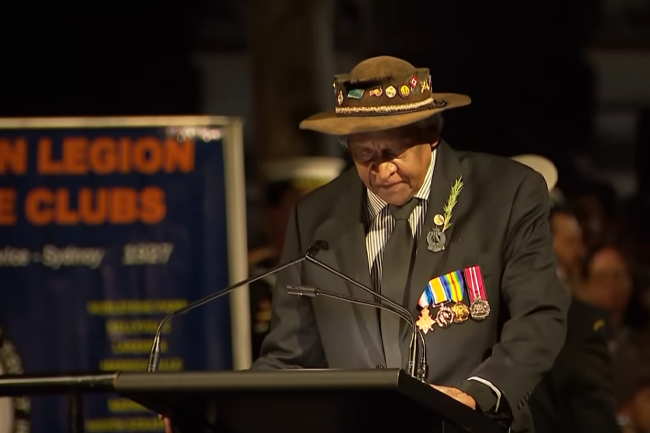
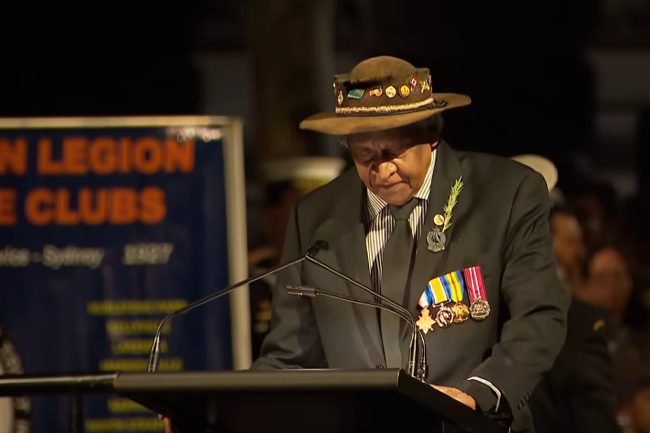
Within Australia itself, Aboriginal and Torres Strait Islander peoples also served, despite facing discrimination at home. Around 1,000 to 1,300 Indigenous men enlisted in the First World War and more than 6,000 served in the Second World War. On the battlefield, many experienced a level of equality not afforded to them in civilian life. Yet after returning home, many were excluded from recognition and veterans’ benefits.
That history continues to resonate today. ANZAC Day events on 25 April 2026 have also reminded us that respect for First Nations Australians in national commemorations cannot be taken for granted. At ANZAC Day services in 2026, including in Melbourne and Sydney, Welcome to Country and Acknowledgement of Country ceremonies were disrupted by booing, drawing widespread concern and public discussion.
These moments do not define Australia, but they do challenge us to reflect on how fully we live up to the values of respect and inclusion. As a country, we can and must do better, ensuring that recognition is not selective, and that dignity and respect are extended consistently to First Nations Australians.
When these histories are considered together, a clear pattern emerges. The war effort that sustained ANZAC operations was global in scale and diverse in composition, yet the way it has been remembered in Australia has often been more limited.
Recognising this broader history is not about diminishing the sacrifice of Australian and New Zealand soldiers. It is about completing the story. They served as part of a much larger collective that included soldiers from the Indian subcontinent, African labourers and carriers, and many others drawn into the war through global and colonial systems.
Mainul Haque OAM is a retired Australian public servant with nearly three decades of experience in government, academia, and community leadership.
 This work is licensed under a Creative Commons Attribution-NonCommercial-NoDerivs 3.0 Australia License
Support independent journalism Subscribe to IA.


Related Articles
- Anzac Day is the right time to question Australia's military identity
- Compulsory Anzac Day services an attack on freedom
- Uniting Australia with Vikki Campion’s fast-asleep, anti-woke Anzac bikkie tins
- EDITORIAL: Uniting Australia with Vikki Campion’s fast-asleep, anti-woke Anzac bikkie tins
- ANZAC legend still inspiring politicians to send Australians to the slaughter