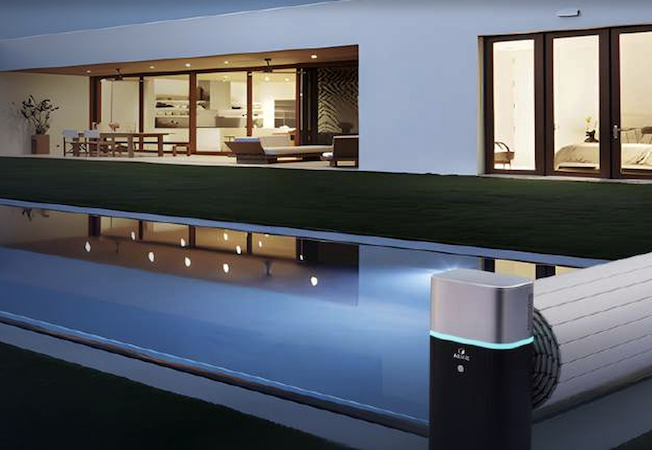
On a hot, windy afternoon, a backyard swimming pool looks perfectly still. Nothing is dripping, nothing is draining and the water level seems unchanged. Yet over the course of that day, a surprising amount of water may have quietly lifted off the surface and drifted away.
Evaporation is the least visible form of water loss in the home and one of the largest for households with a pool. As droughts grow longer and water supplies come under more pressure around the world, that invisible loss is becoming harder to ignore. This article looks at how much water pools really lose, why it matters in a warming climate, and what can be done about it.
A slow leak nobody can see
Water evaporates from any open surface, but a swimming pool is close to ideal for it. It has a large, flat area exposed to the sun, it is often heated and it usually sits in the open where wind can move across it. Every one of those factors speeds up evaporation.
The rate depends on air temperature, humidity, wind and water temperature. Hot, dry and windy conditions produce the heaviest losses, which means the problem is worst in exactly the places and seasons where water is already scarce. Because nothing appears to be leaking, many owners simply top up with a hose every week or two and never think about where the water went. To understand why that habit matters, it helps to put some numbers on it.
How much water are we really talking about?
In warm weather, a pool can easily lose several millimetres of depth a day. That sounds trivial until you multiply it across the surface. A typical backyard pool with around 40 square metres of surface that loses an average of four millimetres a day gives up roughly 160 litres every day.
Across a year, that adds up to tens of thousands of litres and in hot, dry climates it can approach the full volume of the pool. In effect, some owners refill their pool from scratch every year without ever draining it.
For one household, that shows up as a noticeable line on the water bill. Multiplied across millions of private pools in sunny, water-stressed regions, it becomes a meaningful draw on public supply.
Why it matters more in a drying climate
Water scarcity is no longer confined to deserts. During its 2018 crisis, Cape Town banned the filling of private pools as the city edged towards running out of water. Catalonia restricted pool filling during its severe drought in 2024 and parts of the western United States have faced repeated limits on outdoor water use. As rainfall patterns shift, more communities are having to decide where their water should go.
Australia shows this pressure clearly. Perth, where summer days regularly climb past 40 degrees, has seen winter rainfall decline since the 1970s and now relies heavily on desalination and groundwater. Other cities have lived through years of strict restrictions during drought. That experience has changed how many owners think about pool covers Australia wide, seeing them less as an optional extra and more as a basic water-saving measure.
Reducing evaporation is one of the few ways a household can save a large volume of water without changing how it lives. The good news is that the fix is remarkably simple.
The simplest fix sits on the surface
Evaporation happens at the boundary between water and air. Break that contact and most of the loss stops. That is all a pool cover does and it is why water utilities and energy agencies in several countries have long recommended covers as one of the most effective steps a pool owner can take.
Commonly cited estimates suggest a well-fitted cover can reduce evaporation by 90 per cent or more. The exact figure depends on the fit, the material and how consistently the cover is used, but even a partial reduction saves thousands of litres a year.
Different covers suit different goals. A solar pool cover, usually made from a bubble-style material that floats on the surface, cuts evaporation while also letting sunlight warm the water beneath. Heavier covers add strength and debris protection. Whatever the type, the key is simply having something between the water and the open air. And once that barrier is in place, the benefits reach well beyond water.
The savings don't stop at water
Because evaporation carries heat and chemicals away with it, covering a pool has a ripple effect on running costs and environmental impact. The main gains include:
- Lower heating costs. The U.S. Department of Energy has identified evaporation as the largest source of heat loss from pools, so a cover helps heated pools hold their warmth overnight.
- Reduced energy use and emissions. Less heat lost means less gas or electricity used by pool heaters, which matters as households try to cut both bills and emissions.
- Fewer chemicals. Sunlight breaks down chlorine and topping up with fresh water means rebalancing the chemistry. Covering the pool slows both processes.
- Cleaner water. Leaves, dust and insects stay out, which reduces the load on filters and pumps.
- Less time spent on maintenance. Less debris and more stable chemistry mean fewer hours skimming, vacuuming and testing.
These gains apply to pools of every size and they are often overlooked in smaller water bodies that people do not think of as pools at all.
Spas and smaller pools lose water too
Spas and hot tubs are kept at around body temperature or higher, which makes them especially prone to evaporation and heat loss. Because they are small, the loss is easy to miss, but a spa left uncovered on a cool night can burn through a surprising amount of energy just to stay warm. Insulated spa covers keep that heat and water in and they also keep children, pets and debris out.
Above ground pools face similar issues. They are often chosen because they are affordable and quick to set up, but they sit fully exposed to wind and sun, and owners frequently skip a cover altogether. Well-fitted above ground pool covers offer the same water, heat and cleaning benefits as covers for in-ground pools, and on a smaller budget those savings make a real difference.
Whatever the pool or spa, a cover only saves water if it is actually used properly, which is where many good intentions fall down.
Making a cover actually work
A cover that spends most of its time rolled up beside the pool saves very little. A few practical habits make a big difference to how much water it actually saves:
- Use it every day. The biggest losses happen on hot, windy days and overnight, so the cover should go back on whenever the pool is not in use.
- Get the fit right. Gaps around the edges let air reach the water. A cover cut to the shape of the pool performs far better than a loose, oversized sheet.
- Make it easy to handle. If a cover is heavy or awkward, it tends to stay off. A roller or simple storage system makes daily use far more likely.
- Store it out of direct sun. UV exposure breaks down cover materials over time, so shading the cover when it is off the pool extends its life.
- Fix leaks first. If the water level drops faster than expected, check for a leak before blaming evaporation alone.
- Reduce wind exposure. Hedges, fences and screens around the pool slow the air moving across the surface when it is uncovered.
Individual habits matter, but the bigger question is how communities encourage these habits at scale.
Water policy should look at the surface too
Most water-saving campaigns focus on shorter showers, efficient appliances and garden watering. Pools tend to appear only when drought forces outright bans on filling them. Yet evaporation from existing pools is a steady, year-round loss that could be reduced long before a crisis arrives.
Some water authorities have offered rebates for pool covers at various times and a few jurisdictions have tied cover requirements to permission to fill new pools. These approaches treat the cover as practical water infrastructure rather than a consumer luxury. As more regions face long-term drying, there is a reasonable case for making them more common, alongside honest public information about how much water uncovered pools actually lose.
The bottom line
A backyard pool can lose a surprising share of its water to the air each year, and in a drying climate that loss carries real costs for households and communities. The solution is not complicated. Covering the water when it is not in use cuts evaporation dramatically and brings lower heating bills, fewer chemicals and less maintenance along with it.
For anyone who owns a pool or spa, it is one of the simplest ways to enjoy it while taking a little less from a shared and increasingly precious resource.