The rise of app-based and contract work has changed more than how Australians earn. It is also changing where work happens, who pays for the workplace and which risks are carried by the worker.
The gig economy is often sold as a story of freedom: choose your hours, choose your clients and work from anywhere. That promise is real for some. Yet flexibility can also conceal a transfer of costs from businesses to individuals, including equipment, internet, insurance, unpaid administration and the space needed to do the job.
For policymakers, employers and workers, the important question is no longer whether flexible work will remain. It is whether the systems around it will make that flexibility useful, fair and sustainable.
The gig economy is not just an app
Public debate tends to focus on delivery riders and rideshare drivers because platform work is highly visible. But the same labour model reaches much further. Designers, consultants, bookkeepers, programmers, translators, care workers and tradespeople increasingly move between short contracts, multiple clients and periods of uncertain demand.
That variety matters. A courier cannot perform a shift from a desk, while a freelance analyst may only need a reliable room, fast internet and somewhere to meet a client. Lumping every contractor together produces weak policy and an equally weak picture of how workspaces are changing.
What links these workers is not a particular job. It is the absence of a conventional employer providing the full package around that job. When the office disappears, so can the everyday infrastructure that employees rarely have to price separately.
Flexibility for whom?
A flexible schedule can help people manage caring responsibilities, study or health needs. It can also allow specialists to work for clients outside their immediate suburb. Those gains should not be dismissed simply because the language of flexibility is sometimes abused.
The problem begins when flexibility is offered without bargaining power. A worker may be free to log on at any time but still have little control over rates, deadlines or how an algorithm allocates jobs. A contractor may work from home, yet absorb higher electricity bills and lose the separation between paid work and private life.
This is why the location question is political as well as practical. A kitchen table may be technically available, but it is not automatically a safe, quiet or productive workplace. Public libraries help, although they are not designed for confidential calls or regular commercial activity. Cafes shift the cost to repeated purchases and offer no guarantee of a seat.
The workplace is becoming a service
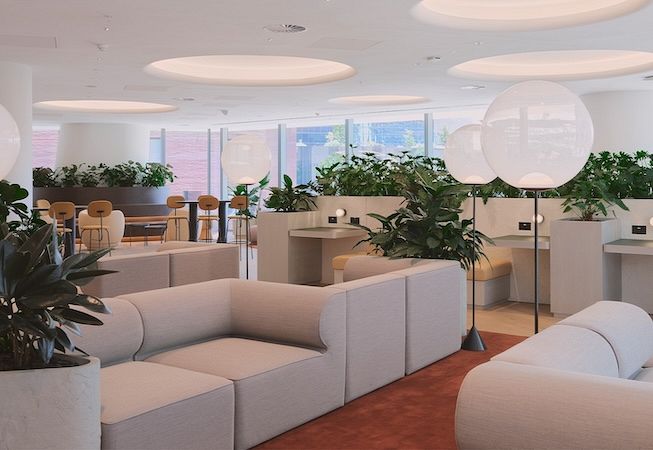
Traditional offices bundle rent, utilities, cleaning, furniture, meeting rooms and technology into an arrangement paid for by an employer. Independent workers must assemble those elements themselves. Flexible offices unbundle them again, allowing a person or small team to pay for a desk, room or business address only when it is needed.
That can be useful for a consultant meeting clients, a start-up between leases or a remote employee whose home is unsuitable for focused work. It can also support the social side of work. Casual conversations do not replace secure employment, but isolation is a genuine occupational issue for people who spend long periods working alone.
The shift has consequences for cities. If fewer organisations take long leases, commercial buildings must serve a more mobile population. Landlords and operators are responding with shorter commitments, shared amenities and spaces that can accommodate individuals one day and project teams the next.
What flexible space can and cannot solve
A well-equipped workspace can remove friction. It cannot guarantee a minimum income, provide paid leave or settle whether a worker has been wrongly classified as an independent contractor. Those are matters for labour law, regulation and collective bargaining.
Nor should access to professional space become another condition workers feel compelled to fund in order to appear credible. If a business requires a contractor to be present at a particular place or time, the cost of that requirement should not simply vanish from the employment equation.
Used on the worker's own terms, however, flexible space can be practical infrastructure. The test is whether it expands genuine choice. A day desk that helps someone complete a project is different from a recurring expense imposed because a company has removed its office while retaining office-style expectations.
Where Australians work next
The future of work will not be divided neatly between the corporate office and the spare bedroom. It will be a patchwork of homes, client sites, shared workplaces and temporary project rooms. That diversity may suit workers whose needs change from week to week, but only if flexibility is paired with clear rights and transparent costs.
For independent professionals in Victoria, Melbourne coworking spaces show how commercial property is adapting to this more fragmented demand. At 80 Collins Street, The Work Project lists hot desks, virtual offices, meeting rooms and short-term office suites alongside shared amenities. That range is evidence of a changing market, not a cure for insecure work: access remains most valuable when workers can choose it rather than being forced to absorb it as another cost of earning.
Australia should judge the new geography of work by more than occupancy rates or fashionable fit-outs. The real measure is whether workers gain control without losing security. Flexible space may be part of that settlement, but it cannot substitute for fair pay, enforceable standards and a voice in the conditions under which work is done.