Policy now assumes older Australians will age at home. The monitored alarm market has moved into that gap and it deserves the same scrutiny as the care system itself.
Australia has settled, in legislation and in budget papers, on the idea that most people will grow old in their own homes. The Aged Care Act 2024, which commenced in November 2025, is built on that assumption. What no Act settles is who notices at 3 am, in a house where nobody else lives.
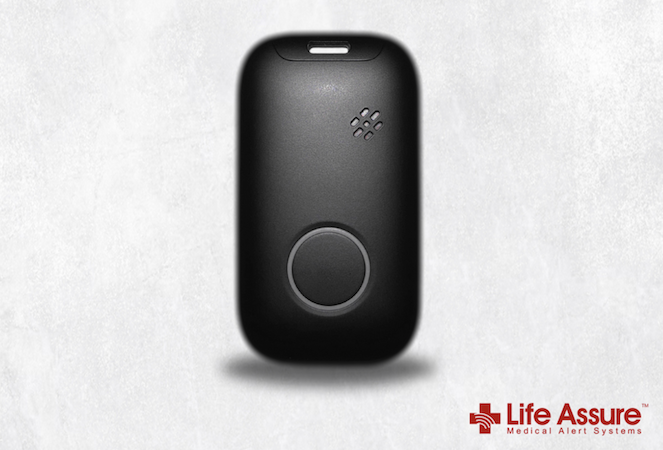
A consumer market has moved into that gap. Life Assure is a Canadian provider of monitored personal alarms. Its pitch is the pitch the whole category makes: a button, a voice and somebody awake.
Life Assure is a Canadian company and its monitoring service is available to customers in Canada only. No reader in Australia can buy it, which is exactly why it is useful here. It shows the model plainly, without a local sales pitch attached to the description.
Ageing at home is now the stated plan
The sequence is easy to lose track of:
- 2018 to 2021: The Royal Commission into Aged Care Quality and Safety runs, reporting with 148 recommendations.
- 2024 to 2025: The Aged Care Act 2024 passes in November 2024 and commences on 1 November 2025, framed around the rights of the person receiving care.
- July 2027: The Commonwealth Home Support Program is due to fold into Support at Home.
The direction is settled. The capacity is not. Waiting lists have run to many thousands of people, a large share of them already assessed and simply waiting for a package. The for-profit share of providers has grown substantially since the 1990s.
Those figures belong to a longer argument about how the system sees older people. The question is whether they count as citizens or as units of demand. That argument runs straight through the sector's one-size-fits-all model. A private alarm sits downstream of all of it.
What is actually being sold here?
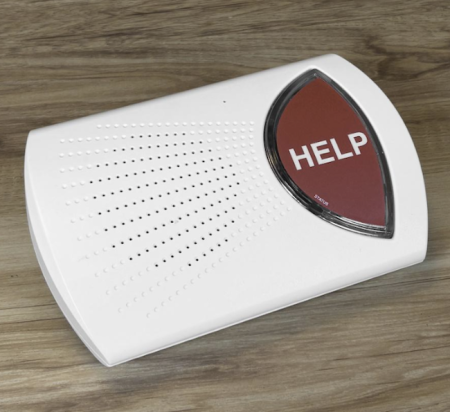
A monitored alarm is a service wearing the costume of a gadget. The hardware is the cheap part. Three separate things have to work at once:
- A wearable button, worn as a pendant, a wristband or a belt clip.
- A network path, usually mobile, occasionally broadband or a landline.
- A staffed centre where Medical Alert Specialists answer the line and open the household file.
Life Assure publishes the shape of that kit on its own site. Two-way voice comes as standard and fall detection as an upgrade. The home unit is rated to reach 600 feet from the base, on a battery said to hold 80 hours in reserve. Its mobile device is listed as charging in two to three hours.
Those are ordinary specifications for the category. The consequential differences sit in the third item, which is the least visible and the hardest to compare from a website.
Why does the alarm market stop at the border?
Monitoring is stubbornly national. A response centre needs local numbering and agreements with local carriers. It also needs a working relationship with the ambulance service that gets dispatched.
Consumer protection is national too. An Australian buyer who signs with an Australian provider keeps the benefit of Australian Consumer Law. That includes the guarantees attaching to any service sold here. That is not a small footnote on a contract a frail person may hold for years.
So the Canadian example travels as an idea and not as a product. What crosses the border is the set of questions and those are the same in Melbourne as they are in Montreal.
Which questions should a buyer put first?
- Where is the response centre, who staffs it overnight and in which country does it sit?
- What is the contract term and what happens to it after a death or a move into residential care?
- Which network does the device use and what is the plan for a house with weak reception?
- What keeps the unit running through a blackout and for how long?
- Can the family see an alert history and who else can see the location data?
- Is the service assessed against any Australian standard, or only against the seller's own claims?
Ask about the false alarm policy as well. A device that punishes accidental presses gets left in a drawer and a drawer protects nobody.
Where independent advocacy sits
The Older Persons Advocacy Network runs an advocacy service for people using government-funded aged care. It is free, independent and confidential, and reachable on 1800 700 600. Funding comes through the National Aged Care Advocacy Program rather than from providers. That matters a great deal when the complaint is about a provider.
The Australian Human Rights Commission publishes plain guidance on age discrimination and the rights attached to it. Ageism is the background noise against which most of these purchases get made and it shapes how the conversation lands at home.
Families rarely arrive at these questions calmly. There are plenty of published accounts of households worn down by the aged care system. A pendant is not an answer to that. It is a partial answer to one narrow failure mode.
Frequently asked questions from Australian families
Does a personal alarm replace an ambulance?
No. It shortens the gap before help is called and gives responders an address and a household file. Emergency services still do the work and 000 remains the number that matters most in a serious event.
Who regulates these devices in Australia?
The device sits under general consumer and electrical rules rather than a dedicated alarm regulator. That is why the contract and the response centre deserve more scrutiny than the plastic. Ask for the terms in writing before any money changes hands.
Is fall detection reliable enough to depend on?
It is a useful supplement and not a guarantee. Sensors read a sudden drop, so a slow slide to the floor can be missed entirely. Treat it as a second chance rather than the primary plan.
What should happen when somebody moves into care?
The contract should end without a penalty and any unused period should be refunded on a fair basis. Check that clause at the start, because nobody reads it at the point it becomes relevant.
A test for the next round of reform
Ageing at home only means something if somebody answers. Policy has promised the first half of that sentence and the market has quietly been left to supply the second.
That arrangement deserves the same scrutiny the care system now gets. Until it does, one sensible response is available to any household in 2026. Ask harder questions of the seller than the brochure invites.