New research into environmental volunteers reveals a concerning pattern: younger volunteers grapple with hopelessness as Australia's volunteer rates decline, meaning fewer people are stepping up when we need them most, writes Ben Goodsell.
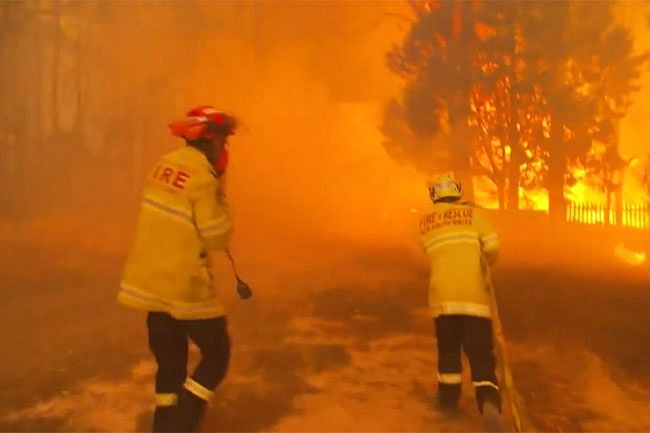
AUSTRALIA'S ENVIRONMENTAL ACTION is built on a foundation that's quietly crumbling. While bushfires rage, species disappear and ecosystems collapse, the volunteer workforce that forms the backbone of environmental conservation is shrinking, and the emotional weight of climate change is reshaping who stays and who walks away.
Volunteer rates across Australia have been declining for years, exacerbated by cost-of-living pressures and economic uncertainty. According to Volunteering Australia, considerable numbers of new volunteers either withdraw or are let go in their first year. Some organisations report dropout rates approaching alarming levels, mirroring global patterns where economic factors make volunteering increasingly unviable.
For environmental organisations that rely almost entirely on unpaid labour, from bushland regeneration groups to wildlife rescue services, this trend is potentially catastrophic.
The Climate Perspectives project has spent months surveying environmental volunteers across Australia to understand what drives them, what sustains them and, crucially, what might drive them away. The findings, now released in the inaugural 2025 report, paint a complex picture of hope, anxiety and generational divide that should worry anyone who cares about Australia's environmental future.

Who shows up and why
The research, which surveyed environmental volunteers using established psychological instruments including the Climate Change Hope Scale and Climate Change Anxiety Scale, revealed a generational split that cuts to the heart of climate action's sustainability. Volunteers aged 30 and over reported significantly higher levels of hopefulness about climate solutions, while younger volunteers under 30 showed greater levels of hopelessness.
Shreyasi Baruah, 25 years old, who took part in the project, says:
I'm usually an optimistic, positive and warm person by nature. My feelings on climate change are the caveat to that. I hear less conversations of the environment being talked about with people I spend time with. It's hard to reconcile with, that our planet is beginning to burn up but we are all so distracted with all the hardships of daily life.
But I feel hopeful each time I do hear or see someone's efforts in acting for the environment. Because no matter the outcome, nature is always worth believing in and fighting for.
This emotional burden manifests differently across demographics. Female volunteers reported higher functional impairment, the feeling that climate anxiety disrupts their daily lives, compared to their male counterparts. Younger volunteers also reported more personal experiences with climate impacts — hardly surprising for a generation that's spent their formative years watching climate disasters intensify.
But despite the anxiety, despite the hopelessness, volunteers aren't disengaging. Behavioural engagement scores were the highest across all measures, which include actions like recycling, reducing consumption and actively participating in environmental work.
The research found that volunteers are driven primarily by values: the belief that they can contribute to something important. Understanding (the desire to learn through hands-on experience) and career development also featured prominently, particularly among younger volunteers who scored significantly higher on career motivations compared to their older peers.
Interestingly, overseas-born volunteers reported stronger alignment with environmental values and higher behavioural engagement compared to Australian-born volunteers. This matters because cultural diversity appears to strengthen environmental volunteer networks. But as economic pressures mount and volunteer numbers decline, we risk losing the people most committed to environmental action precisely.
The retention crisis
The concerning reality is that motivation alone doesn't ensure retention. The research found that volunteers who completed extended tasks (in this case, writing detailed advocacy pieces on environmental topics) showed different motivational profiles than those who didn't.
Those who persisted scored higher on career motivations and lower on values-based and social motivations. In other words, volunteers sustained by external factors like professional development may be more likely to follow through on demanding tasks, while those driven purely by values may struggle to maintain engagement without adequate support structures.
This aligns with broader research showing that training, development opportunities, relationship-building and role flexibility are critical retention strategies, precisely the resources that small, under-funded environmental organisations often lack.
Shreyasi acknowledges:
My biggest challenges to volunteering more are definitely related to the cost of living pressure. If I didn't have to worry so much [about] money... I'd be on the frontline more often.
If volunteer numbers continue to decline, I fear that we will drift off into complete distraction. If our governments could act in ways that solve larger, systemic... issues (cost of living crises, students living in poverty), then more people would have greater capacities to help.
Without volunteers, we will run out of a great portion of role models, who set the example for others in society to think about contributing to kind causes.
The path forward
The research points toward several critical needs. Environmental organisations must invest in volunteer training and development, not as an optional extra but as essential infrastructure. They need to create pathways that acknowledge different motivations, from career development for younger volunteers to values-driven engagement for others.
But the hard reality is that most organisations lack adequate resources to keep the lights on, let alone provide this support to their volunteers. Planet Ark entering voluntary administration and the multi-million dollar losses sustained by the Environmental Defenders Office in recent years are examples of a sector being asked to do more with less, year after year.
Australia's environmental future depends on people showing up. But if we want them to keep showing up, we need to create conditions that make sustained engagement possible. That means meaningful government investment and policy support, philanthropic commitment and systemic recognition that environmental civil society is not a luxury, it is load-bearing infrastructure.
Ben Goodsell is Director and Principal Scientist at The Climate Centre, holding a Master of Oceanography alongside postgraduate qualifications in engineering, geology and astronomy.
 This work is licensed under a Creative Commons Attribution-NonCommercial-NoDerivs 3.0 Australia License
Support independent journalism Subscribe to IA.