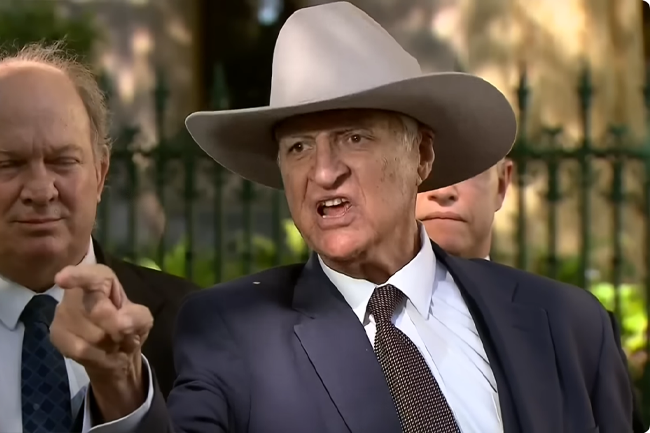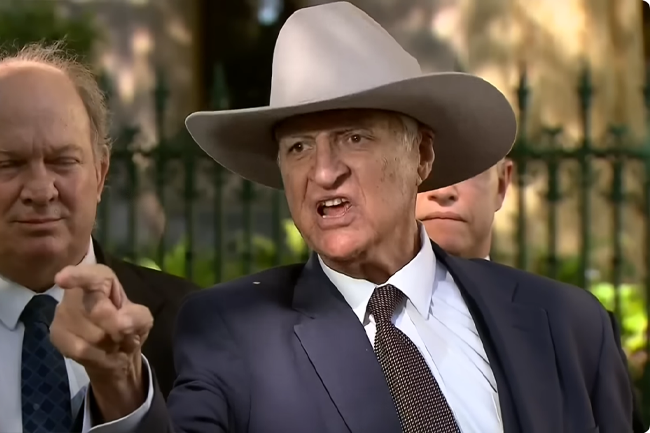
Bob Katter's personal appeal may keep Kennedy out of One Nation's hands, but the future of the Katter dynasty is far less certain, writes Dr William Wallace and Dr Benjamin T Jones.
THE POLITICAL BATTLE for Queensland’s northern outback is on.
Often feeling unrepresented by the major parties, the federal seat of Kennedy has been safely in the hands of Bob Katter for over two decades while his son, Robbie Katter, represents much of the same area at state level as the member for Traeger.
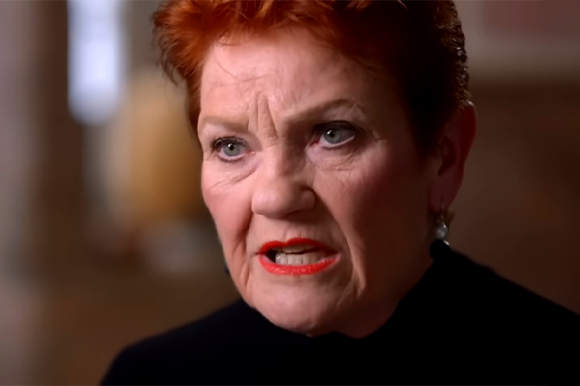
With One Nation surging in the polls, Kennedy is reportedly a target seat, but could Katter Country really become Hanson Country?
Bob Katter has been a fixture of Australian politics at state and federal levels for an incredible 52 years. He is the Father of the House (the longest-serving member of the House of Representatives), having held the seat of Kennedy since 1993. Originally a member of the Nationals, he became an Independent, then formed Katter’s Australian Party (KAP) in 2011.
Despite lacking the resources of the major parties, Katter’s colourful and outspoken manner has made him a cult figure from Townsville to Mount Isa. While KAP has struggled to expand beyond its northern base, Kennedy is known as "Katter Country".

A surging One Nation is poised to deliver Katter his toughest test since at least 2013, when he was almost swept away by the anti-Independent wave that heralded the end of the Gillard Government.
A large Redbridge poll in May 2026 found that One Nation would win between 46-59 seats if an election were held today, reducing the Coalition to a paltry 7-21 seats and wiping them out entirely in Queensland.
One Nation’s strongest support is in rural and regional Queensland, so it makes sense that they would target Kennedy. According to the most recent Bureau of Statistics (ABS) census data, voters in Kennedy are older than the national average, the most popular occupations are technicians and trade workers, and the number of voters with Certificate III qualifications (required for trade careers) significantly exceeds the national and state averages.
In the words of polling outfit Demos Au:
‘Put together, age plus region plus non-university education is the “sweet spot” for the One Nation surge.’
Kennedy ticks every one of these boxes.
Despite this, One Nation may find Kennedy a harder nut to crack than expected. A recent PhD thesis by Dr William Wallace completed at Central Queensland University has analysed the way KAP has built support since 2011.
It finds that much of Katter’s electoral success has come from his ability to attract voters described by journalist Gabrielle Chan as ‘rusted off’. These voters traditionally voted for the Nationals but became disillusioned with the party’s embrace of economic liberalism and perceived neglect of its regional and rural base. In Queensland, this process has arguably been accelerated by the formal merger of the National and Liberal parties.
Katter cannot readily be portrayed as a member of the political establishment or “uniparty”. Over decades he has cultivated an image as a charismatic outsider and utilised the media to cultivate quasi-personal connections with voters. Whether ziplining over crocodiles, arriving at parliament dressed as the Grim Reaper, or delivering colourful speeches in his trademark ten-gallon hat, Katter has built an anti-establishment image which will effectively insulate him from voter backlash in this age of populism.
Ironically, Katter’s longevity is also the source of his long-term vulnerability. He is currently 81 years old. Katter’s dominance in Kennedy is the product of his successful implementation of a populist political strategy predicated on his personal charisma, direct connection with voters and more than half a century of name recognition, which simply cannot be replicated by an organisational structure.
At some point, Katter must hand over the reins, most likely to Robbie, which will be a moment of vulnerability for the Katter dynasty. Robbie Katter has pursued a quieter, more methodical political strategy, prioritising legislative achievements and deemphasising the role of charisma and media stunts. In his own words, Robbie described himself as "more cautious and balanced" than his bombastic father.
The current travails of the Queensland KAP serve as a cautionary tale. The party’s parliamentary representation has declined from four seats to two following the 2024 Queensland Election and a bruising by-election defeat in Hinchinbrook, during which the party’s prospects were significantly damaged by the decision of One Nation to preference the LNP over KAP.
Further compounding these struggles is the proposal by the Queensland Redistribution Commission to abolish Shane Knuth’s seat of Hill, potentially reducing KAP to a solitary seat in the Queensland Parliament. The once promising signs of expansion have reversed and Robbie Katter’s stated aim of holding the balance of power in Queensland now appears to be a pipe dream.
There are good reasons to believe that Bob Katter will remain secure in Kennedy, even if One Nation sweeps across vast swathes of regional and rural Queensland at the next federal election. However, it is an open question if Robbie Katter or another anointed successor can hold Kennedy when the Father of the House finally hangs up his wide-brimmed Akubra hat. Katter Country may yet become Hanson Country.
Dr William Wallace is a research adjunct in the School of Education and the Arts at Central Queensland University with expertise in political populism, especially Katter's Australia Party.
Dr Benjamin T Jones is a historian, author and social commentator who currently works as Senior Lecturer, History at Central Queensland University. You can follow Dr Jones on Twitter @DrBenjaminJones or on his blog, Thematic Musings.
 This work is licensed under a Creative Commons Attribution-NonCommercial-NoDerivs 3.0 Australia License
Support independent journalism Subscribe to IA.


Related Articles
- Why Bob Katter is right on immigration
- Conservative capitalism: a strange way to remain the same
- What if the Independents hold the balance of power?